


SEO for Moving Companies

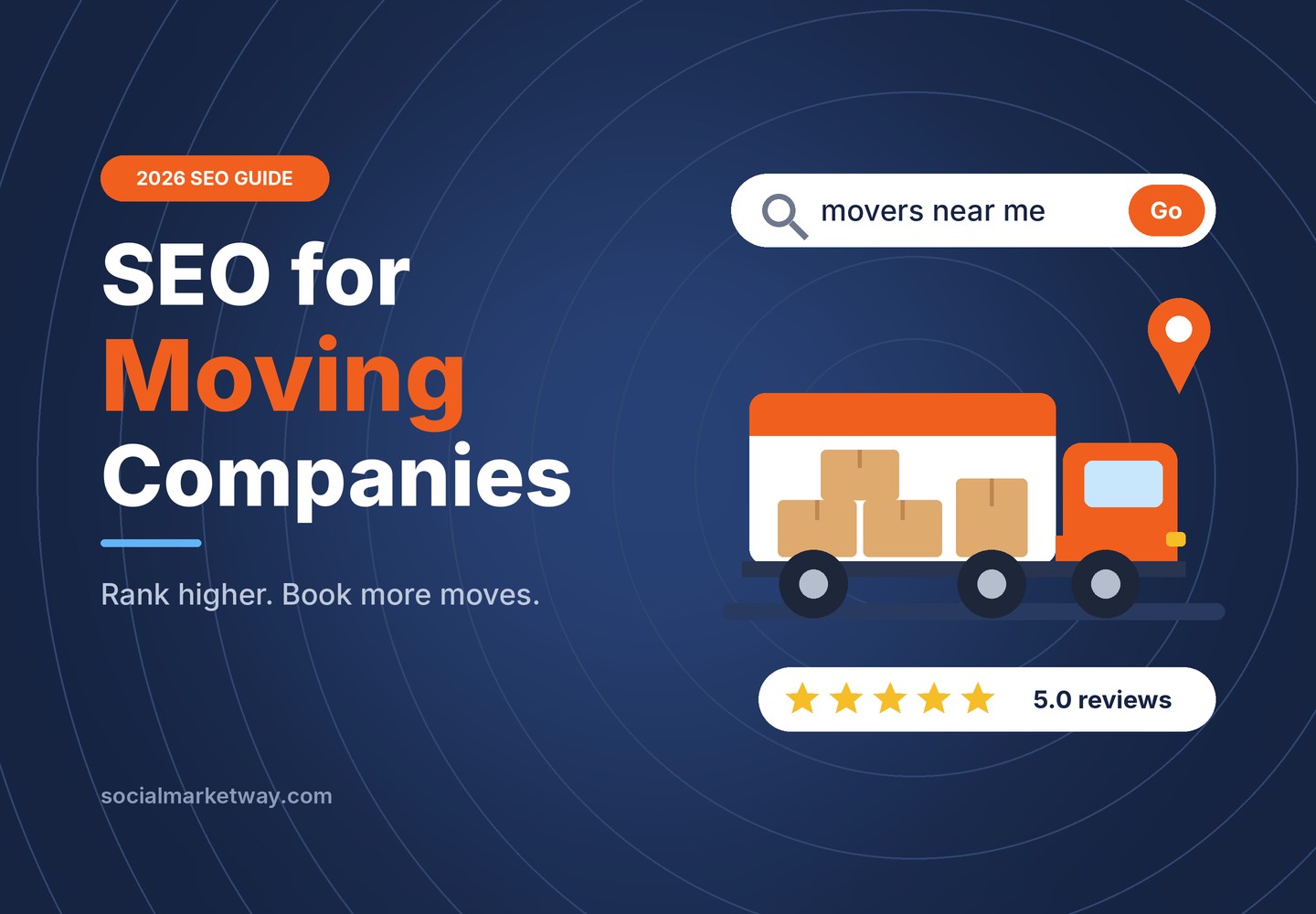
When someone needs a mover, they don’t flip through the yellow pages. They grab their phone and search “movers near me” or “best moving company in [city].” Whoever shows up first usually gets the call, and in a business where a single local move can be worth $1,000 or more, those calls add up fast.
That’s why SEO for moving companies has become one of the most valuable investments a mover can make. Paid ads and lead-gen sites charge you for every click or every shared lead. Strong organic rankings keep sending you customers month after month, without paying for each one.
In this guide, we’ll walk through exactly how moving company SEO works: the keywords that matter, how to dominate local search, what your website needs, how to earn reviews and links, and when it makes sense to bring in professional help.
Why SEO for Movers Pays Off
The moving industry is crowded and competitive. In most cities you’re up against national van lines, local family-owned outfits, and broker websites that buy up ad space. SEO levels that playing field in a few important ways:
- You show up at the moment of need. People searching for movers are ready to book. They’re not browsing; they have a move date.
- You stop renting your leads. Shared lead platforms send the same customer to several competitors. An organic lead from your own website is yours alone.
- Your cost per booked job drops over time. Ads stop the moment you stop paying. Rankings you’ve earned keep working.
- You build trust before the first call. A strong Google presence, with reviews, photos, and helpful content, makes you look like the established, reliable choice.
Good SEO for movers isn’t one tactic. It’s a combination of local visibility, a well-built website, useful content, and a strong reputation across the web. Each of those pieces is part of our full SEO services, and we’ll break each one down below.
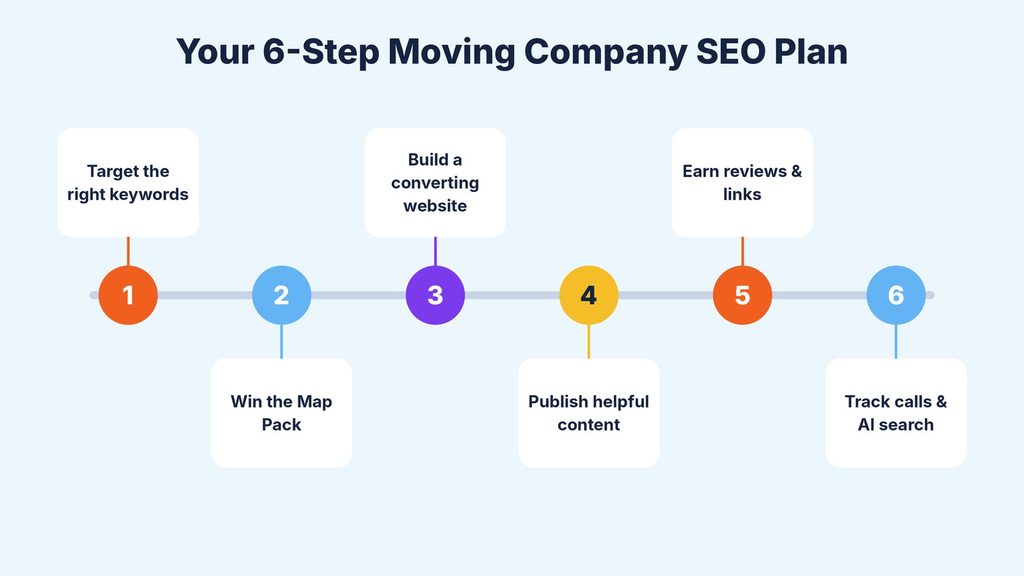
Step 1: Target the Keywords Your Customers Actually Search
Movers SEO starts with knowing what your customers type into Google. Most moving searches fall into a few clear groups:
| Search type | Example keywords | Why it matters |
|---|---|---|
| “Near me” and city searches | movers near me, moving company in Dallas | Highest booking intent; drives Map Pack results |
| Service searches | local movers, long distance movers, office movers | Matches each service page you offer |
| Specialty searches | piano movers, senior moving services, storage and moving | Less competition, often higher job value |
| Price searches | moving company cost, how much do movers charge | Captures people comparing quotes |
| Planning searches | moving checklist, how to pack dishes for a move | Builds trust early, earns links and future bookings |
A few tips for moving SEO keyword research:
- Go hyper-local. Target your city, surrounding suburbs, and neighborhoods, e.g. “movers in Plano” or “Uptown Dallas apartment movers.”
- Map one main keyword per page. Your long-distance page should target long-distance terms; don’t make every page compete for “movers.”
- Watch the money terms. Keywords with higher cost-per-click in Google Ads are usually the ones closest to a booking. Ranking for them organically saves you that ad spend.
- Use free tools. Google Search Console, Google’s autocomplete, and the “People also ask” box reveal exactly how locals phrase their questions.
Step 2: Win the Local Map Pack
For moving companies, SEO lives and dies by local search. The Google Map Pack, the three businesses shown with a map at the top of the results, gets a huge share of clicks for “movers near me” searches. Getting into it starts with your Google Business Profile.
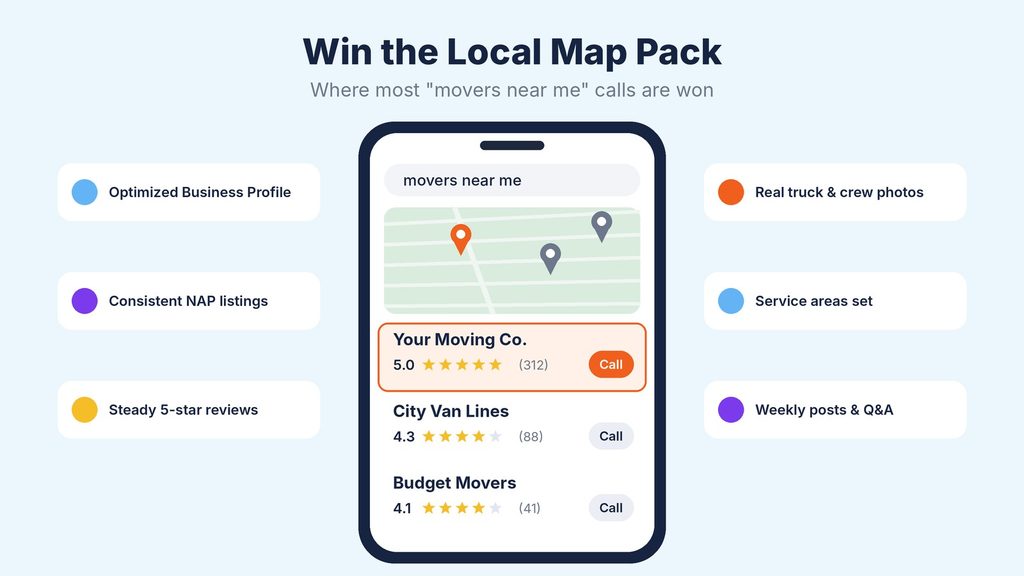
Optimize your Google Business Profile:
- Choose “Moving company” as your primary category and add relevant secondary ones, such as “Mover” or “Moving and storage service” where they apply.
- Make sure your business name, address, and phone number (NAP) are accurate and match your website exactly.
- Set your service areas to the cities you actually serve.
- Add every service you offer, with short descriptions.
- Upload real photos: your trucks, crew in uniform, packing in action, your storage facility. Fresh photos signal an active business.
- Post updates regularly: seasonal tips, promotions, recent jobs.
- Answer questions in the Q&A section before customers have to ask.
Keep your NAP consistent everywhere. Your name, address, and phone number should be identical on your website, Yelp, Facebook, the Better Business Bureau, and every directory. Inconsistent listings confuse Google and can hold your rankings back.
Create a page for each city you serve. If you serve five cities, build five genuinely useful location pages. Include local details: neighborhoods you work in, local landmarks, building access tips, and reviews from customers in that city. Avoid copy-and-paste pages that only swap the city name; Google sees them as thin content.
Step 3: Build a Website That Ranks and Converts
Your website is where searchers decide whether to call you or the next mover on the list. It needs to satisfy both Google and a stressed-out customer planning a move.
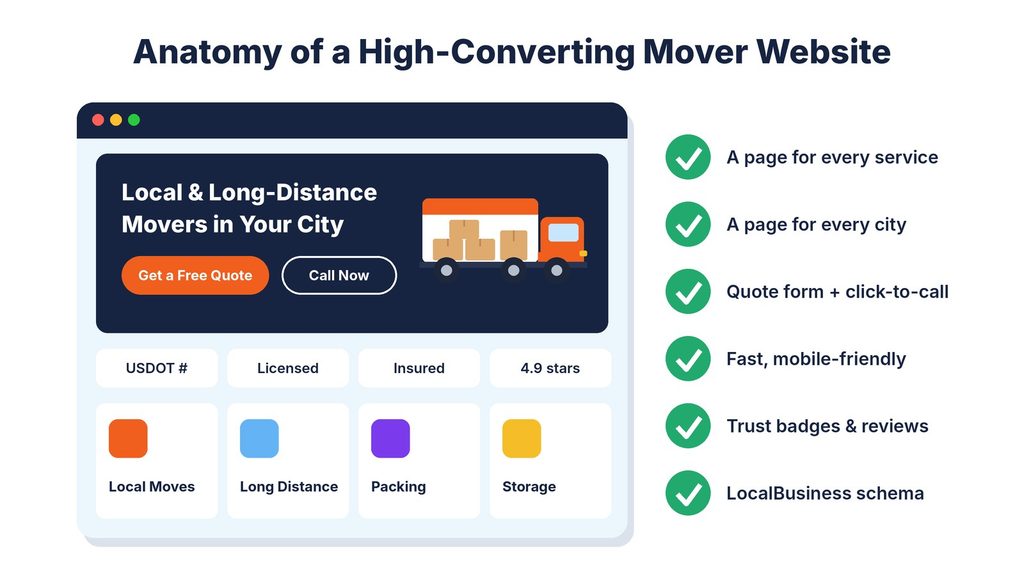
- Give every service its own page. Local moves, long-distance moves, commercial moves, packing, storage, and specialty items should each have a dedicated page targeting that service.
- Write clear titles and headings. A title like “Long Distance Movers in Austin, TX | Your Company” tells Google and searchers exactly what the page offers.
- Make quotes effortless. Put a click-to-call button and a short quote form above the fold on every page. Most moving searches happen on mobile.
- Load fast. Compress images and use quality hosting. A slow site loses impatient visitors and rankings.
- Show trust signals. Display your USDOT and MC numbers (for interstate movers), license and insurance details, years in business, and review badges.
- Add schema markup. LocalBusiness (or MovingCompany) schema helps search engines understand your name, address, hours, and service area.
- Link your pages together. Connect city pages to service pages and blog posts to the services they relate to.
Getting these details right is the heart of on-page SEO, and it’s often where moving companies see the quickest wins, because many competitors’ websites still miss the basics.
Step 4: Publish Content That Brings in Leads
People start researching a move weeks before they book. Helpful content puts your brand in front of them early, builds trust, and gives Google more reasons to rank your site. Content ideas that work well for movers:
- Moving checklists and timelines: an 8-week moving checklist, or a printable packing list.
- Cost guides: “How much do movers cost in [city]?” with honest price ranges and what affects them.
- Local guides: “Moving to [city]: neighborhoods, parking permits, and what to know.”
- Packing how-tos: packing a TV, dishes, artwork, or a home office.
- Specialty moves: moving seniors, moving with pets, moving a piano or gym equipment.
- Comparisons: hiring movers vs. renting a truck, or full-service vs. labor-only.
Each post should answer the question thoroughly, include your own photos where possible, and link to the related service page with a clear call to book a quote. Over time, this library of content becomes a steady source of organic SEO traffic that keeps growing without extra ad spend.
Step 5: Build Your Reputation With Reviews, Citations and Links
Trust is everything in the moving business. Customers are handing you everything they own, and Google knows it. Reputation signals carry real weight in local rankings.
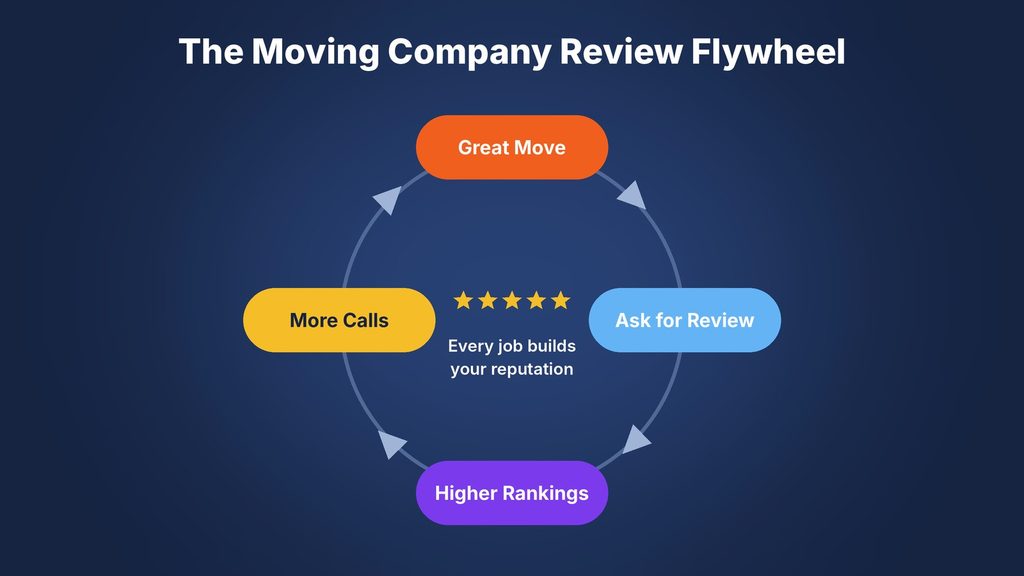
Make reviews part of every job. Ask happy customers for a Google review right after the move, while the experience is fresh. Send a text with a direct review link, and train your crew leads to mention it. Respond to every review, positive or negative, professionally and quickly. A thoughtful response to a complaint often impresses future customers more than a five-star rating.
Get listed in the right places. Beyond Google, claim and complete profiles on Yelp, the BBB, Angi, Nextdoor, Facebook, and moving-specific directories. If you’re an interstate mover, make sure your FMCSA registration details are accurate. Every consistent listing reinforces your NAP and builds credibility.
Earn local backlinks. Links from respected local websites tell Google you’re a real, established business. Good opportunities for movers include:
- Real estate agents and property managers who refer clients
- Local chambers of commerce and business associations
- Sponsoring community events, school fundraisers, or charity drives
- Partnering with storage facilities, junk removal, or cleaning companies
- Getting featured in local news for community work or seasonal moving tips
Together, reviews, citations and links make up your off-page SEO, the reputation work that helps you outrank movers with bigger ad budgets.
Step 6: Track What Matters (Including AI Search)
Rankings are nice, but booked jobs pay the bills. Track the numbers that tie SEO to revenue:
- Calls and quote requests from organic search and your Google Business Profile (use call tracking numbers and form tracking).
- Map Pack and organic rankings for your main service and city keywords.
- Organic traffic to service and location pages in Google Analytics.
- Google Business Profile insights: calls, direction requests, and website clicks.
- Review count and average rating compared to your top competitors.
Also keep an eye on AI search. More customers now ask ChatGPT, Google Gemini, or Google’s AI Overviews to “recommend a reliable moving company in [city].” These tools tend to favor businesses with strong reviews, consistent listings, and mentions on trusted local sites. The good news: the same moving company SEO work in this guide also improves your chances of being recommended there.
DIY or Hire Moving Company SEO Services?
You can absolutely start SEO for your moving company on your own. Claiming your Google Business Profile, asking for reviews, and fixing your NAP listings are great first steps. But during peak season, most movers don’t have time to write content, build location pages, and chase backlinks while also running crews and trucks.
Professional moving company SEO services make sense when:
- You’re in a competitive metro area with national brands and brokers in the results
- You serve several cities and need location pages built properly
- Your website is slow, outdated, or not generating calls
- You’re spending heavily on ads or shared leads and want to lower your cost per job
When comparing providers, look for experience with local service businesses, transparent monthly reporting tied to calls and leads, and a clear plan rather than vague promises. Be wary of anyone guaranteeing #1 rankings.
Wondering about budget? Our guide on how much SEO costs explains typical pricing models and what you should expect at each level, so you can plan your investment with confidence.
Frequently Asked Questions About SEO for Moving Companies
How long does SEO take to work for a moving company? Most movers see early improvements, such as better Map Pack visibility and more profile calls, within two to three months. Stronger organic rankings typically take four to six months, and longer in competitive metro areas.
What is the most important SEO factor for movers? For local moves, a fully optimized Google Business Profile backed by a steady stream of genuine reviews is usually the biggest driver of calls. A fast, well-structured website with dedicated service and city pages comes next.
Is SEO better than Google Ads for moving companies? They work best together. Ads deliver calls immediately but stop when your budget does. SEO takes longer to build but keeps generating leads without paying per click, lowering your cost per booked job over time.
Do I need a separate page for every city I serve? If you regularly serve a city and want to rank there, yes. Each location page should include unique local details, reviews, and photos rather than duplicate text with the city name swapped.
How much do moving company SEO services cost? Pricing depends on your market’s competitiveness, the number of locations you serve, and the scope of work. Local campaigns usually run on a monthly retainer. Ask any provider for a clear breakdown of deliverables and reporting.
Can SEO help my moving company show up in ChatGPT and AI search? Yes. AI assistants like ChatGPT and Google Gemini tend to recommend businesses with strong reviews, consistent listings, and mentions on trusted sites, which are the same signals a solid moving company SEO strategy builds.
Final Thoughts: Make SEO Your Best Mover
SEO for moving companies comes down to a simple idea: be the most visible, most trusted mover in your area when people are ready to book. Optimize your Google Business Profile, build service and city pages that convert, publish helpful content, and collect reviews after every job. Do that consistently and you’ll rely less on expensive ads and shared leads every month.
Ready to fill your calendar with more booked moves? Social Market Way helps moving companies grow with proven local SEO strategies. Explore our SEO packages to find the right plan for your business, or book a strategy call and we’ll show you exactly where your next customers are coming from.