

How to Tell If Your SEO Company Is Working: A Practical Guide for Business Owners

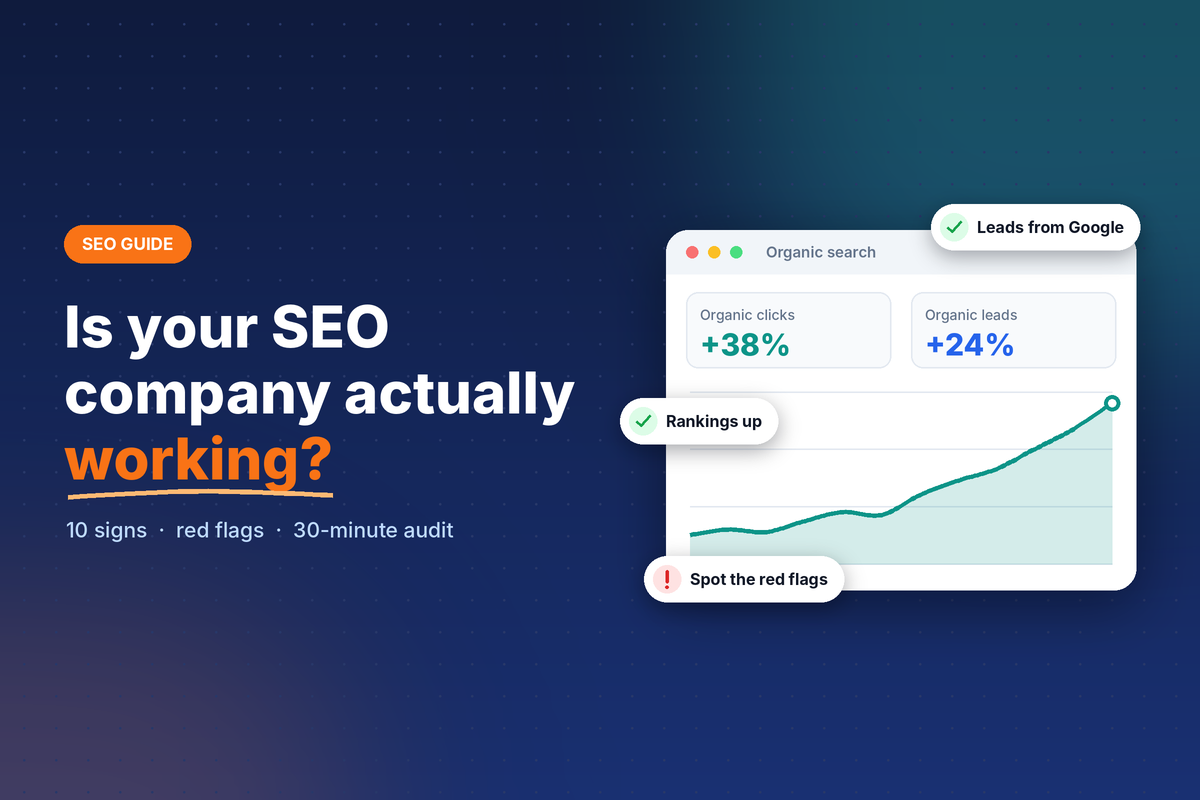
You signed the contract and you’re paying the monthly invoice. Every month a report lands in your inbox, full of charts, acronyms and green arrows pointing up. But a quiet question keeps coming back: is any of this actually working?
You’re not alone in asking. SEO is one of the most valuable long-term investments a business can make. It’s also one of the hardest to judge from the outside. Results build slowly, the work happens mostly behind the scenes, and the metrics can be framed to look impressive even when nothing meaningful is changing.
This guide gives you a clear, no-nonsense way to evaluate your SEO company. You’ll learn what realistic progress looks like month by month, which numbers matter and which are vanity metrics, the warning signs of an agency that’s coasting, and the questions that separate real partners from report generators. By the end, you’ll be able to open your next monthly report and know whether your money is working as hard as it should.
Why It’s So Hard to Tell Whether SEO Is Working
Before getting into the signs, it helps to understand why SEO is uniquely hard to evaluate. It’s not like paid ads, where you switch on a campaign and see clicks within hours.
SEO is cumulative. Content published today might not rank meaningfully for three to six months. A backlink earned in March might not move rankings until May. That lag makes it easy for a struggling agency to keep saying “just give it more time,” and hard for you to know when that answer stops being reasonable.
Many factors are outside anyone’s control. Google updates its algorithm constantly. Competitors invest in their own SEO. AI-generated answers in search results are changing how many people click through to websites at all. A drop in traffic isn’t always your agency’s fault, and a rise isn’t always to their credit.
Much of the work is invisible. Fixing crawl errors, improving page speed, restructuring internal links and cleaning up duplicate content all matter, but none of it shows up as a visible change on your homepage.
Reports can mislead without lying. An agency can truthfully report that you “rank for 1,200 keywords” while almost none of them bring in a single customer.
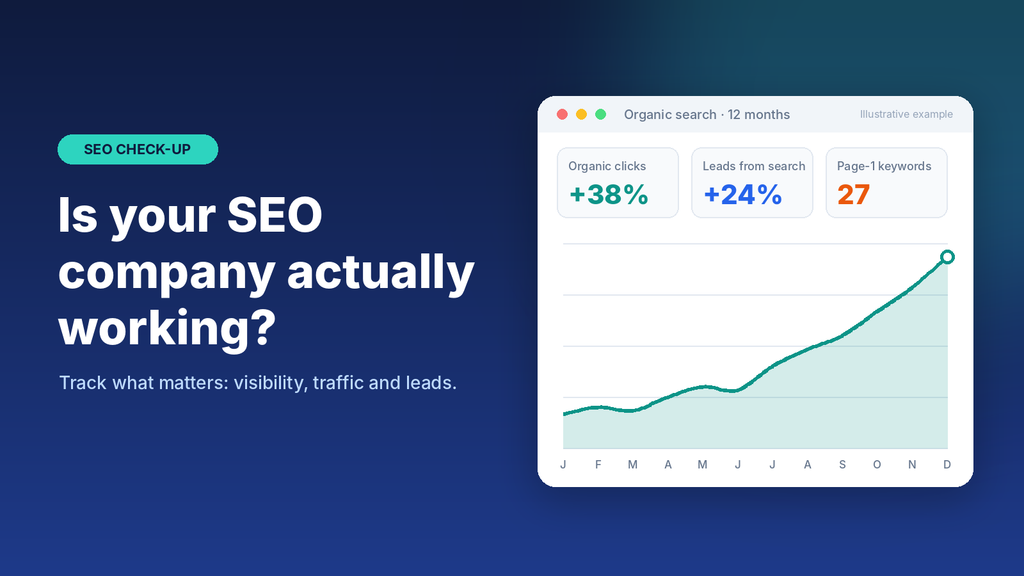
The good news is that once you know what to look for, the picture gets much clearer.
What a Realistic SEO Timeline Looks Like
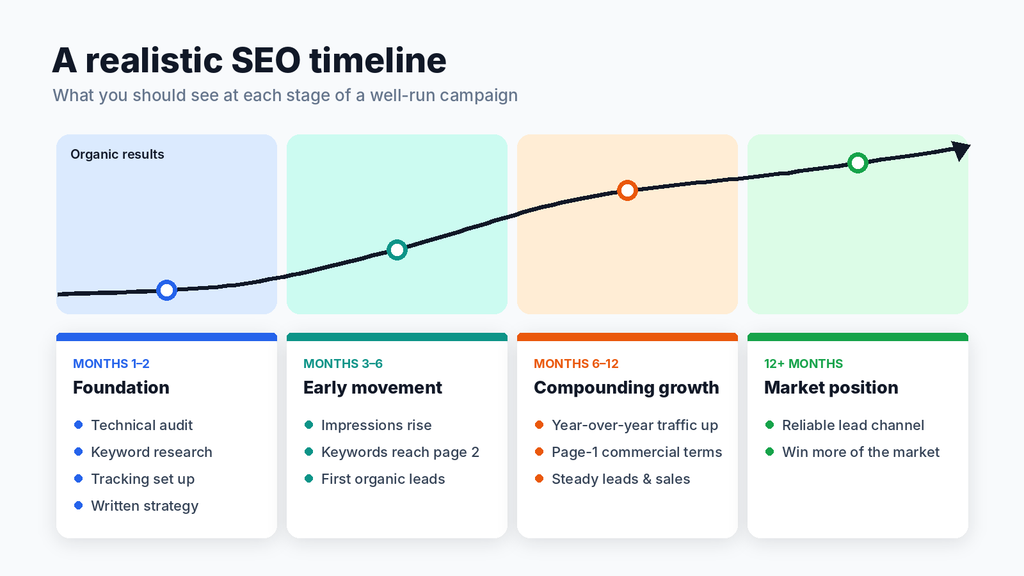
One of the biggest sources of frustration is mismatched expectations. Here’s a realistic outline of how a well-run SEO campaign usually unfolds. Your timeline will vary with your industry’s competitiveness, your site’s history and your budget, but this gives you a baseline.
Months 1–2: Foundation and Discovery
The first weeks should be busy, even if rankings barely move. A competent agency will:
- Run a full technical audit of your site
- Research keywords based on your actual services and customers
- Analyze your competitors’ strengths and weaknesses
- Set up or verify tracking in Google Search Console and Google Analytics 4
- Record baseline metrics so progress can be measured later
- Deliver a written strategy or roadmap
What you should see: documents, audits, a clear plan and early technical fixes. If two months in you’ve received nothing but an invoice and a generic ranking report, that’s your first warning.
Months 3–6: Early Movement
This is when the foundation starts paying off. Pages that were fixed or optimized begin climbing. New content starts getting indexed and showing up in search. You’ll typically see:
- Rising impressions in Google Search Console
- Keywords moving from page 3–5 onto page 2, and some onto page 1
- Early gains in organic traffic, especially for long-tail, specific searches
- The first leads or sales clearly traceable to organic search
Months 6–12: Compounding Growth
A healthy campaign shows clear momentum here. Traffic growth should be visible year over year, important commercial keywords should be reaching the first page, and organic search should be producing measurable business results: calls, form fills, bookings, sales.
Beyond 12 Months: Market Position
By now, SEO should be a reliable channel. The question shifts from “is it working?” to “how do we capture more of the market?” If you’re past the one-year mark and can’t point to any business results from organic search, something is seriously wrong.
10 Signs Your SEO Company Is Actually Working
Here are the indicators that matter, roughly in order of importance to your bottom line.
1. Organic Traffic Is Growing, and It’s the Right Traffic
Organic traffic is the most obvious metric, and a good starting point. But raw numbers alone don’t tell the full story.
How to check it: In Google Analytics 4, go to Reports → Acquisition → Traffic acquisition and filter for “Organic Search.” Compare the current period to the same period last year, not just last month. Many businesses are seasonal, and comparing December to November can paint a misleading picture.
What good looks like:
- Steady upward trend over 6–12 months, even with some monthly ups and downs
- Growth landing on pages that matter: service pages, product pages, location pages
- Visitors who stay, scroll and visit more than one page
What to watch for: Traffic that grows only on blog posts unrelated to what you sell. If your plumbing company’s top new page is “15 Fun Facts About Water,” you may be getting visitors who’ll never become customers. Traffic that doesn’t match your business is a vanity win.
2. You’re Ranking for Keywords That Bring Customers
Every SEO report includes rankings. The question is which rankings.
There’s a big difference between ranking #1 for your brand name (which you’d probably do anyway) and ranking on page one for “emergency AC repair near me” or “best accounting software for small law firms.” The second kind brings in buyers.
How to evaluate keyword reports:
- Ask for a priority keyword list. You and your agency should agree on 15–50 high-value, commercial-intent terms. Track these separately from the long list of “everything we rank for.”
- Look at movement, not just position. A keyword moving from #48 to #14 is real progress even though it’s not on page one yet.
- Check search volume and intent. Ranking #1 for a phrase nobody searches is meaningless.
- Verify it yourself. Search your key terms in a private/incognito browser window. Results are personalized, so this won’t be perfectly exact, but it’s a useful gut check.
Red flag: A report that says “you now rank for 2,000 keywords!” without telling you which ones bring traffic or revenue. Big numbers are easy to inflate with irrelevant long-tail terms.
3. Impressions and Click-Through Rate Are Improving in Google Search Console
Google Search Console (GSC) is the most honest data source you have, because it comes straight from Google. If your agency isn’t giving you access to it, or isn’t using it, ask why.
Key metrics to review in the Performance report:
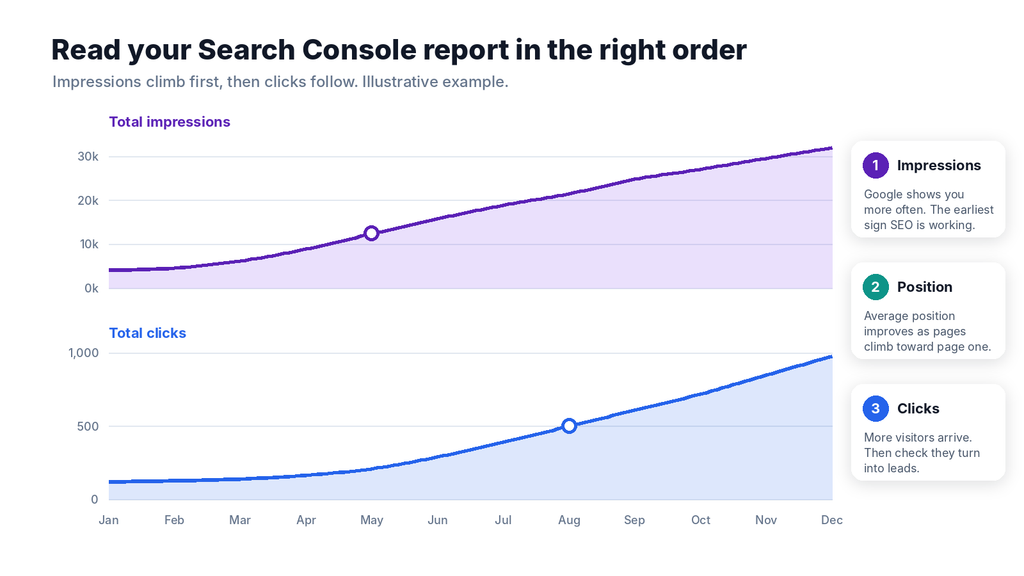
- Impressions: How often your site appeared in search results. Rising impressions are often the earliest sign that SEO is working, showing up weeks or months before clicks catch up.
- Clicks: How many people actually visited your site from search.
- Average CTR (click-through rate): The percentage of impressions that became clicks.
- Average position: Where you typically appear. This number can be noisy, so watch the trend rather than the exact figure.
A healthy pattern: Impressions rise first, then average position improves, then clicks follow. If impressions are climbing but clicks aren’t, that’s a signal your page titles and meta descriptions need work. A good agency will notice and fix this.
One modern nuance worth knowing: AI-generated answers at the top of Google can answer some questions directly, which may lower click-through rates on informational searches even when you’re ranking well. A sharp SEO partner will explain this rather than hide it, and will shift strategy toward searches where people still need to click.
This is the sign that matters most. Traffic and rankings are means to an end. The end is revenue.
4. Organic Search Is Generating Leads and Sales
How to measure it:
- Set up conversion tracking. In GA4, mark form submissions, phone-number clicks, purchases, booking completions and other valuable actions as key events. Your agency should help with this, and if they haven’t, that alone tells you something.
- Filter conversions by channel. Look at how many key events came from organic search versus paid ads, social or direct traffic.
- Use call tracking. If phone calls drive your business, a call-tracking number for organic visitors makes results far easier to attribute.
- Ask your sales team. Add “How did you hear about us?” to forms and intake calls. “I found you on Google” is valuable data.
What good looks like: A steady rise in leads or sales from organic search over 6–12 months, and a cost per lead that compares well to your paid channels. Over time, SEO usually becomes one of the most cost-effective sources of customers because you aren’t paying per click.
The bottom-line question: If you stopped paying your SEO company today, would you lose leads? If you honestly can’t tell, your tracking isn’t set up properly, and that’s worth fixing before anything else.
5. Your Site’s Technical Health Is Measurably Better
Technical SEO is the plumbing of your website. Nobody notices it when it works, but when it’s broken, nothing else performs.
Signs of real technical progress:
- Indexing issues are shrinking. In GSC, the Pages report shows which pages are indexed and why others aren’t. Fewer errors over time is a good sign.
- Core Web Vitals are passing. These measure loading speed, responsiveness and visual stability. GSC has a dedicated report showing which URLs are rated “Good,” “Needs improvement” or “Poor.”
- Broken links and redirect chains are fixed.
- The site works well on mobile. Google primarily uses the mobile version of your site for ranking.
- Structured data (schema) has been added where relevant, helping search engines understand your business, products, reviews and FAQs.
What you should ask for: A before-and-after view. “We fixed 47 crawl errors, improved mobile load time from 5.8 to 2.1 seconds, and resolved 120 duplicate title tags” is a meaningful update. “We did technical optimization this month” is not.
6. You Can See the On-Page Work
On-page SEO is the work done directly on your pages: titles, headings, content, images, internal links and how well each page matches what searchers want. Unlike some technical fixes, much of this is visible if you look.
How to verify on-page work yourself:
- Check your page titles. Search your site on Google (type
site:yourdomain.com) and look at the blue headlines. Are they descriptive and keyword-relevant, or are half of them just “Home” and “Services”? - Read your key service pages. Are they more thorough and helpful than before? Do they answer real customer questions?
- Look at headings. Pages should have a clear H1 and logical H2/H3 structure.
- Check images. Are they compressed for speed, with descriptive alt text?
- Look for internal links. Important pages should link to each other in sensible ways, helping both visitors and search engines move through your site.
If your agency claims to be doing on-page SEO but your pages look identical to six months ago, ask for a page-by-page log of changes. Good agencies keep one.
7. You’re Earning Quality Backlinks, Not Just More Backlinks
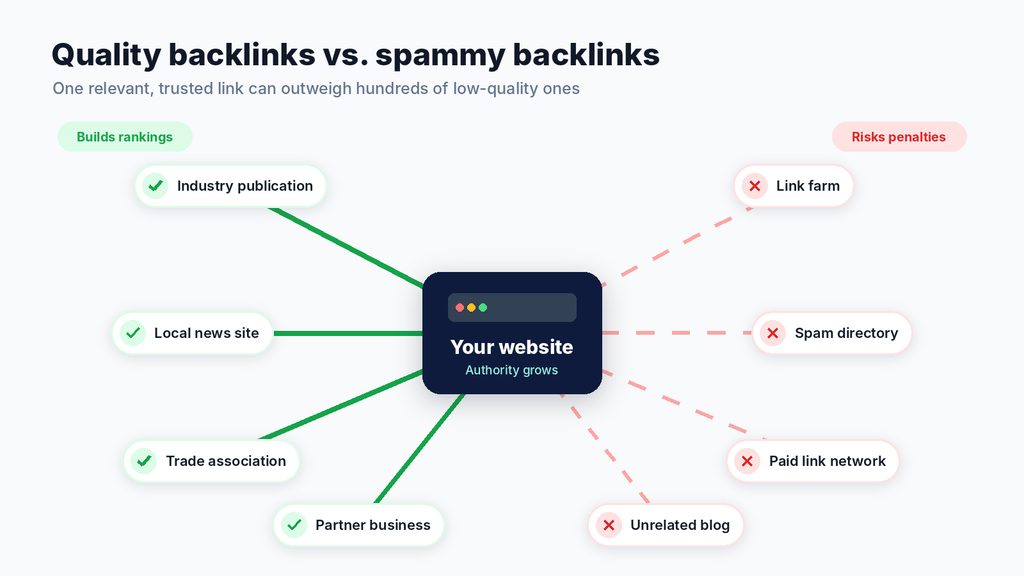
Backlinks, meaning links from other websites to yours, remain one of Google’s strongest ranking signals. But quality matters far more than quantity. One link from a respected industry publication or local news site can outweigh hundreds of links from low-quality directories.
What healthy link building looks like:
- Links from relevant websites in your industry or region
- Links from sites with real audiences and real traffic
- Links placed naturally within content, not stuffed into footers or link farms
- A steady, natural pace of new links over time rather than sudden spikes
- Variety: mentions in articles, partner pages, guest contributions, local organizations, industry associations
How to check: Ask for a monthly list of the actual URLs where links were earned. Then visit a few. Are they real websites a person would read? Or are they thin pages crammed with links to unrelated businesses?
Red flag: “We built 500 backlinks this month.” Mass link building is usually low-quality or spammy, and it can actively hurt you. Google has become very good at ignoring or penalizing manipulative links.
Strong off-page SEO goes beyond links, too. It includes brand mentions, reviews, citations in local directories, and building genuine authority in your space, so ask your agency how they approach the full picture.
8. Your Local Visibility Is Growing (for Local Businesses)
If you serve customers in a specific city or region, local SEO may be the most important part of your campaign. When someone searches “dentist near me” or “roofing company in [your city],” the map results at the top of the page often get the most clicks.
Signs your local SEO is working:
- Your Google Business Profile is complete and active, with accurate hours, categories, services, photos and regular posts
- Your profile insights are rising: more calls, website clicks, direction requests and profile views
- You appear in the local “map pack” for more of your key service-plus-location searches
- Reviews are growing steadily, and your agency is helping you build a system to request and respond to them
- Your business name, address and phone number are consistent across directories, review sites and social platforms
A quick self-test: Search your top three services plus your city name. Do you appear in the map results? Does your position change depending on where in the city you search? A good agency can show you a “local grid” report mapping your visibility across your service area.
9. You’re Showing Up in AI-Powered Search
Search is changing. People now get answers from AI Overviews in Google, from chat assistants, and from AI-powered search tools. Forward-thinking SEO companies are already working to make sure your business appears in these answers too.
What this looks like in practice:
- Your content clearly answers specific questions in a well-structured way
- Your brand is mentioned and cited across reputable sites, which AI systems tend to rely on
- Your business information is consistent and trustworthy everywhere it appears
- Your agency monitors whether your brand appears when relevant questions are asked in AI tools
You don’t need to obsess over this, and the measurement tools here are still maturing. But if your agency has never mentioned AI search, ask them about their approach. Their answer will tell you a lot about whether they’re keeping up with the industry.
10. Communication Is Clear, Proactive and Honest
The final sign isn’t a metric. It’s how your agency behaves. The best SEO partners:
- Explain results in plain language, tying them back to your business goals
- Tell you what they did, why, and what’s next, with a written plan for the coming month
- Share bad news openly. If traffic drops after a Google update, they tell you, explain what they think happened, and present a recovery plan
- Give you full access to your Search Console, Analytics and any tools tracking your site
- Respond within a reasonable time when you have questions
- Make recommendations, including ones that require action on your side, like approving content or fixing a booking form
If you dread your monthly call because it’s 40 minutes of jargon that leaves you more confused, that’s a problem in itself. An agency that can’t explain its work clearly may not have much work to explain.
Red Flags: Signs Your SEO Company Isn’t Working
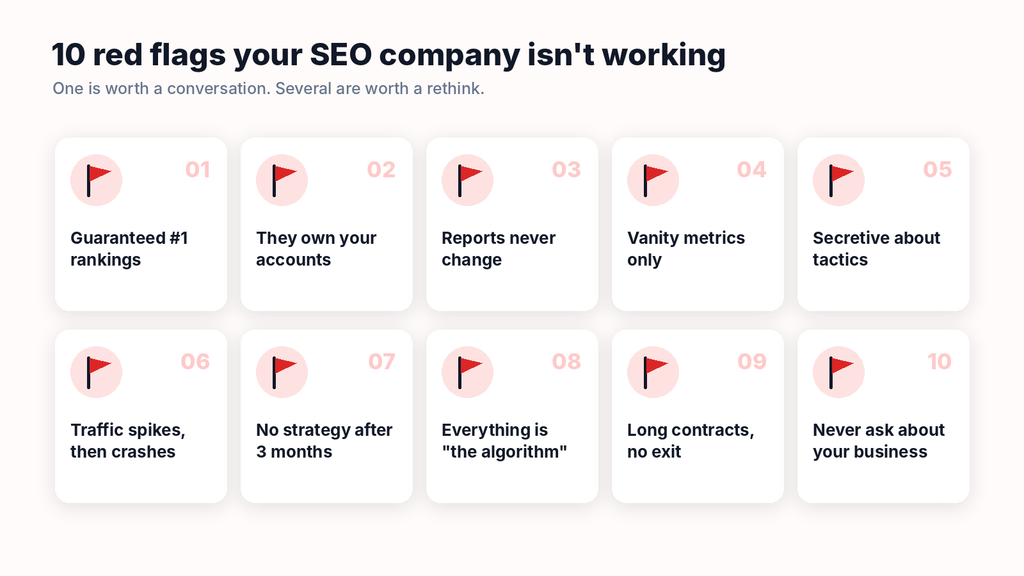
Just as important as knowing the positive signs is spotting the warning ones. Any one of these is worth a conversation. Several together are worth a serious rethink.
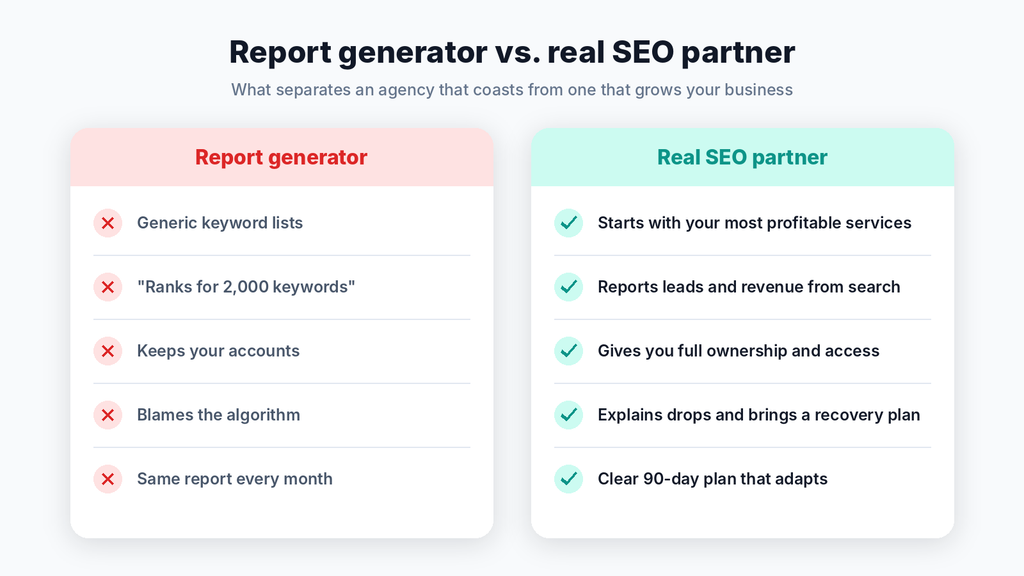
🚩 Guaranteed rankings. No legitimate SEO company can guarantee a #1 position. Google itself warns businesses about anyone making that promise. Guarantees usually mean either spammy tactics or a contract designed around keywords nobody searches for.
🚩 They own your accounts. Your Google Business Profile, Search Console, Analytics and website should be owned by you, with the agency granted access. If an agency set everything up under their own accounts and won’t transfer ownership, you’re being locked in.
🚩 Reports that never change. If every month’s report has the same template, the same vague bullet points (“optimized meta data,” “monitored rankings”) and no specific deliverables, there may not be much happening.
🚩 Vanity metrics only. Reports full of keyword counts, “domain authority” scores and total backlinks, but no traffic data, no conversions and no connection to revenue.
🚩 Secretive about tactics. “We have a proprietary method we can’t share” is often code for tactics that could get your site penalized. You have the right to know what’s being done to your website.
🚩 Sudden traffic spikes followed by crashes. This pattern can point to manipulative link building or low-quality content that worked briefly before Google caught on.
🚩 No strategy after three months. If you can’t describe your SEO strategy in two sentences after a full quarter, either the agency hasn’t built one or hasn’t shared it.
🚩 Blaming everything on “the algorithm.” Algorithm updates are real, but they’re not an excuse for months of flat results without a plan.
🚩 Long contracts with no exit. A confident agency lets results keep clients. Being locked into a 24-month contract with steep cancellation fees is a sign they may not expect you to stay voluntarily.
🚩 They never ask about your business. Good SEO requires understanding your customers, margins, best services and goals. If your agency has never asked which services are most profitable, they’re optimizing blindly.
12 Questions to Ask Your SEO Company
The fastest way to find out whether your SEO company is working is to ask direct questions. Here are twelve that cut through the noise. Pay attention not just to the answers, but to how comfortable your agency is giving them.
- “What specific work did you do on our site last month?” You want a concrete list: pages optimized, content published, technical issues fixed, links earned.
- “Which of our priority keywords moved, and why?” Good agencies connect ranking changes to specific actions.
- “How many leads or sales came from organic search this quarter, compared with last year?”
- “What’s the biggest thing holding back our rankings right now?” A strong agency has a clear answer, whether it’s site speed, thin content, weak authority or competitor strength.
- “What’s the plan for the next 90 days?”
- “Can you show me the backlinks you’ve earned for us?”
- “Do we have full ownership and admin access to all our accounts?”
- “How are you adapting our strategy for AI search results?”
- “Which competitors are beating us, and what are they doing differently?”
- “What do you need from us to get better results?” SEO is a partnership. If they never ask anything of you, they may not be pushing hard enough.
- “If results stay flat for another three months, what would you change?”
- “How do you measure success for our account?” The answer should tie to business outcomes, not just rankings.
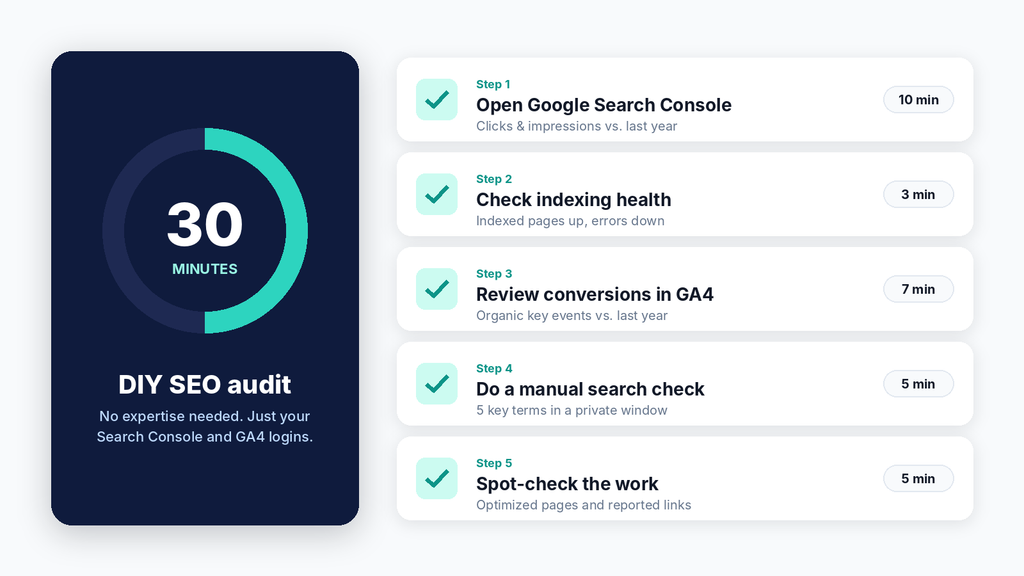
How to Audit Your SEO Company’s Results in 30 Minutes
You don’t need to be an expert to run a basic check. Set aside half an hour, grab your login details, and work through these steps.
Step 1: Open Google Search Console (10 minutes). Go to the Performance report and compare the last 6 months with the previous period, and then year over year if you have the data. Note whether total clicks and impressions are trending up. Then click the Pages tab to see which pages gained the most clicks, and the Queries tab to see which search terms are driving traffic. Are these terms related to what you sell?
Step 2: Check indexing health (3 minutes). In GSC, open Indexing → Pages. Is the number of indexed pages stable or growing? Are there large numbers of errors that haven’t been addressed?
Step 3: Review conversions in Google Analytics 4 (7 minutes). Go to Reports → Acquisition → Traffic acquisition. Look at Organic Search sessions and key events. Compare to the same period last year. If key events aren’t set up, write that down. It’s the first thing to fix.
Step 4: Do a manual search check (5 minutes). Open a private browser window and search five of your most important service keywords. Note where you appear in both the regular results and the map results. Compare with what your agency reports.
Step 5: Spot-check the work (5 minutes). Visit two or three pages your agency says it optimized. Do they look improved? Visit two or three backlinks they reported. Are they real, relevant websites?
At the end, you’ll have a simple picture: Is visibility growing? Is the right traffic growing? Is it turning into business? If the answer to all three is yes, your SEO is working. If any answer is no, you know exactly where to focus the next conversation.
What to Do If Your SEO Isn’t Working
If your review turns up problems, don’t panic, and don’t necessarily fire your agency on the spot. Work through this process instead.
1. Rule Out Unrealistic Expectations
If you’re only two or three months in, flat results may simply mean the campaign is still in its foundation phase. Check whether foundation work has actually been delivered: audits, strategy, technical fixes. If it has, patience may be warranted.
2. Rule Out Problems on Your Side
Sometimes the bottleneck is internal. Has your team been sitting on content approvals for months? Did your developer reject the speed fixes? Did a website redesign wipe out optimized pages? Be honest about whether the agency has had what it needed.
3. Have a Direct Conversation
Share what you found. Ask the questions above. Request a written plan with specific actions and milestones for the next 60–90 days. A good agency will welcome the accountability.
4. Set Clear, Measurable Targets
Agree on what success looks like: for example, “increase organic leads by 25% over the next six months” or “reach page one for these 10 priority keywords.” Put it in writing.
5. Consider Whether the Scope Matches Your Goals
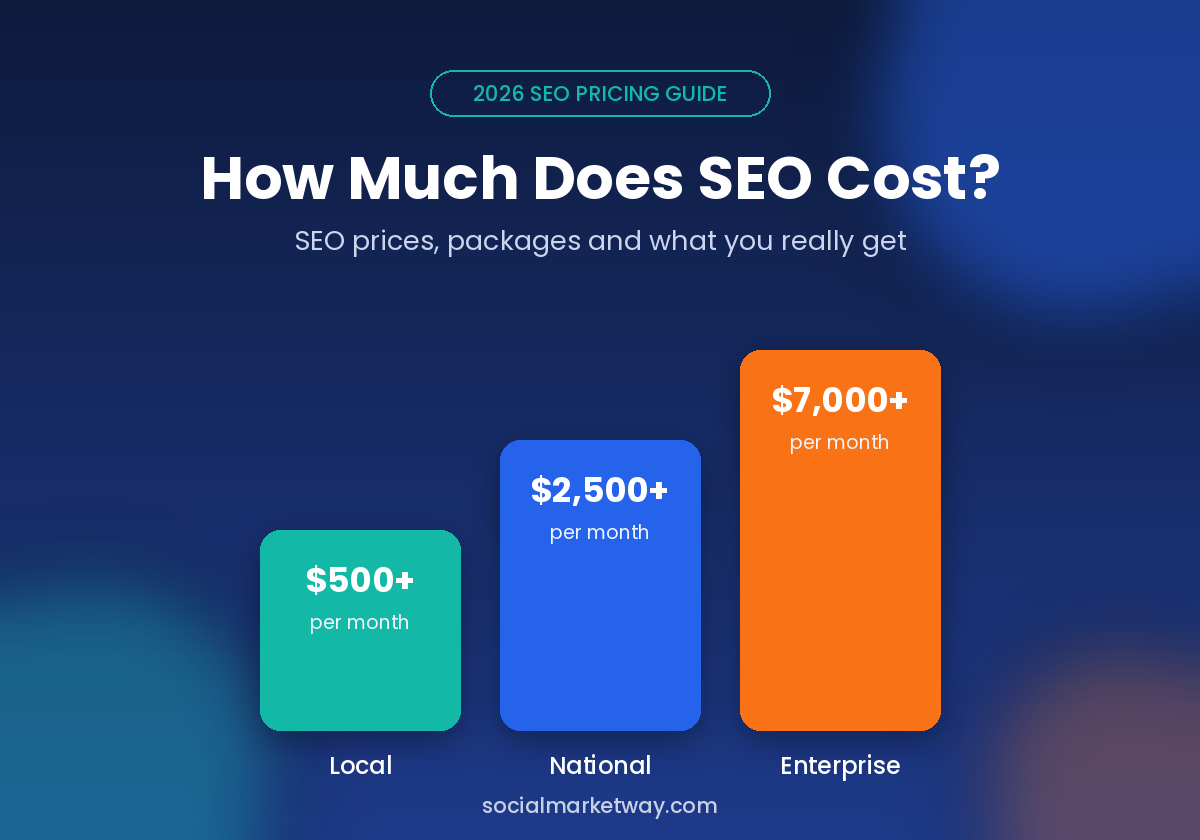
Sometimes the agency is doing good work, but the budget simply doesn’t match the competition. Ranking a local bakery in a small town takes far less effort than ranking a personal injury law firm in a major city. If you’re in a competitive market on a minimal plan, results will be slow no matter how skilled the team is. Reviewing different SEO packages side by side can help you see whether your current scope includes enough content, link building and technical work to compete.
6. Know When It’s Time to Move On
If you’ve had the conversation, set clear targets, given a fair window, held up your end, and still see no meaningful progress, it’s time to find a new partner. Before leaving, make sure you:
- Own all your accounts and have admin access
- Have copies of all content, reports and strategy documents
- Know what links were built and where
- Understand any changes made to your website
What a Great SEO Partner Looks Like
To finish on a positive note, here’s what you should expect from an SEO company that’s truly working for you.
They start with your business, not with keywords. They want to know your most profitable services, your ideal customers, your competitors and your growth goals.
They build a clear strategy that covers the full picture: technical health, on-page optimization, content, off-page authority, local visibility and, increasingly, visibility in AI search.
They report on what matters. Their reports connect rankings to traffic, traffic to leads, and leads to revenue, in plain language you can share with your team.
They’re transparent. You own your accounts, you see the work, and you know exactly what you’re paying for.
They adapt. When Google changes, when competitors move, or when something isn’t working, they adjust the plan and explain why.
They treat SEO as a long-term growth engine, not a monthly checklist.
If you want a team that works this way, from technical audits and on-page optimization to authority building and transparent reporting, take a look at our full range of SEO services and see how a results-focused approach can turn organic search into one of your most reliable sources of customers.
Final Thoughts
Knowing whether your SEO company is working comes down to three questions:
- Is your visibility growing? Impressions, rankings for priority keywords and local map presence.
- Is the right traffic growing? Organic visitors to the pages that sell your products and services.
- Is that traffic turning into business? Leads, calls, bookings and sales you can trace back to organic search.
Add a fourth question about the relationship itself, is your agency transparent, proactive and easy to understand?, and you have everything you need to judge whether your investment is paying off.
SEO takes patience, but patience shouldn’t mean blind faith. With the right metrics, the right questions and a partner who’s genuinely invested in your growth, you’ll never have to wonder again whether your SEO is working. You’ll be able to see it.