

Local SEO for Small Business: Playbook That Turns Searches Into Calls

Why local search is where your next customers are
When someone types “plumber near me” or “best dentist in Miami,” they are not browsing. They have a problem and want it solved today. The business that appears first in the map results usually gets the call.
That is why local SEO for small business is one of the highest-return investments a local company can make. You are not paying for every click like with ads. You are earning a permanent spot in front of people who are ready to buy.
Most guides on this topic stop at “claim your Google profile and get reviews.” This one goes further. Below is the exact system our team at Social Market Way uses to move local businesses into the map pack and, more importantly, to turn that visibility into booked jobs.
Here is what you will learn:
- How Google decides which businesses show up in the map pack
- How to set up a Google Business Profile that actually converts
- How to find local keywords with real search volume
- How to structure service and location pages
- How to build citations and local links that move rankings
- How to run a review system on autopilot
- How to turn local traffic into phone calls and form fills
- A 90-day action plan you can start today
Whether you run a single-location shop or manage local seo for businesses with several branches, every step below applies.
How Google decides who shows up in the map pack
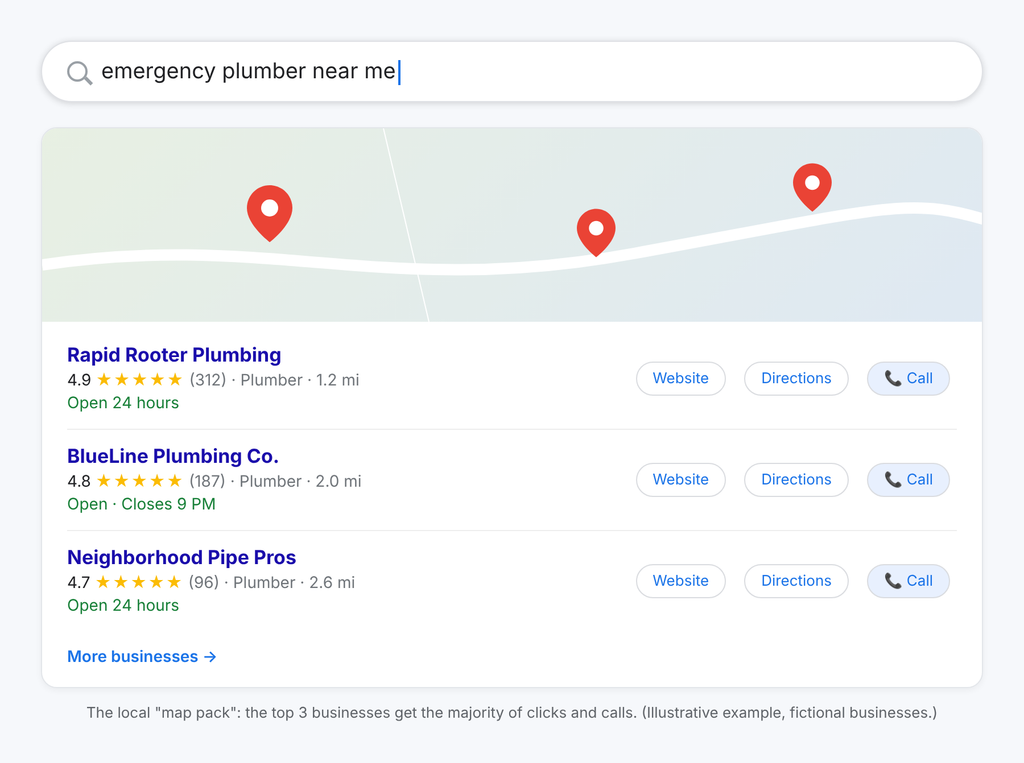
Type almost any service plus a city into Google and you will see a map with three businesses under it. That box is the “map pack,” and it sits above the regular organic results. For most service businesses, it is the most valuable real estate on the internet.
Google has said publicly that local results are based on three things: relevance, distance and prominence (Google Business Profile Help). Understanding these three is the foundation of seo for local search.
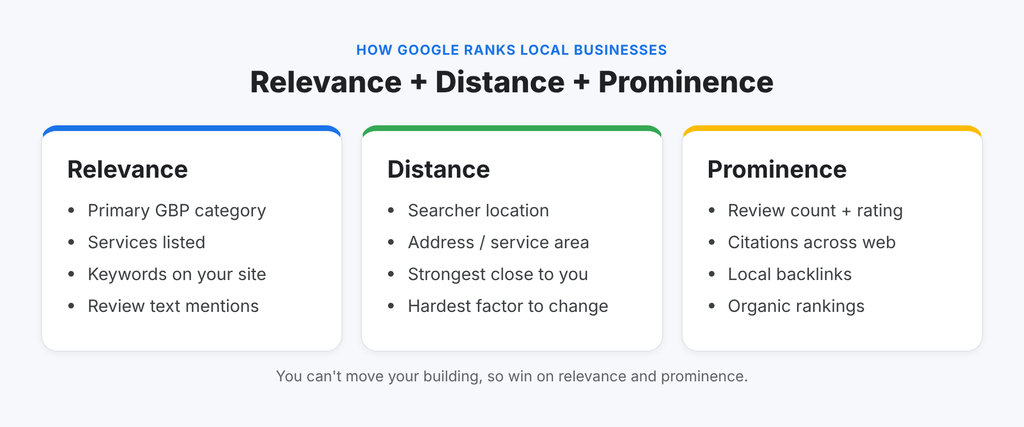
Relevance is how well your business matches what was searched. Your Google categories, listed services, website content and even the words customers use in reviews all feed it.
Distance is how far you are from the searcher, or from the location in their search. You cannot change where your office is, so do not waste energy fighting this one.
Prominence is how well known and trusted your business is. Review count and rating, citations, local backlinks and your regular organic rankings all count here.
Here is the key insight most owners miss: distance is fixed, so the businesses that win are the ones that out-work competitors on relevance and prominence. Every tactic below pushes one of those two levers.
Local SEO vs. traditional SEO
Traditional SEO tries to rank a website nationally for broad topics. Local business search engine optimization has a narrower and more profitable goal: show up when people near you are ready to hire. It uses all the same fundamentals (good content, technical health, links), plus local-only signals like your Google Business Profile, citations and reviews. If you want the full picture of how both fit together, our SEO services page breaks it down.
Step 1: Build a Google Business Profile that wins calls
Your Google Business Profile (GBP) is the listing that appears in the map pack and on Google Maps. For many customers, it is the first and only thing they see before calling. Treat it like your most important sales page, because it is.
The profile setup checklist
- Claim and verify the profile. Unverified profiles rank poorly and can be edited by anyone.
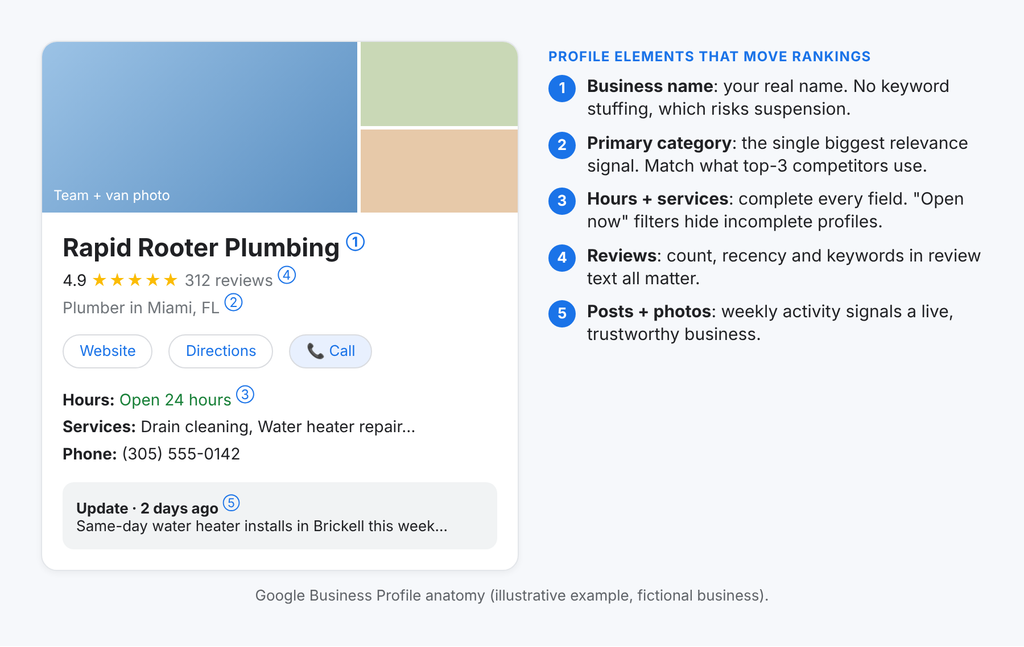
- Choose the right primary category. This is the single strongest relevance signal you control. Search your main service, open the top three competitors, and note which category they use. Add secondary categories only for services you actually offer.
- Use your real business name. Adding keywords like “Best Plumber Miami” to the name violates Google’s guidelines and can get the listing suspended.
- Fill out every service. Add each service with a short description. These help you show up for specific searches like “tankless water heater install.”
- Set accurate hours, including holidays. Searches like “open now” quietly filter out businesses with missing or wrong hours.
- Write a description for humans. Say who you help, where, and why you are different, in plain language. Mention your main city and service once.
- Upload real photos every month. Team, vehicles, storefront, before-and-after jobs. Real photos build trust far better than stock images.
- Post weekly. Use Google Posts for offers, recent jobs and seasonal tips. It keeps the profile fresh and gives searchers a reason to choose you.
- Seed the Q&A. Add the five questions customers ask most on the phone, with clear answers.
- Add UTM tracking to your website link so you can see in analytics exactly how many visits and leads come from the profile.
Service-area businesses
If you travel to customers (plumbers, cleaners, landscapers), you can hide your street address and set a service area instead. You will still rank, but strongest near your verified address, which is why the website and citation work below matters so much for reaching surrounding towns.
A well-built profile is the fastest win in seo for local businesses. Fixing categories, services and photos alone can lift visibility within weeks. If you want us to audit yours, our local SEO team can do it for you.
Step 2: Find local keywords people actually search
Guessing keywords is how small businesses end up ranking for terms nobody types. Real keyword research shows you the exact phrases customers use, and how many people use them each month.
Start with Google’s own suggestions
Type your main service and city into Google and stop before pressing enter. Every suggestion that appears is a phrase real people search. Write them all down, then repeat with “near me,” “cost,” “emergency” and each neighborhood you serve.
Then check search volume in a keyword tool
Next, put that list into a tool like Semrush or Ahrefs to see monthly search volume. Here is a real example from the cluster around this very topic:
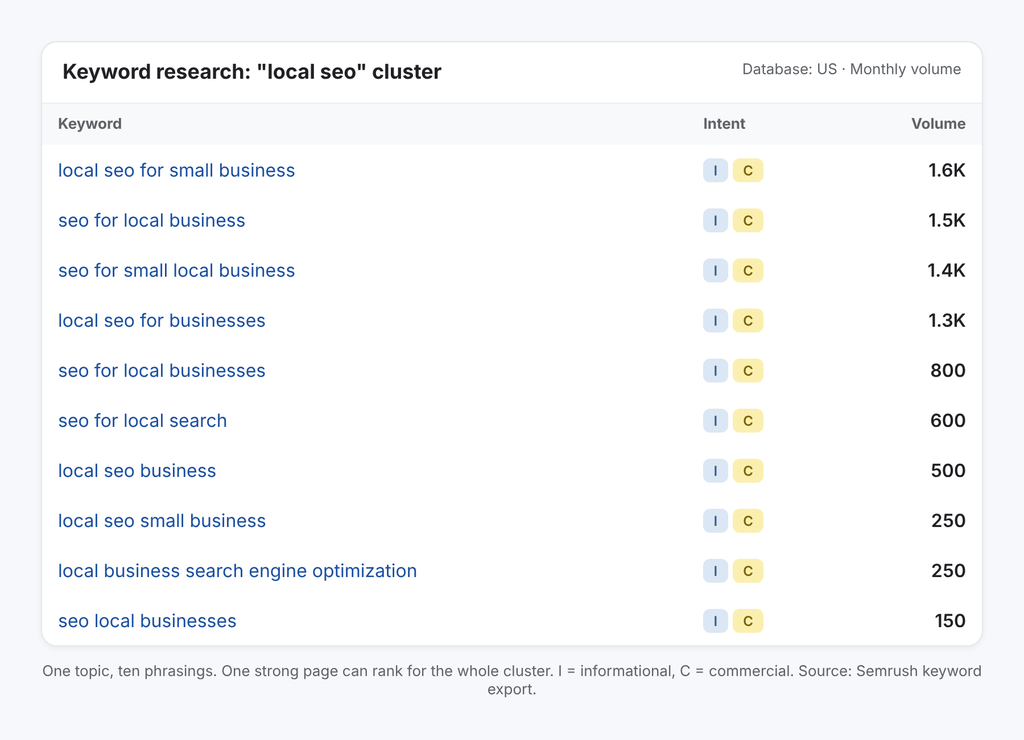
Notice two things. First, ten phrasings of the same idea add up to over 8,000 searches a month, and one strong page can rank for all of them. Second, the tool marks intent: “commercial” terms are searched by people comparing providers, which makes them more valuable than purely informational ones.
Sort keywords by money, not just volume
Group what you find into three buckets:
| Bucket | Example | What to build |
|---|---|---|
| Ready to hire | “emergency plumber miami” | Service + city page with a call button |
| Comparing options | “best plumber in coral gables” | Reviews, proof, pricing, location pages |
| Researching | “why is my water heater leaking” | Helpful blog post that links to the service page |
Start with the “ready to hire” bucket. A keyword with 90 searches a month from people with a burst pipe is worth more than 5,000 searches from people reading for curiosity. That is the mindset shift that makes seo for local business profitable instead of just busy.
Step 3: Build service and location pages that rank and convert
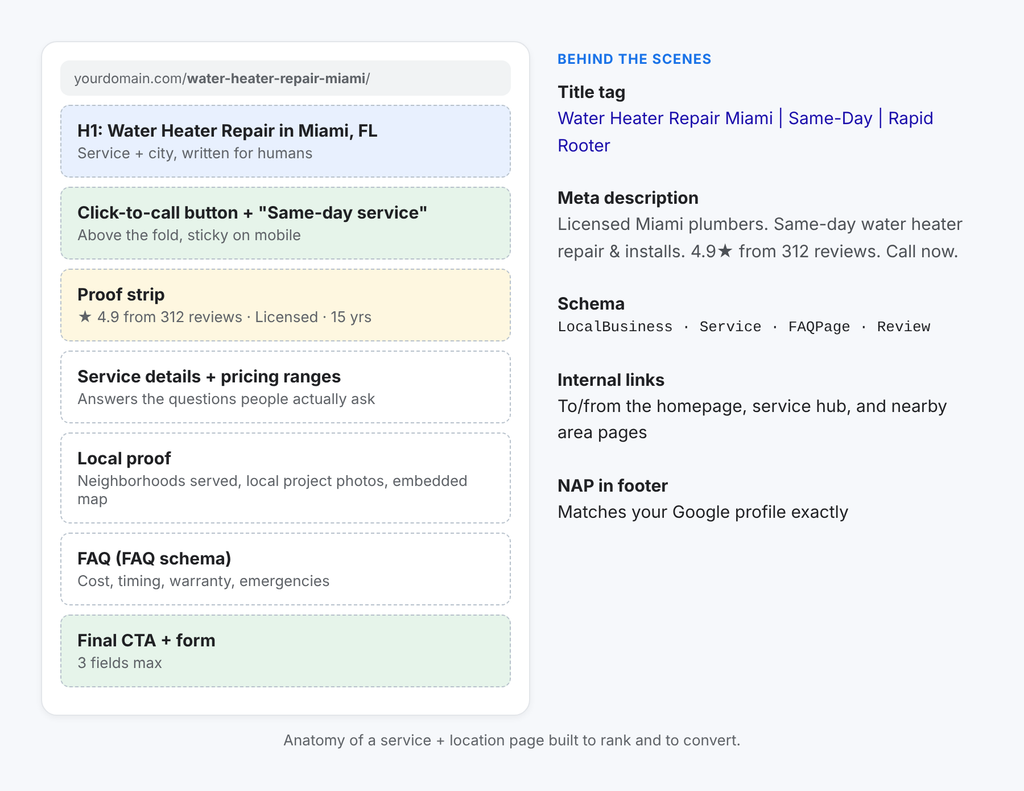
Your Google profile gets you into the map pack. Your website is what convinces Google you deserve to stay there, and convinces the customer to call. The biggest mistake we see is a single “Services” page listing everything. Google cannot rank one page for twelve different services in five different towns.
One page per core service
Give each main service its own page: “Water Heater Repair,” “Drain Cleaning,” “Sewer Line Replacement.” Each page targets one service and your main city, and goes deep enough to answer real questions about cost, timing and process.
Location pages done right
If you serve several towns, create a page for each important one. But do not copy one page and swap the city name; Google treats that as thin, duplicate content. Each location page needs something genuinely local: projects completed there, neighborhood-specific problems (older homes, hurricane damage, hard water), reviews from customers in that area, and directions or a map.
The on-page essentials
- Title tag: Service + city + a reason to click. Keep it under about 60 characters.
- H1: A clear, human headline that includes the service and location.
- URL: Short and descriptive, like /water-heater-repair-miami/.
- NAP in the footer: Name, address and phone identical to your Google profile.
- Embedded Google Map on your contact and location pages.
- Internal links between your service pages, location pages and blog posts so authority flows to the pages that make money.
- Fast mobile load. Most local searches happen on phones, and slow pages lose callers before they ever see your number.
Schema markup: speak Google’s language
Schema is code that tells search engines exactly what your business is, where it is and what it offers. At a minimum, add LocalBusiness schema (or a more specific type like Plumber or Dentist) with your NAP, hours, geo-coordinates and service area. Add FAQPage schema to pages with FAQs and Service schema to service pages. It will not rank you on its own, but it removes guesswork for Google.
These details are where most DIY efforts at local seo for small business fall short. If you would rather have it handled properly, see how our on-page SEO service works.
Step 4: Clean up and build your citations
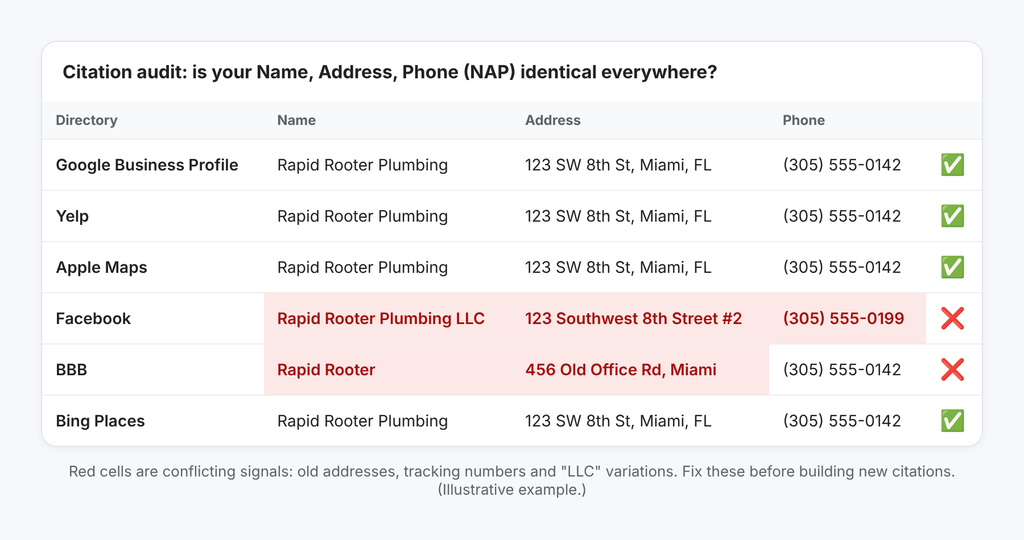
A citation is any online mention of your business name, address and phone number (NAP): Yelp, Apple Maps, Bing Places, Facebook, BBB, industry directories and your local chamber of commerce. Google cross-checks these sources to confirm you are a real, established business at a real location.
When the details match everywhere, that trust grows. When they conflict, Google gets mixed signals and is less confident putting you in front of customers.
The most common citation problems
- An old address from before you moved
- A call-tracking number listed instead of your main number
- Name variations: “LLC,” “& Sons,” abbreviations
- Duplicate listings on the same site
- Suite numbers written three different ways
How to fix and build citations
- Pick one official version of your NAP and write it down. Use it character for character everywhere.
- Audit what already exists. Search your business name, old addresses and old phone numbers to find every listing.
- Fix the big ones first: Google, Apple Maps, Bing, Yelp, Facebook, BBB and the major data aggregators that feed smaller sites.
- Then add industry and local directories: Angi or Houzz for home services, Healthgrades for medical, Avvo for legal, plus your city’s chamber of commerce and local business associations.
- Re-check every six months. Directories sometimes overwrite your fixes with old data.
Quality beats quantity here. Fifty accurate, relevant citations do more than 300 spammy directory listings. It is unglamorous work, but it quietly supports everything else on this list.
Step 5: Turn reviews into a ranking and sales machine
Reviews do double duty. They are a major prominence signal for Google, and they are the number one thing a stranger reads before deciding whether to call you. A business with 300 recent reviews will usually beat a business with 30 old ones, even if the second is closer.
The problem is that most happy customers never leave a review unless they are asked, at the right moment, in the easiest possible way.
A review system that runs itself
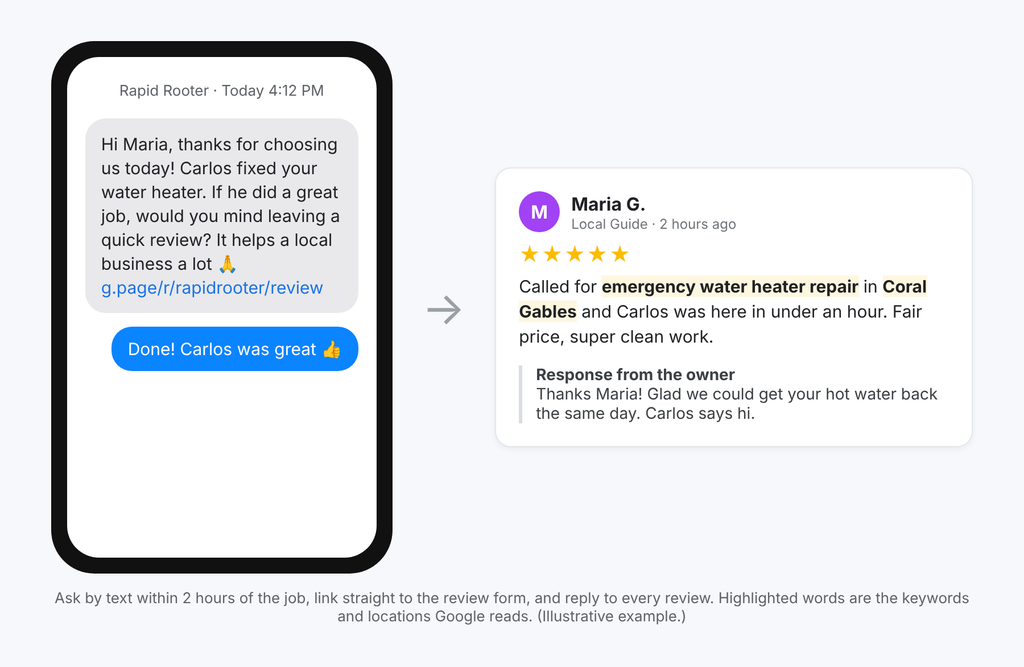
- Get your direct review link from your Google Business Profile (the “Ask for reviews” button).
- Ask within a couple of hours of finishing the job, while the customer is still happy. A text message gets far more responses than an email sent days later.
- Make it personal. Use their name and the technician’s name. People review people, not companies.
- Let the details flow naturally. When customers mention the service and their neighborhood, it adds relevance. Never script or pay for reviews, and never gate them by only asking happy customers; both break Google’s rules.
- Reply to every review within 48 hours. Thank positive reviewers by name and mention the service. It shows future customers you care.
- Handle negative reviews calmly. Acknowledge, apologize where it is fair, and offer to fix it offline. A professional reply to a bad review often wins more trust than a page of perfect ones.
Aim for a steady pace, not a spike
Google and customers both look at recency. Ten reviews every month for a year looks far healthier than 100 reviews in one week and then silence. Build the ask into your job completion process so it happens every time, automatically.
Step 6: Earn local links your competitors can’t copy
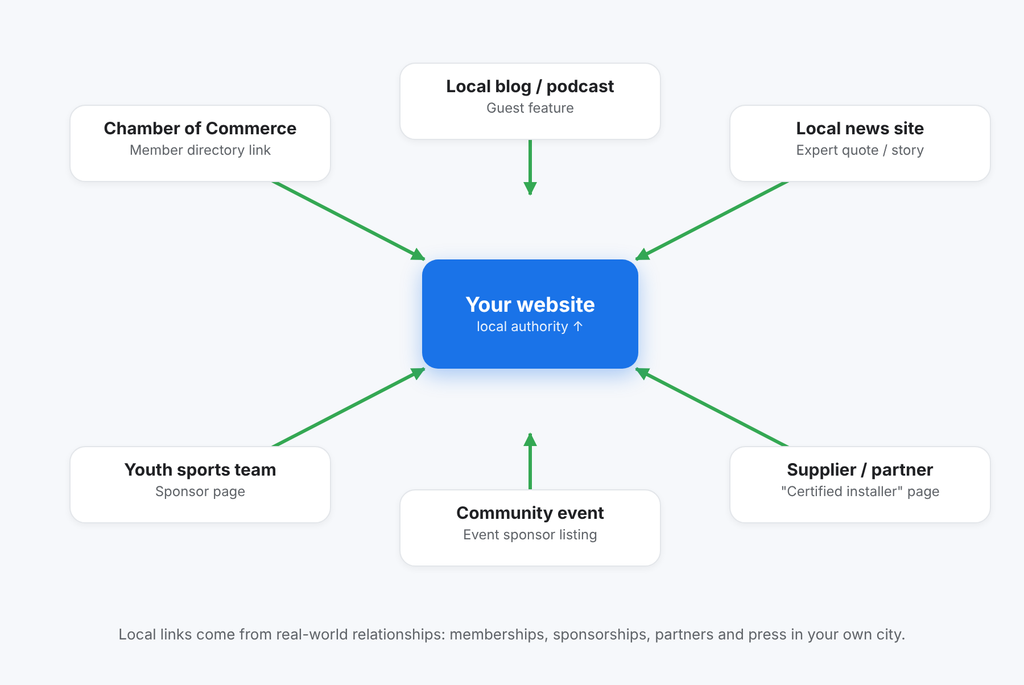
Backlinks, other websites linking to yours, are still one of the strongest prominence signals. For local rankings, a link from your city’s newspaper or chamber of commerce is often worth more than a link from a big national site with no connection to your area.
The best part: you already have relationships that can turn into links. You just have not asked yet.
Ten local link ideas that actually work
- Chamber of commerce and business associations. Membership usually includes a directory profile with a link.
- Sponsor a youth sports team, school event or charity run. Sponsor pages almost always link to supporters.
- Suppliers and manufacturers. Many have “find a certified installer” or dealer pages. Ask to be listed.
- Partner businesses. A realtor, a home inspector and a plumber all serve the same customers. Create a “trusted partners” page and link to each other.
- Local news and journalists. Offer expert tips when a relevant story breaks (storm prep, tax season, back to school).
- Local blogs and podcasts. Neighborhood bloggers and city podcasts are always looking for guests.
- Host or teach something. A free workshop or class gets listed on community calendars and event sites.
- Scholarships. A small local scholarship earns links from school and community pages.
- Publish local data or guides. “Average home repair costs in Miami” or “Best dog parks in Doral” naturally attract links and shares.
- Unlinked mentions. Search for your business name; when a site mentions you without a link, politely ask them to add one.
What to avoid
Skip paid link packages, private blog networks and “1,000 links for $50” offers. They can trigger penalties that take months to recover from. A handful of real local links will outperform hundreds of fake ones.
Link building is the most time-consuming part of SEO local businesses deal with, and it is where professional help pays off most. Learn how we approach it on our off-page SEO page.
Step 7: Turn local traffic into phone calls (the step everyone skips)
Rankings do not pay the bills. Calls, bookings and walk-ins do. Plenty of businesses reach page one and still wonder why the phone is quiet. The answer is almost always what happens in the first five seconds on their website.
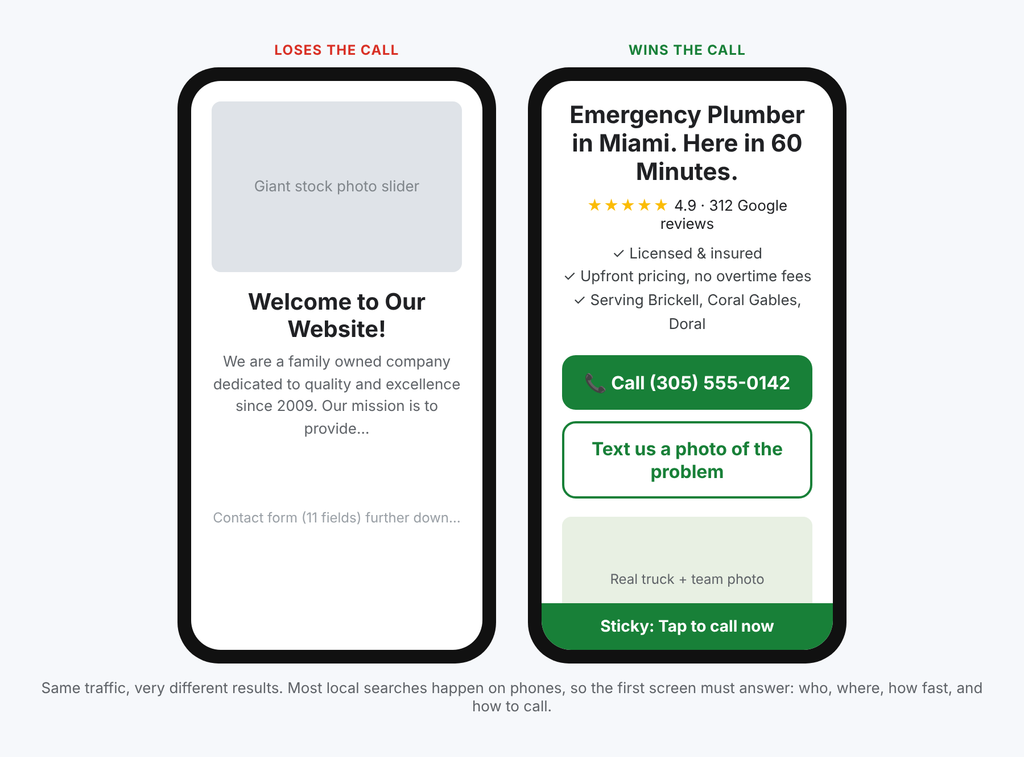
The local conversion checklist
- Headline that matches the search. If someone searched “emergency plumber Miami,” the first thing they read should say exactly that, plus a reason to choose you (“Here in 60 minutes”).
- Click-to-call button above the fold, and a sticky call bar on mobile. Do not make people hunt for your number.
- Proof right away. Star rating, review count, years in business, licenses and guarantees, all visible without scrolling.
- Real photos of your team. People want to know who is coming to their home or who they will meet.
- Short forms. Name, phone and what they need. Every extra field costs you leads.
- Offer a text option. Many people would rather text a photo of the problem than call. Make that easy.
- Show pricing ranges or “starting at” prices where you can. Uncertainty about cost is one of the biggest reasons people hesitate.
- Answer the phone. It sounds obvious, but missed calls are the most expensive leak in local marketing. Use a call answering service or call-back system for after-hours.
Good seo for small local business is not just about getting found. It is about getting chosen. The businesses that win focus on both, and treat their website like a salesperson, not a brochure.
If you want a second set of eyes on how well your site converts local visitors, book a free strategy call with our team. We will show you exactly where leads are leaking.
Step 8: Track what matters (hint: it’s not just rankings)
You cannot improve what you do not measure. But many businesses track the wrong things, like a single ranking checked from their own office. Your ranking changes block by block across your city, and rankings mean nothing if they do not produce calls.
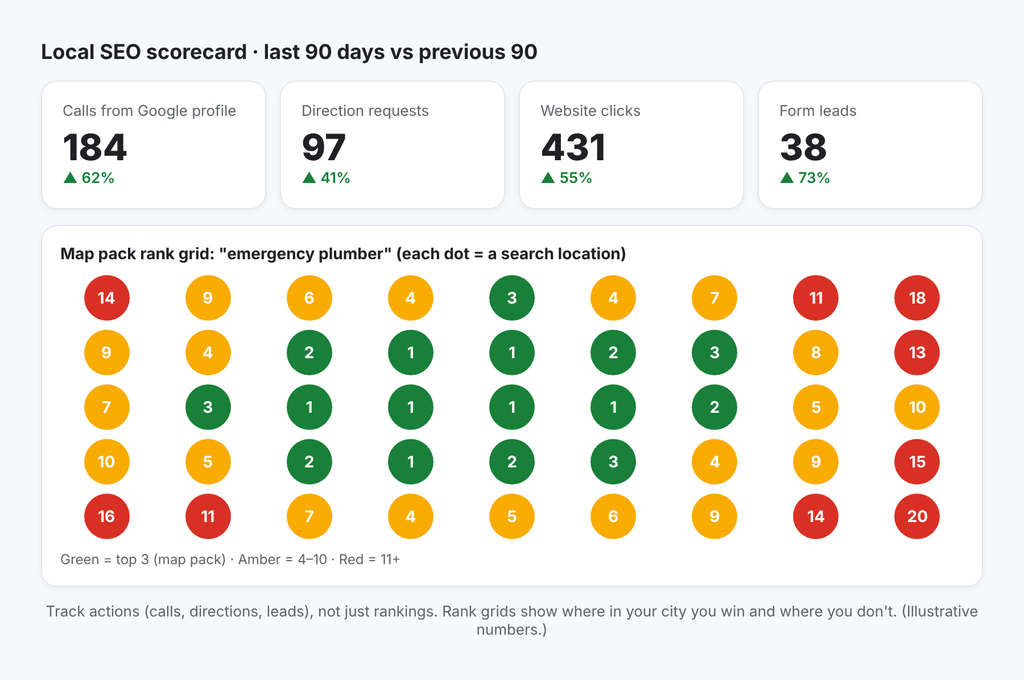
The metrics to watch every month
| Metric | Where to find it | Why it matters |
|---|---|---|
| Calls, direction requests, website clicks | Google Business Profile performance | Direct leads from the map pack |
| Form submissions and tracked calls | Google Analytics 4 + call tracking | Leads from your website |
| Rank grid across your service area | A local rank grid tool | Shows where you win and where you don’t |
| Clicks and queries | Google Search Console | Which keywords bring visitors |
| Review count, rating and velocity | Your Google profile | Your trust trend over time |
The rank grid is especially useful. If you dominate near your office but disappear three miles away, you know exactly where to focus location pages, citations and local links next.
Your 90-day local SEO action plan
Here is how to put everything above into motion without getting overwhelmed.
Days 1–30: Foundation
- Claim, verify and fully complete your Google Business Profile
- Choose your official NAP and fix the top 10 citations
- Research keywords and map one keyword group to each page
- Add click-to-call, reviews and trust signals to your homepage
- Set up Google Analytics 4, Search Console and call tracking
Days 31–60: Build
- Create or rebuild your core service pages
- Launch your review request system and reply to every review
- Add LocalBusiness and FAQ schema
- Start weekly Google Posts and monthly photo uploads
- Join your chamber of commerce and one industry association
Days 61–90: Expand
- Publish location pages for your top two or three service areas
- Secure three to five local links (sponsors, partners, suppliers)
- Publish one helpful local guide that answers a common customer question
- Review your rank grid and lead numbers, then double down on what is working
Local SEO is a compounding investment. Most businesses start seeing movement within the first three months, with stronger results building over six to twelve months as reviews, links and content add up.
Frequently asked questions
How long does local SEO take to work?
Quick wins like fixing your Google profile and citations can show results in a few weeks. Competitive markets usually take three to six months for strong, steady map pack rankings. The timeline depends on your competition, your starting point and how consistently the work is done.
Can a small business do local SEO without an agency?
Yes. Everything in this guide can be done in-house if you have the time. Most owners start themselves, then bring in help when they would rather spend their hours running the business. A good local SEO business partner should be able to show you exactly what they will do each month and how they will report on leads, not just rankings.
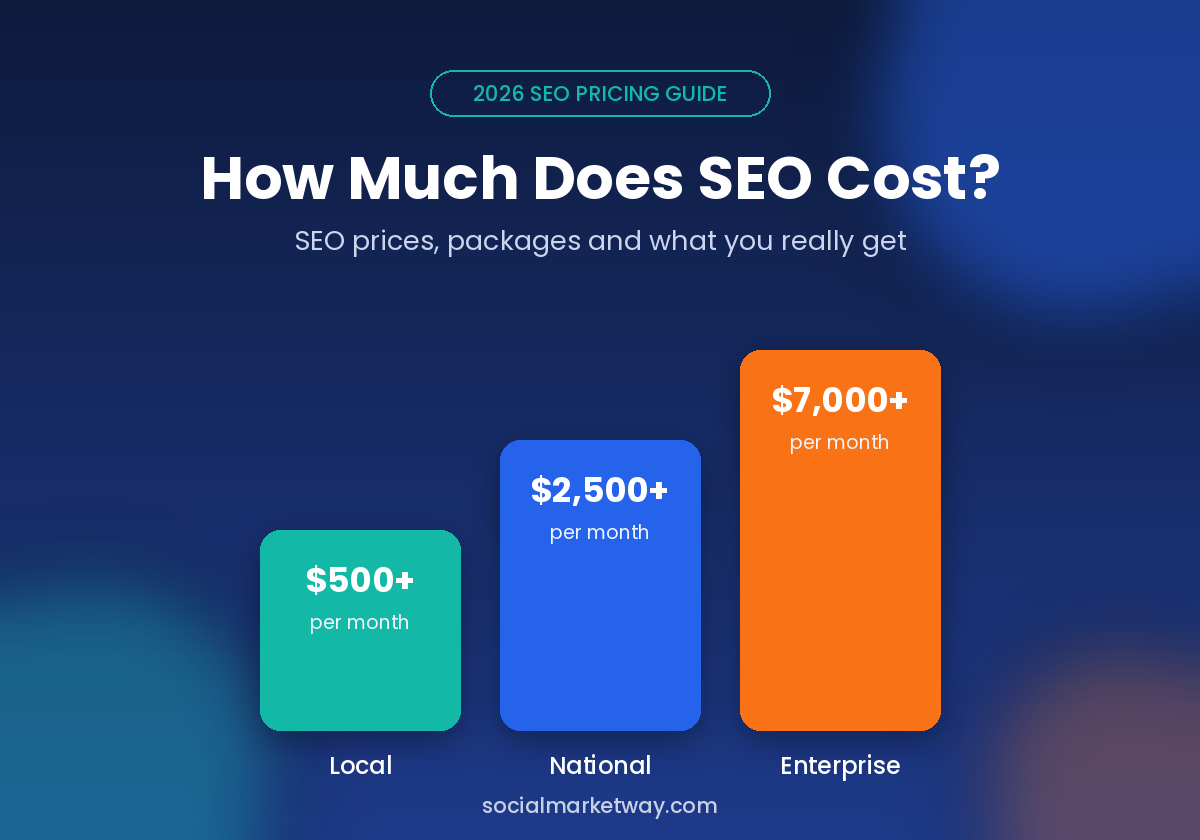
How much does local SEO cost?
It depends on how competitive your market is and how many locations you serve. A single-location business in a smaller town needs far less work than a multi-location brand in a major city. You can compare options on our SEO packages page.
Do I need a physical address to rank in the map pack?
You need a real, verifiable address to create a Google Business Profile, but service-area businesses can hide it from the public. Virtual offices and coworking addresses usually violate Google’s guidelines and can get a listing suspended.
Is local SEO worth it compared to Google Ads?
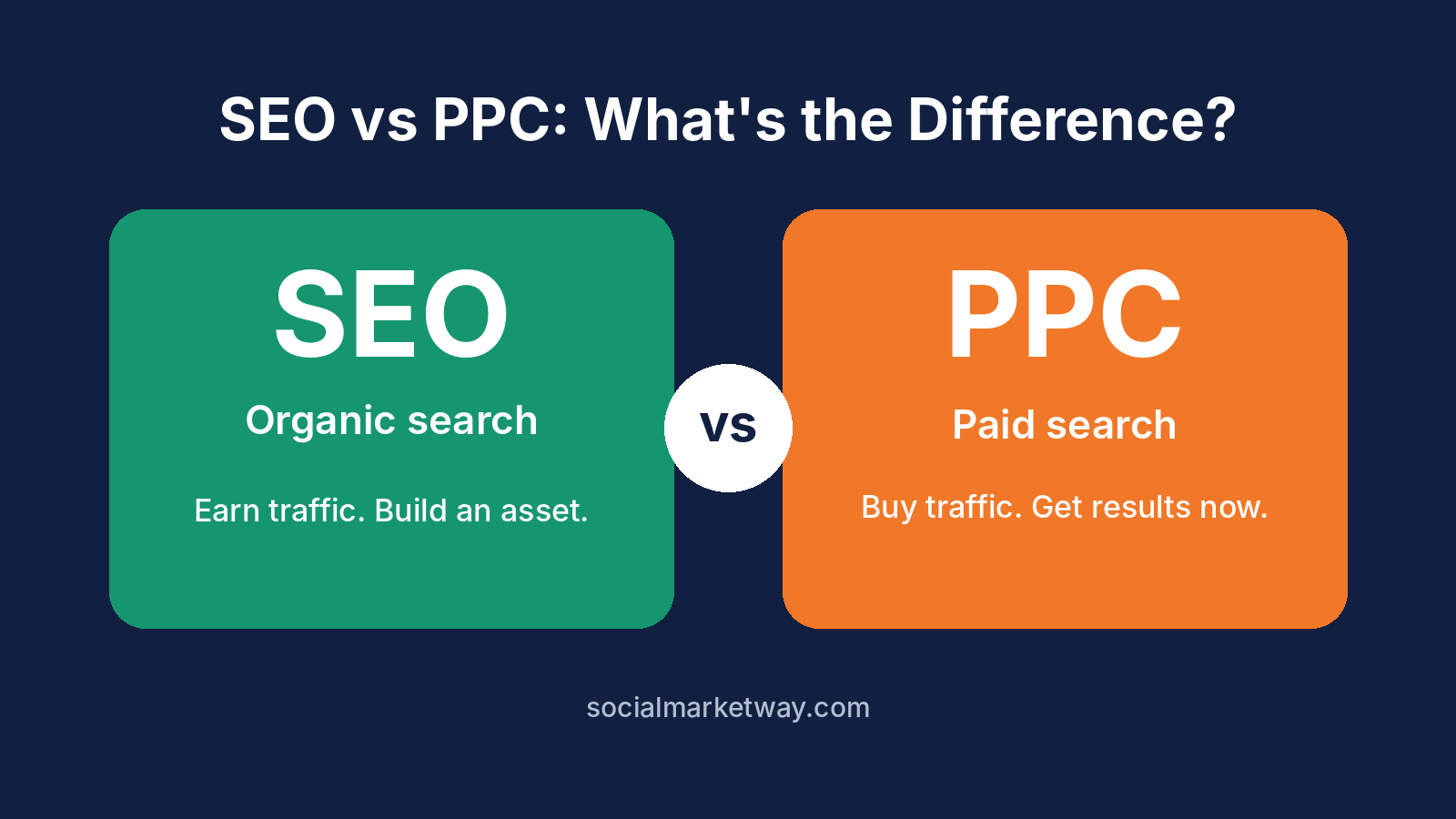
They work best together. Ads give you instant visibility while you pay; local SEO builds visibility you own, and the leads keep coming without paying per click. For most local seo small business budgets, SEO delivers a lower cost per lead over time.
Ready to own your local market?
You now have the same playbook we use for our clients. The difference between businesses that read guides like this and businesses that dominate their market is execution: doing every step, consistently, month after month.
If you would rather spend your time serving customers while we handle the rankings, reviews strategy, links and conversion work, we would love to help. Our team builds local SEO programs focused on one thing: more calls from the right customers.
Book your free local SEO strategy call →
On the call, we will look at your Google profile, your top competitors and your website, and show you the three changes that would bring in the most new leads. No pressure, no obligation. You can also explore our full range of digital marketing services.