

Construction Company Marketing: How to Generate More Leads Online

It’s Tuesday morning and your crew is booked through Friday. After that, the schedule goes quiet.
That gap between “busy” and “nothing lined up” is the problem most contractors are trying to solve. Referrals still matter, but they arrive when they arrive. If you want to choose your projects instead of waiting for them, you need a marketing system that produces leads every week.
This guide walks through that system. You’ll see how homeowners and developers actually find builders now, which channels deliver the fastest and most durable leads, and how to make sure a phone call doesn’t die in your inbox. Every section is practical, and none of it requires a giant budget to start.
How Clients Find Construction Companies Today
Construction buyers research longer than almost any other kind of customer. A kitchen remodel, a commercial build-out or a new home is a five- or six-figure decision. Nobody hires the first name they see.
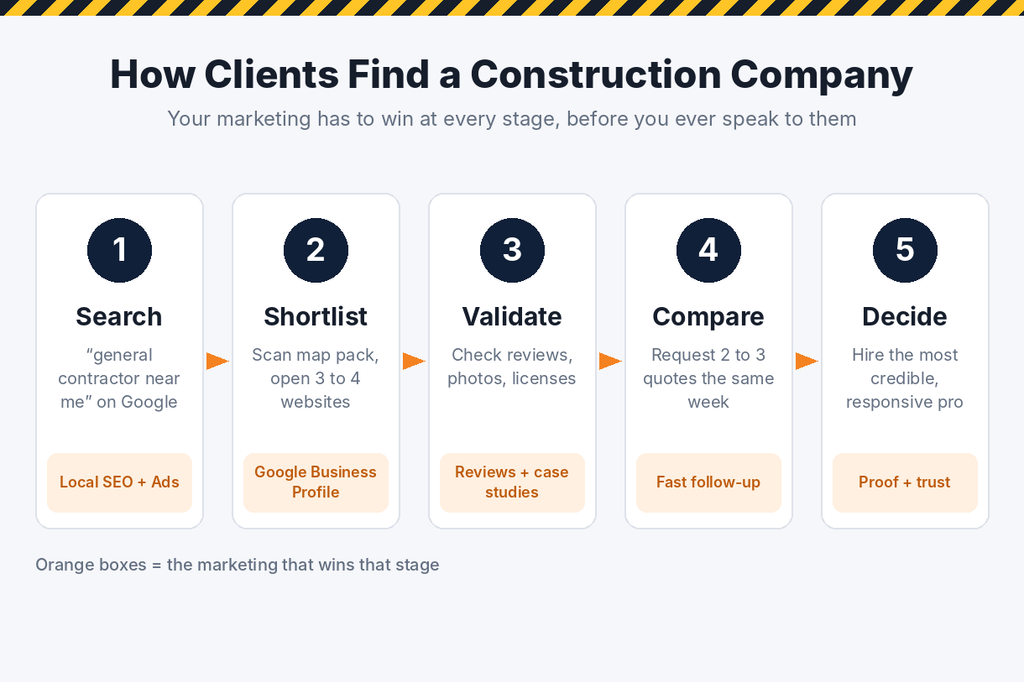
The typical path looks like this:
- Search. They type something like “general contractor near me” or “commercial renovation [city]” into Google.
- Shortlist. They scan the map results, open three or four websites and check reviews.
- Validate. They look for photos of finished projects, licenses, insurance and how long you’ve been in business.
- Compare. They request two or three quotes, often within the same week.
- Decide. They pick the company that felt most credible and responded best, not always the cheapest one.
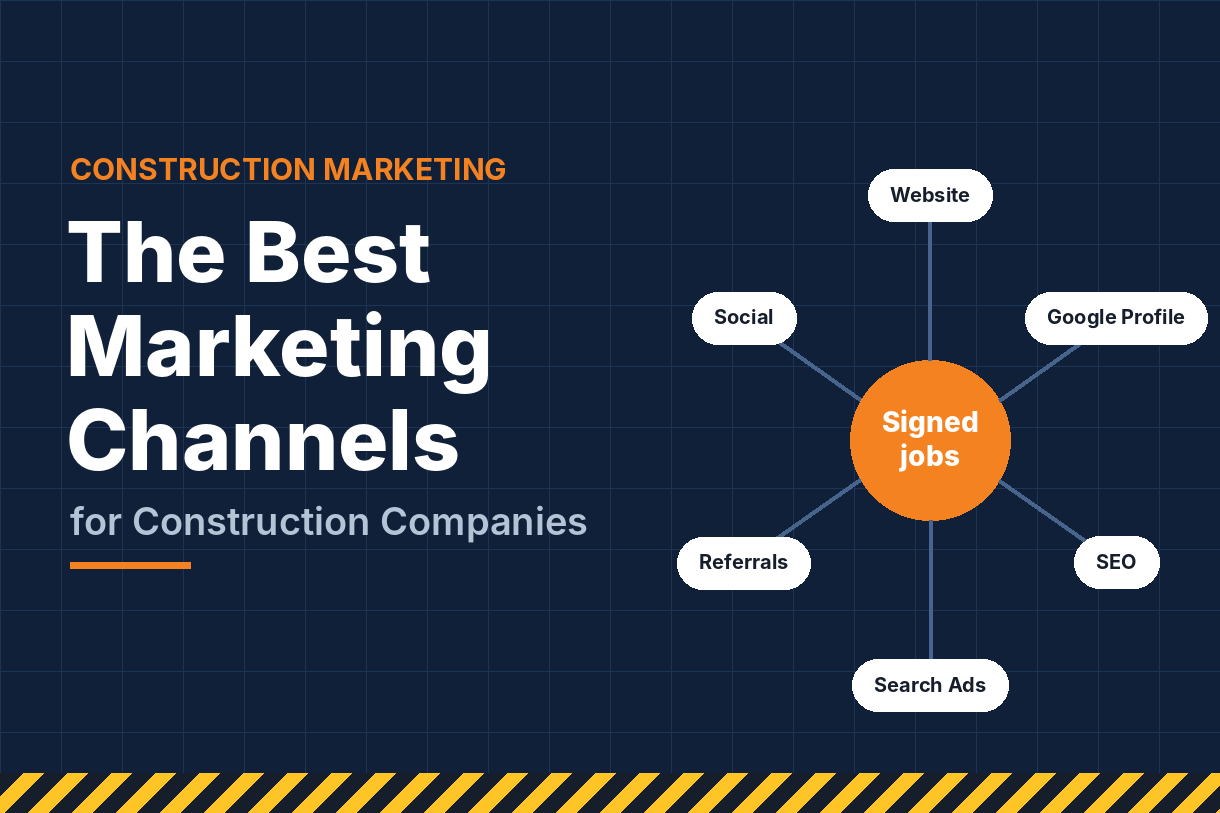
Notice that at every step, the buyer is judging you before you ever speak to them. Your marketing has to win the shortlist, survive the validation stage and make it easy to reach you. That’s why effective construction company marketing isn’t one tactic. It’s a connected set of channels that each handle part of that journey.
Step 1: Turn Your Website Into a Lead Engine
Your website is where every other channel sends people. Ads, Google Maps, social posts and referrals all end with a visit to your site. If that visit doesn’t build trust and make contact easy, the rest of your marketing leaks.
A lead-ready construction website has a few non-negotiables:
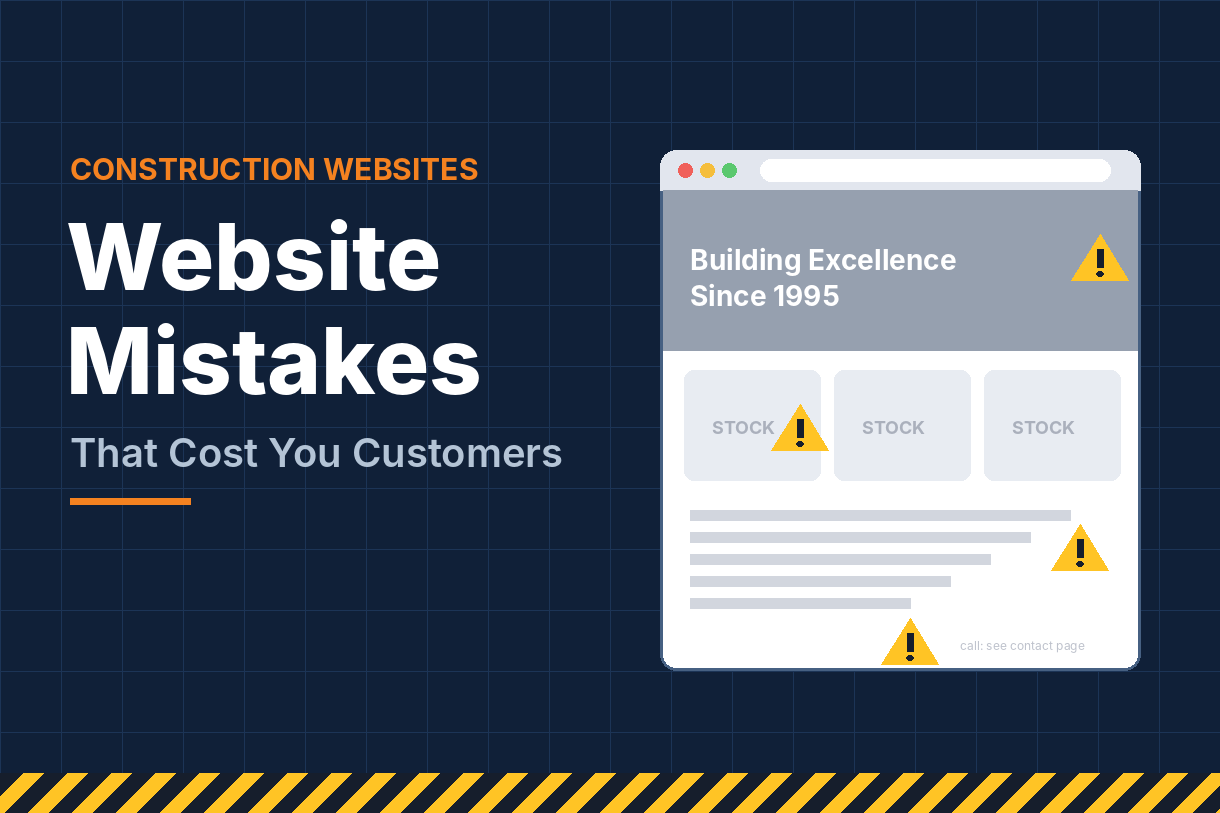
- A clear headline above the fold. Say what you build and where: “Commercial Build-Outs and Tenant Improvements in Phoenix” beats “Quality You Can Trust.”
- A visible phone number and quote button on every page, especially on mobile, where most first visits happen.
- A separate page for each core service. Roofing, additions, kitchens and commercial work each deserve their own page, because each is searched differently.
- Project galleries with real photos. Before-and-after shots of your own work outperform stock images every time.
- Trust markers. License numbers, insurance, years in business, associations and warranties should be easy to find.
Structure matters as much as design. Each service page needs a focused title tag, a descriptive H1, helpful copy that answers buyer questions and image alt text that describes the project. This is the work covered by professional on-page SEO services, and it’s often the quickest win for a contractor whose site looks good but rarely shows up in search.
Finally, test the site on your own phone. If it takes more than a few seconds to load or the quote form is hard to fill in with your thumb, fix that first. Speed and simplicity convert.
Step 2: Own Your Local Market
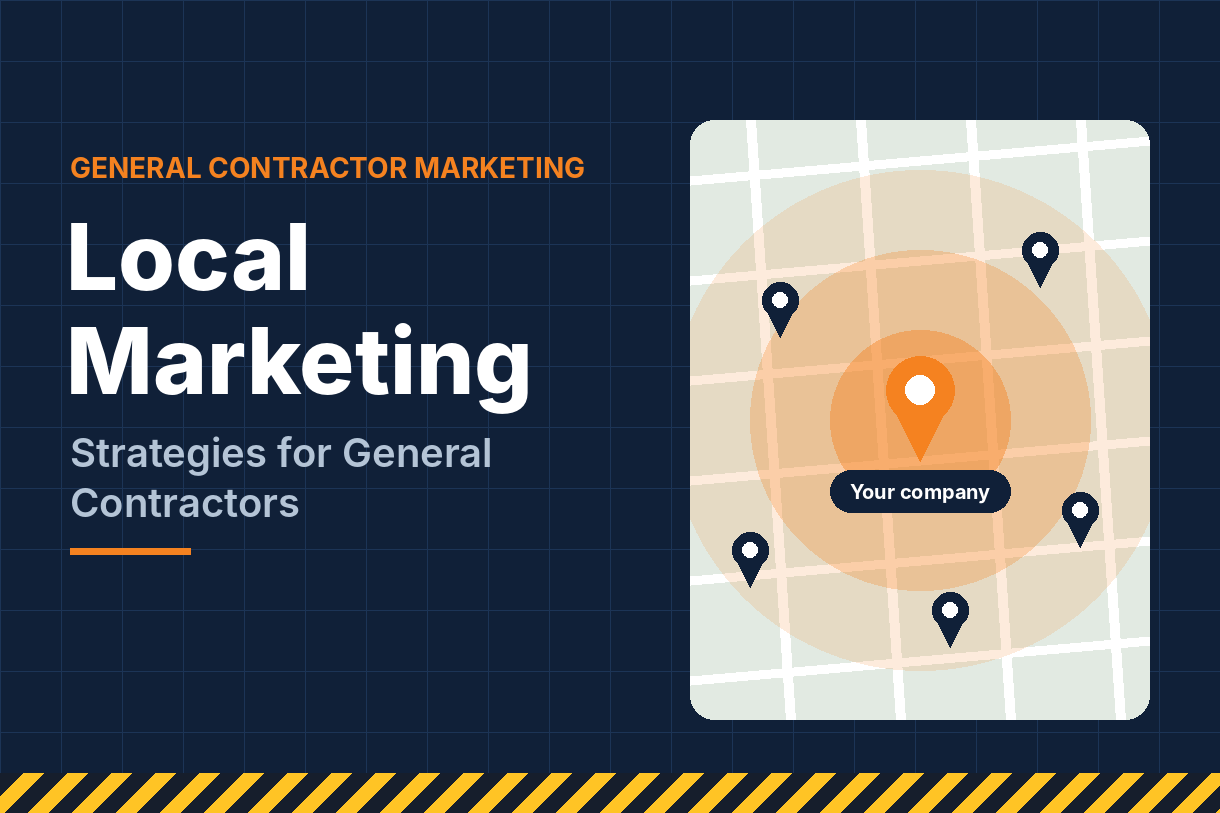
Most construction work is local. Your crews drive to the job, so your marketing should focus on the towns and neighborhoods you actually serve.
The most valuable local asset you have is your Google Business Profile. It controls whether you appear in the map pack, the three businesses Google shows above the regular results for searches like “deck builder near me.” For many contractors, the map pack produces more calls than the website itself.
To compete there:
- Pick the most accurate primary category (for example, “General contractor” or “Roofing contractor”) and add relevant secondary categories.
- List every service and service area you genuinely cover.
- Upload new project photos every month. Fresh, geotagged job photos signal an active business.
- Post updates about completed projects, seasonal offers or new services.
- Answer questions in the Q&A section before a competitor’s customer does.
Consistency across the web matters too. Your business name, address and phone number should match exactly on your website, Google, Bing, Yelp, Houzz, Angi, the BBB and your local chamber of commerce. Mismatched listings confuse search engines and cost you rankings.
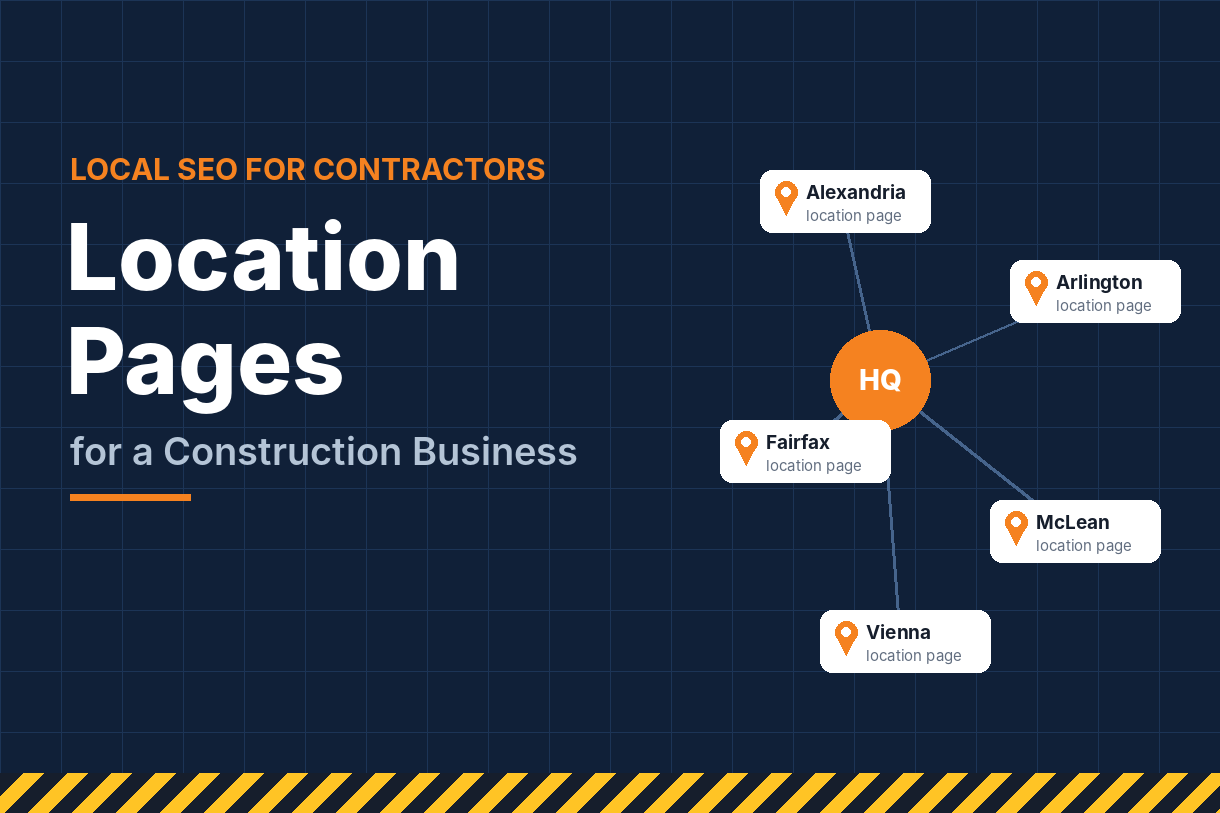
If you serve several cities, give each one a dedicated page with real local content: projects completed there, permitting notes, neighborhoods covered. Thin pages that swap only the city name rarely rank. A structured local SEO strategy ties all of this together so your company shows up in every town you want work from.
Step 3: Build Organic Search Into a Long-Term Lead Source
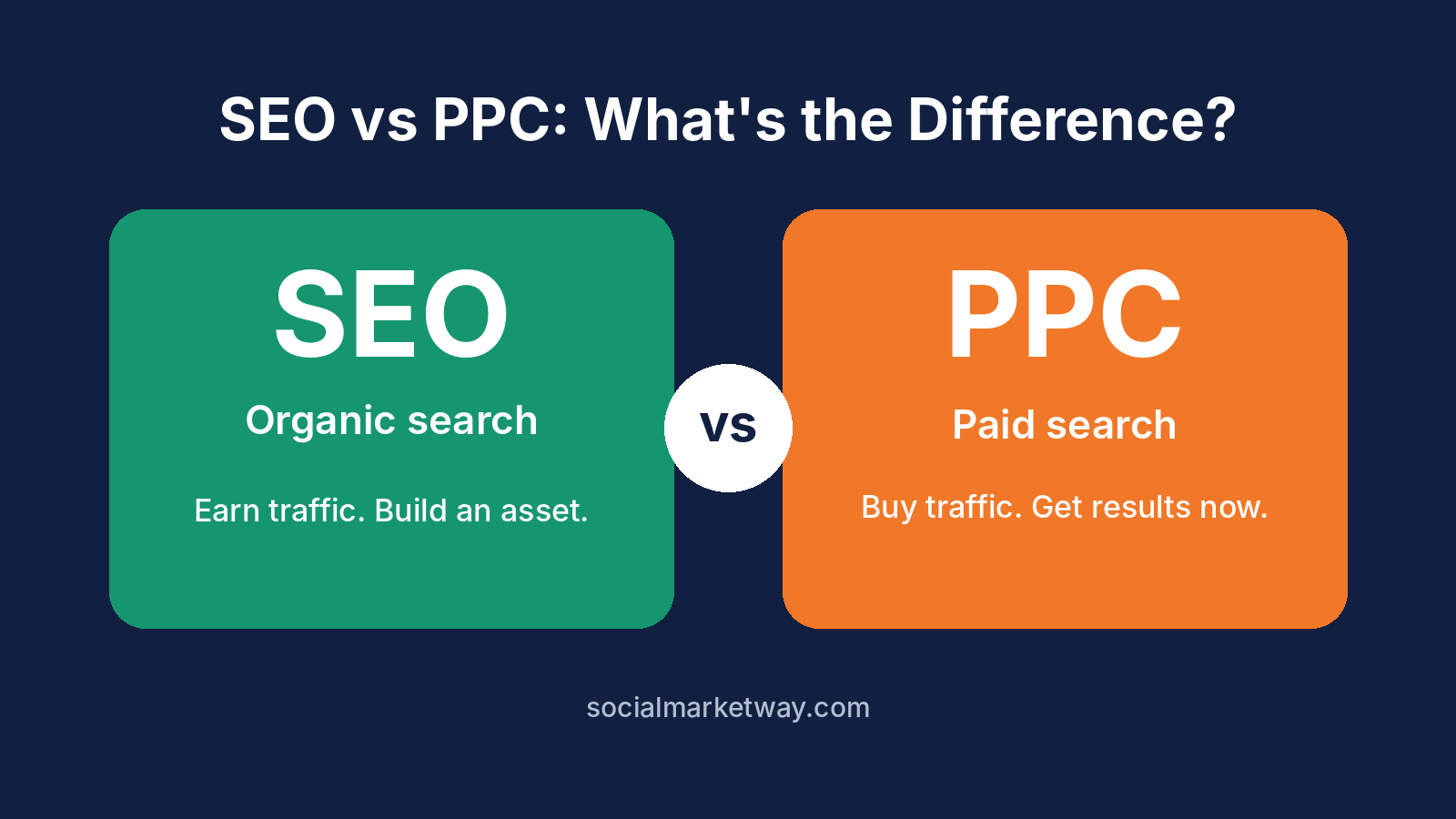
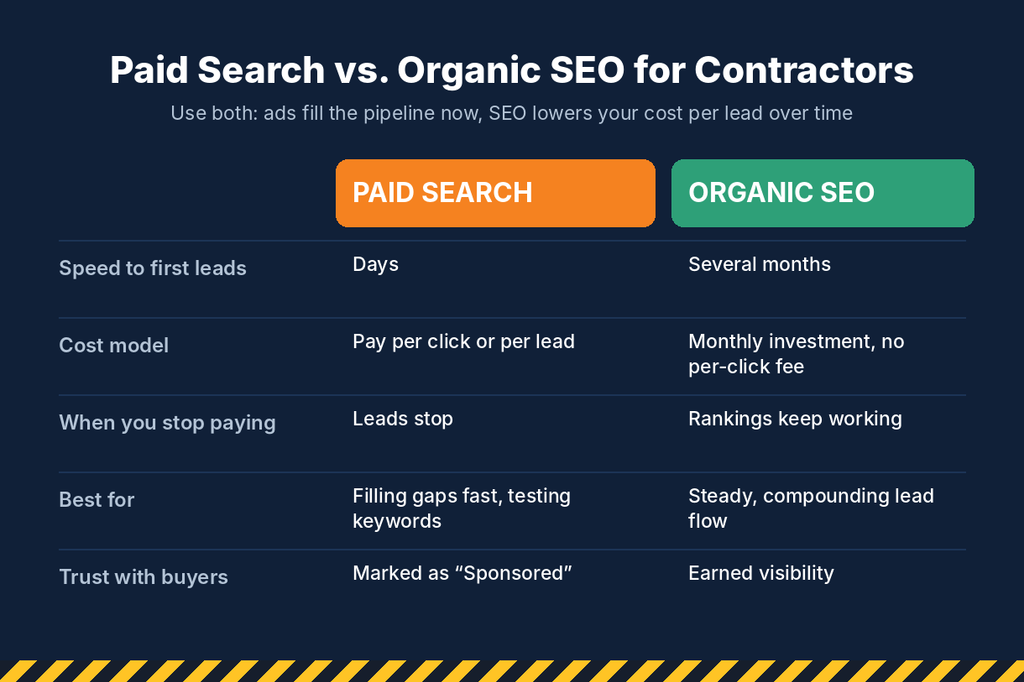
Paid channels stop the moment you stop paying. Organic search keeps working. A service page that ranks for “commercial roofing contractor [city]” can bring in calls every month for years, with no cost per click.
The trade-off is time. Organic rankings usually take several months to build, which is why it pays to start early and stay consistent. The contractors who dominate search in their area rarely got there with a burst of effort. They kept publishing helpful content, earning reviews and improving their site quarter after quarter.
For most construction companies, the organic plan centers on four things:
- Keyword research focused on services plus locations, not vanity terms.
- Service and location pages that match what buyers search.
- Helpful content that answers pre-hire questions, such as permit timelines, cost ranges and material choices.
- Authority signals like links from suppliers, local news and trade associations.
We’ve covered the full playbook, from keyword research and meta tags to backlinks and technical fixes, in our guide to SEO for construction companies. If organic search is going to be part of your marketing mix, that’s the place to start.
The key point for now: SEO is the channel that compounds. Every month of work makes the next month’s leads cheaper.
Step 4: Use Paid Search to Fill the Pipeline Faster
While organic search builds, paid search can put you in front of buyers this week. Search ads appear at the top of Google for the exact terms you choose, and you only pay when someone clicks.
Paid search works best for construction companies when it’s tight and focused. Broad campaigns that bid on “construction” or “remodeling ideas” burn budget on researchers and DIYers. High-intent terms such as “bathroom remodel contractor near me” or “commercial concrete contractor [city]” attract people ready to request a quote. A disciplined PPC strategy also includes negative keywords like “jobs,” “salary,” “DIY” and “free” so you’re not paying for clicks that will never convert.
A few rules make paid search profitable for contractors:
- Send ads to dedicated landing pages, not your homepage. One service, one offer, one form.
- Use call extensions and location extensions so mobile searchers can tap to call and see you’re nearby.
- Geo-target tightly. Only show ads where your crews will travel.
- Schedule ads around your office hours if no one can answer the phone at night.
- Track calls and form fills as conversions, not clicks, so the system optimizes for real leads.
Local Services Ads deserve a mention too. These “Google Guaranteed” or “Google Screened” listings sit above regular ads, charge per lead instead of per click, and carry a trust badge. Many contractors run them alongside standard search campaigns.
Google’s ad platform rewards attention. Bids, search terms, ad copy and budgets need regular review, or costs creep up quietly. If you don’t have time to manage that every week, professional Google Ads management keeps campaigns lean and focused on cost per lead rather than raw traffic.
The smartest approach treats paid and organic as partners. Ads cover the gap while SEO matures, and your ad data reveals which keywords convert, so you know which pages to prioritize organically.
Step 5: Let Your Work and Your Clients Do the Selling
In construction, proof beats promises. Buyers want evidence that you’ve done their kind of project, on budget, without drama. Your marketing should put that evidence everywhere.
Reviews are your strongest asset. Ask every satisfied client for a Google review within a few days of project completion, while the experience is fresh. Make it easy with a short text message and a direct link. Respond to every review, including the occasional negative one, calmly and professionally. Prospects read your replies as closely as the reviews.
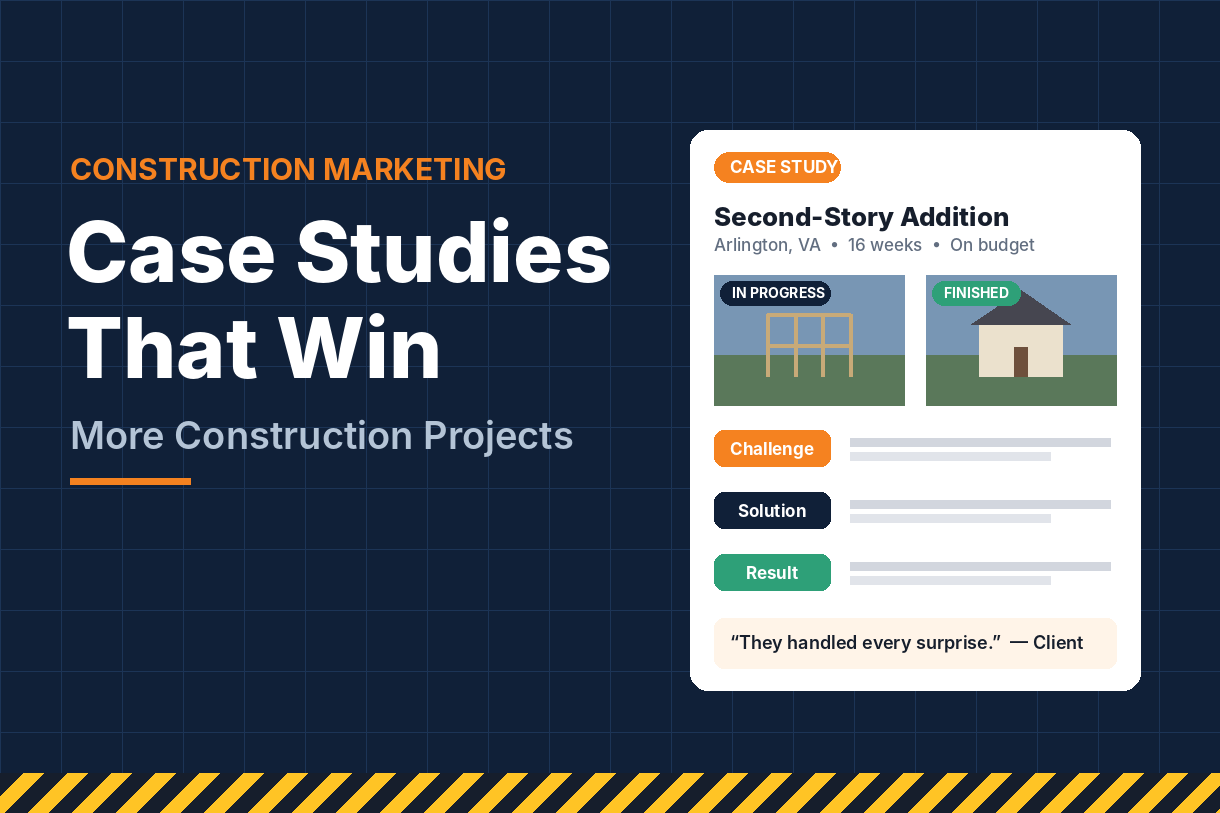
Case studies turn projects into sales tools. Pick your best jobs and document them with a simple structure: the client’s problem, your solution, the timeline and budget, and the result. Add photos from start to finish and a short quote from the client. A handful of solid case studies will close more deals than a hundred generic gallery images.
Video builds trust fast. A two-minute walkthrough of a finished project, a time-lapse of a framing day or a short intro from the owner makes your company feel real. You don’t need a film crew; a modern phone and steady hands are enough.
Use these assets everywhere: on service pages, in your Google profile, in proposals and in follow-up emails. Proof works hardest at the moment a buyer is deciding between you and a competitor.
Step 6: Stay Visible With Social Media and Email
Social media rarely produces a signed contract on its own, but it keeps your name in front of people between projects. That matters, because construction decisions often take months.
Focus on the platforms your buyers use:
- Facebook and Instagram for residential work. Before-and-after posts, short reels from the job site and client spotlights perform well. Local community groups can also generate referrals.
- LinkedIn for commercial and B2B work. Share completed projects, safety milestones and team updates that property managers, developers and architects will notice.
- YouTube for longer project walkthroughs, which also help your website when embedded on service pages.
Email is the quiet workhorse. Many leads aren’t ready to build when they first contact you. A simple follow-up sequence (a thank-you, a relevant case study, a seasonal reminder) keeps you top of mind until they are. Past clients belong on your list too. A short quarterly newsletter with recent projects and maintenance tips brings repeat work and referrals at almost no cost.
Consistency beats volume. Two good posts a week and one email a month, sustained for a year, will outperform a burst of activity that fizzles after a month.
Step 7: Capture Every Lead and Follow Up Fast
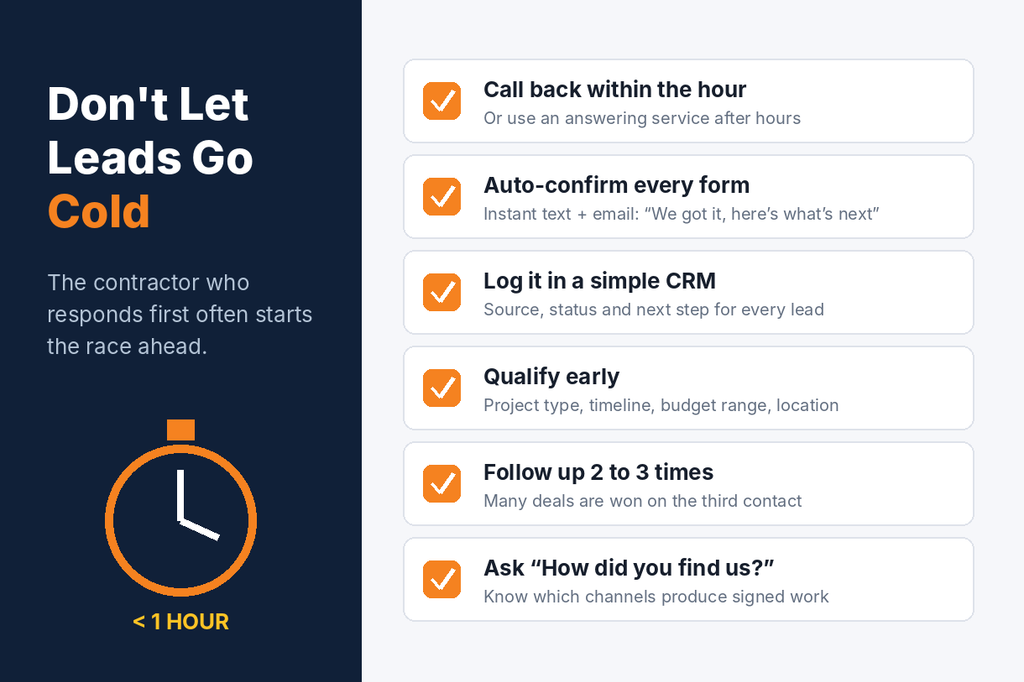
Here’s an uncomfortable truth: many contractors don’t have a lead problem. They have a follow-up problem. Calls go to voicemail, form submissions sit in an inbox nobody checks, and the prospect hires whoever called back first.
Speed is one of the biggest competitive advantages a construction company can have. A buyer who requests three quotes on Monday is often leaning toward one company by Tuesday. Be the first to respond, and you start the race ahead.
Tighten your lead handling with a few simple systems:
- Answer the phone or call back within the hour during business hours. If that’s not realistic, use an answering service.
- Send an automatic text and email when someone fills in your form, confirming you received it and when they’ll hear from you.
- Use a simple CRM to log every lead, its source and its status. Even a shared spreadsheet beats sticky notes.
- Qualify early. Ask about project type, timeline, budget range and location so your estimators spend time on the right jobs.
- Follow up on every quote at least two or three times. Many deals are won on the third contact.
Finally, ask every new lead how they found you. Combined with call tracking and form tracking, this tells you which channels actually produce signed work, not just clicks.
Step 8: Set a Budget and Measure What Matters
There’s no single right number for a construction marketing budget. It depends on your average project value, your growth goals and how competitive your market is. What matters more is how you split the budget and how you judge results.
A sensible starting split for a growing contractor might look like this:
- Website and SEO: the long-term foundation that lowers your cost per lead over time.
- Paid search and Local Services Ads: immediate leads while organic visibility grows.
- Reviews, content and video: the proof that turns visitors into callers.
- Social media and email: staying visible and earning repeat and referral work.
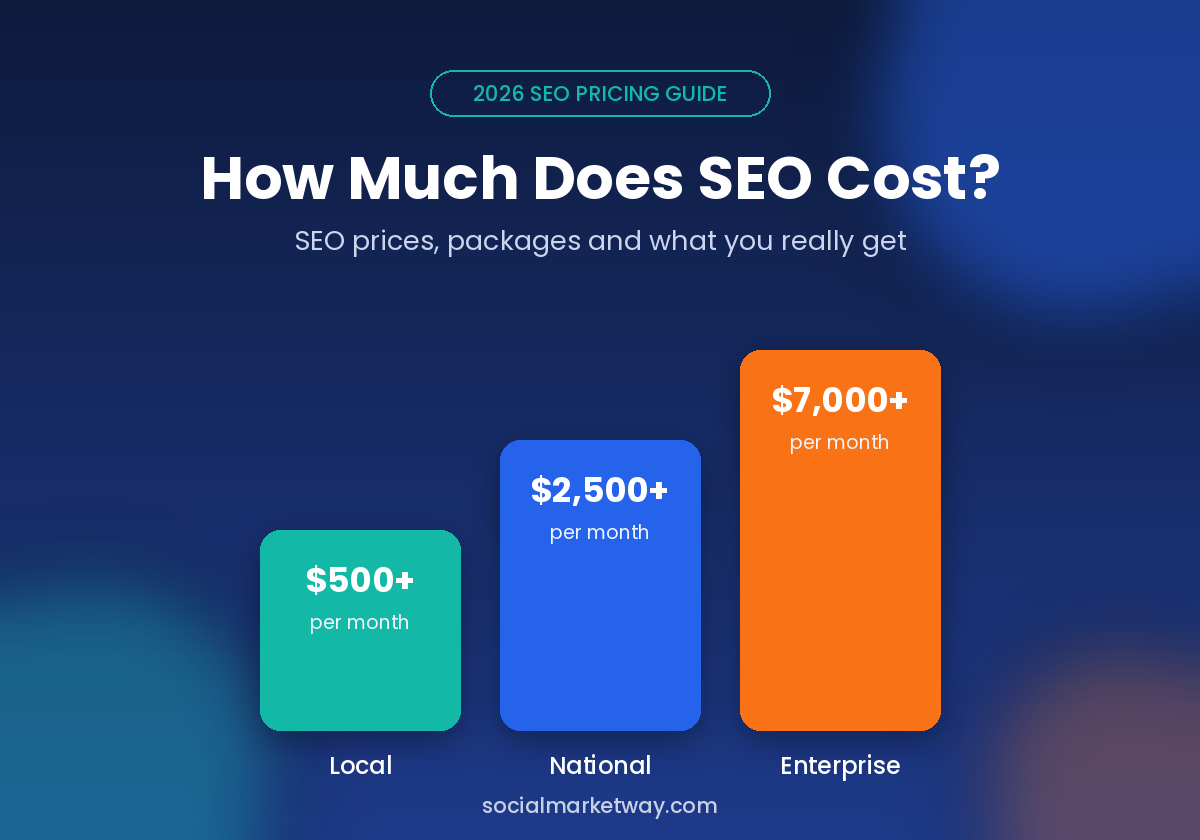
For organic search specifically, a predictable monthly investment usually works better than one-off projects, because rankings respond to consistent effort. Structured SEO packages make that easier to budget, with clear deliverables each month instead of open-ended hourly work.
Whatever you spend, track these numbers every month:
| Metric | What it tells you |
|---|---|
| Leads by source | Which channels bring in calls and forms |
| Cost per lead | What each channel costs to produce one inquiry |
| Lead-to-estimate rate | How many inquiries are qualified |
| Close rate | How many estimates turn into signed work |
| Cost per signed project | The number that decides where your next dollar goes |
Move money toward the channels with the lowest cost per signed project, not the ones with the most clicks.
Your 90-Day Construction Marketing Plan
You don’t have to do everything at once. Here’s a realistic order of operations:
- Days 1 to 30: Fix the foundation. Claim and complete your Google Business Profile, clean up directory listings, add a phone number and quote button to every page, and build separate pages for your top services.
- Days 31 to 60: Turn on lead flow. Launch a focused search campaign on your highest-value service, start a review request routine after every project, and set up call and form tracking.
- Days 61 to 90: Build momentum. Publish your first two case studies, start a consistent social posting rhythm, add an email follow-up sequence, and review your cost per lead by channel.
After 90 days, you’ll have real data. Double down on what’s producing signed work and cut what isn’t.
Frequently Asked Questions
What is the best marketing strategy for a construction company? The best strategy combines a strong website, an optimized Google Business Profile, search visibility (organic and paid) and a steady flow of reviews. Together, these cover how buyers search, compare and decide.
How long does construction marketing take to work? Paid search and Local Services Ads can generate leads within days. Organic search and content usually take several months but deliver lower-cost leads over the long run.
How much should a construction company spend on marketing? It varies by market and growth goals. Start with a budget you can sustain for at least six months, track cost per signed project, and scale the channels that perform.
Do construction companies still need social media? Yes, but as a trust and visibility channel rather than the main lead source. It keeps you top of mind and supports referrals.
Ready to Fill Your Project Pipeline?
The construction companies that grow steadily aren’t lucky. They’ve built a marketing system that brings in qualified leads every week and follows up on every one.
Social Market Way helps contractors and construction firms build that system, from local visibility and search to paid campaigns that deliver measurable leads. Contact our team today for a strategy conversation, and let’s map out where your next projects will come from.