

The Best Marketing Channels for Construction Companies

Every week, someone tries to sell a construction company a new marketing channel. A lead service promises 50 calls a month. A social media agency says TikTok is the future. A sales rep swears billboards still work.
Some of them are right, for some contractors. The challenge isn’t finding marketing channels. It’s knowing which ones fit your projects, your market and your budget, and which ones will drain money without producing signed work.
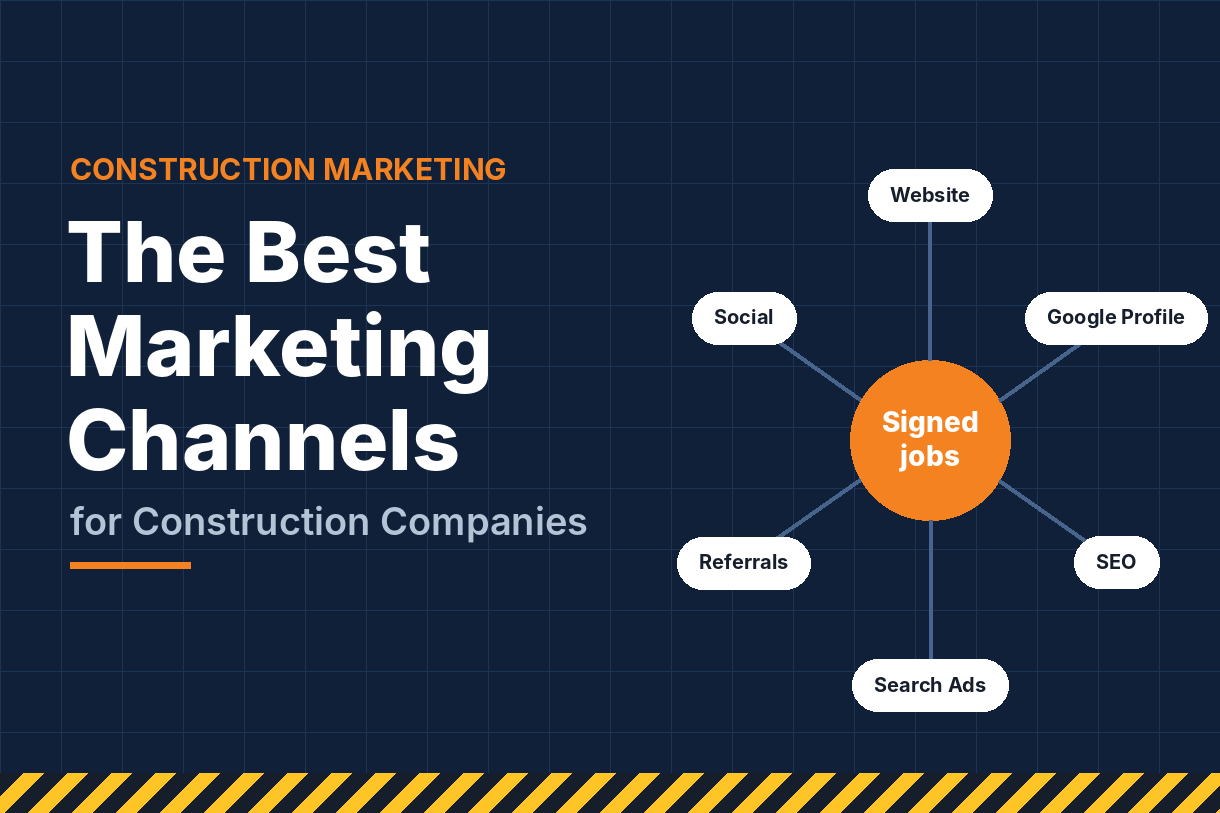
This guide breaks down the ten marketing channels that consistently work for construction companies. For each one, you’ll see what it’s best for, how fast it works, what it costs to run, and where it fits in your overall mix.
How to Judge a Marketing Channel
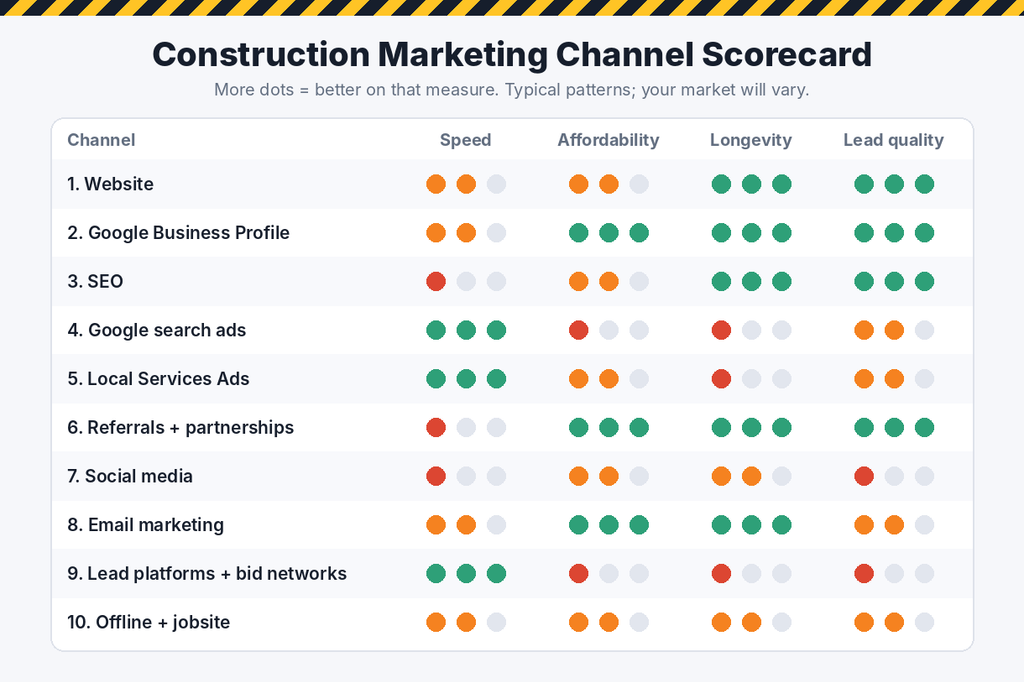
Before comparing channels, it helps to know what you’re comparing. For a construction company, every channel can be judged on four things:
- Speed: how quickly it produces leads after you start.
- Cost to run: what you spend per month, and whether that cost rises as you grow.
- Longevity: whether results stop the day you stop paying, or keep building over time.
- Lead quality: how likely those leads are to become signed, profitable projects.
No channel wins on all four. Paid ads are fast but stop when the budget does. SEO is slow but compounds. Referrals produce the best leads but are hard to scale on demand. The best construction marketing plans combine channels so their strengths cover each other’s weaknesses.
It also matters what kind of construction you do. A residential remodeler, a commercial general contractor and a specialty subcontractor all buy from different people, so their best channels differ too. We’ll come back to that after walking through each channel.
The ratings in this guide are general patterns based on how these channels typically perform for contractors. Your own results will depend on your market, competition and execution, which is why tracking matters as much as choosing.
1. Your Website: The Channel Every Other Channel Depends On
Best for: every construction company. Speed: immediate once live. Longevity: high.
Your website isn’t just one channel among many. It’s where almost every other channel sends people. Ads, Google Maps, social posts, referrals and even yard signs end with someone visiting your site to decide whether to call.
That makes the website the multiplier for everything else. A site that loads fast, shows real projects, lists your services clearly and makes it easy to request a quote improves the results of every channel you add. A weak site does the opposite: you pay to send people there, and they leave.
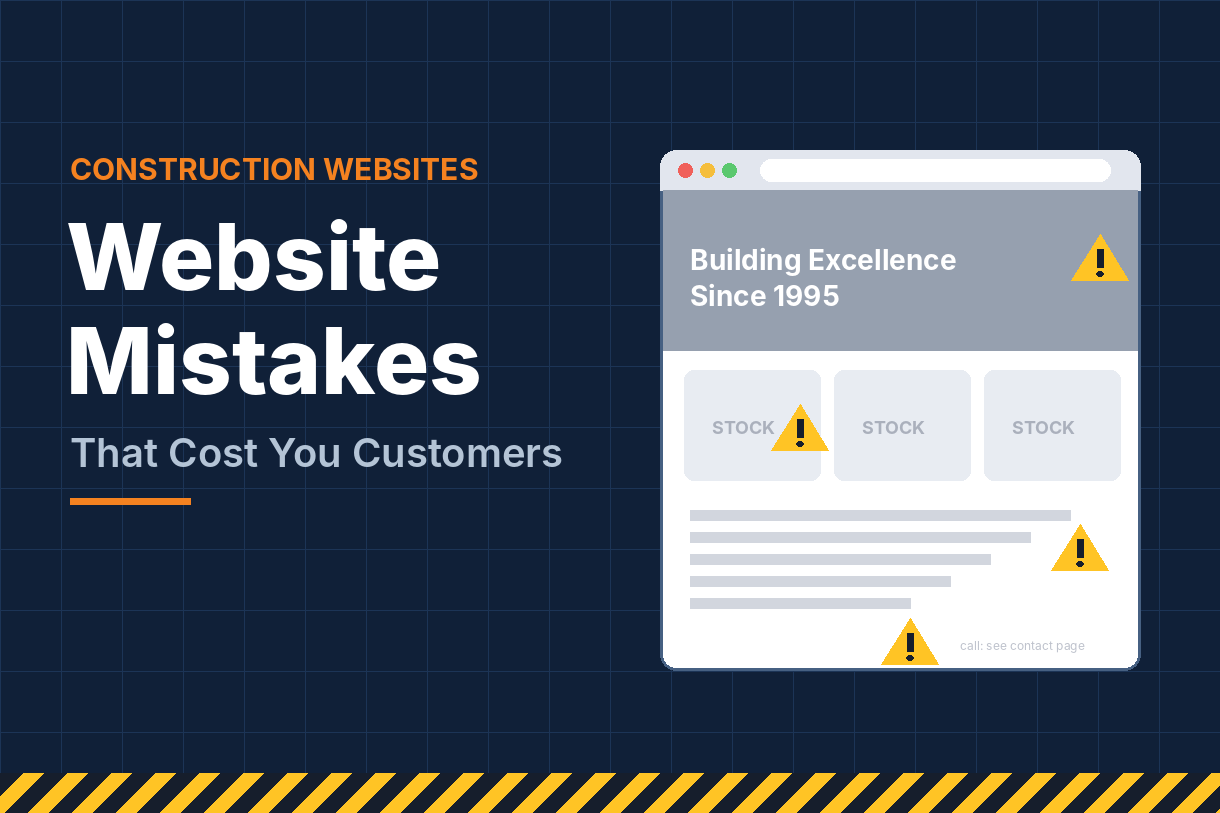
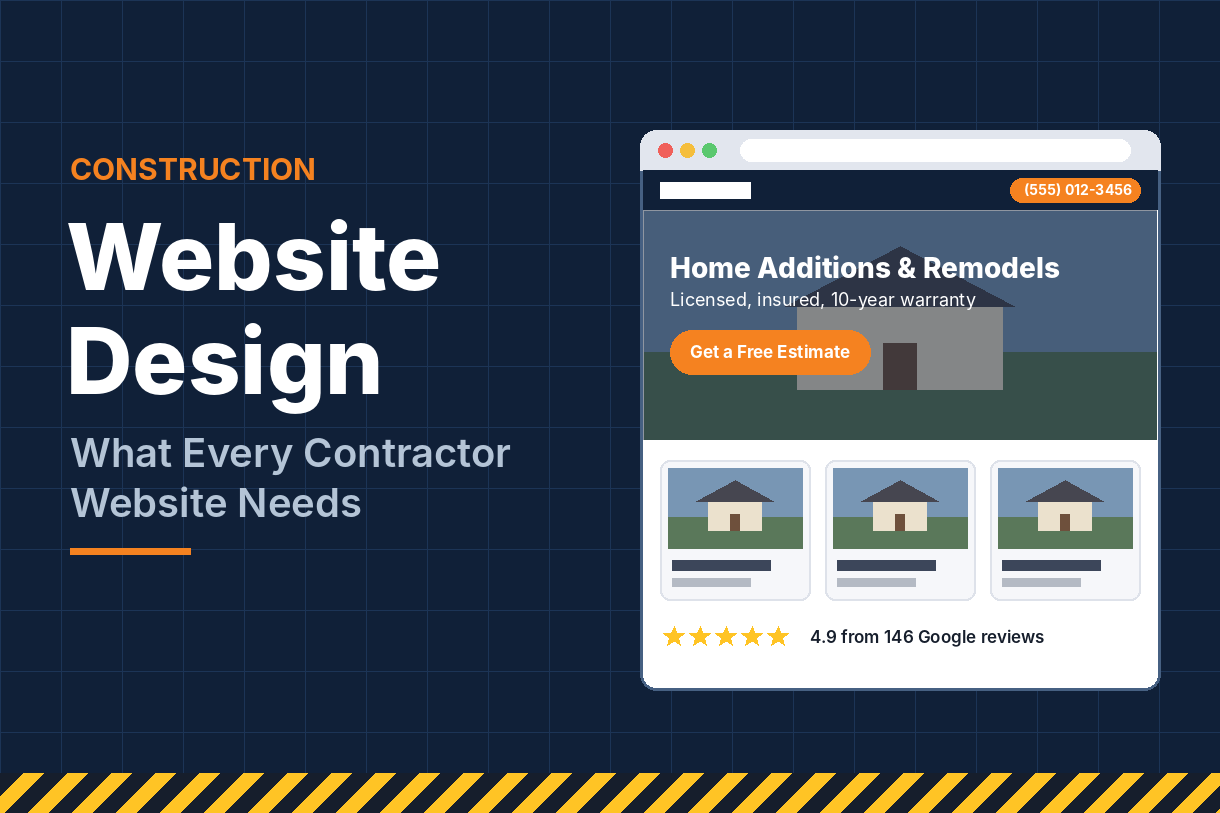
The essentials are a specific headline, a visible phone number, a page for each core service, a strong project gallery and short quote forms. Our guide on construction website design covers each element in detail.
A website also needs to be built for search. Every service and location page should have a clear title tag, descriptive headings and optimized images, which is the work on-page SEO covers.
2. Google Business Profile: The Highest-Return Free Channel
Best for: residential contractors and local general contractors. Speed: weeks. Cost: free. Longevity: high.
For local searches like “general contractor near me,” Google shows a map with three businesses before the regular results. Those listings come from Google Business Profiles, and for many contractors they produce more phone calls than the website itself.
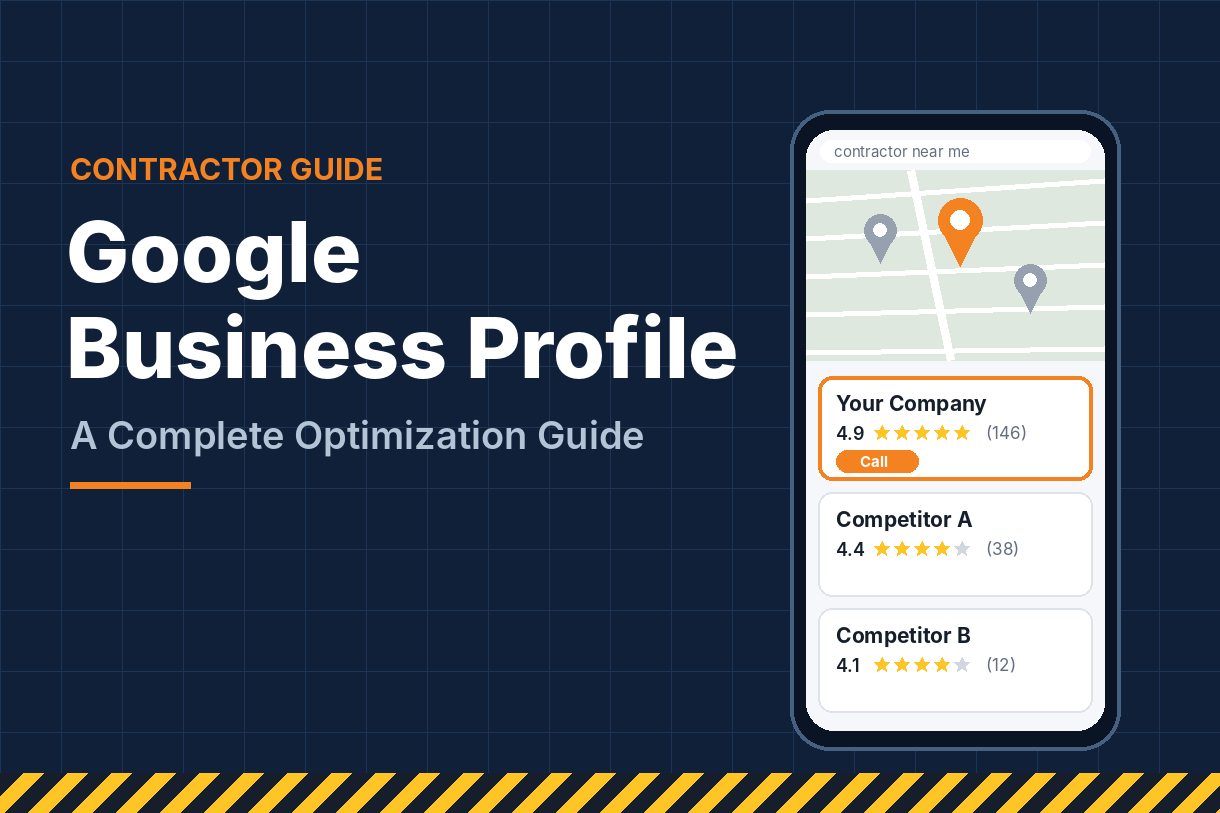
It costs nothing to run, and the work is straightforward: choose the right categories, list every service, add new project photos regularly, earn steady reviews and post updates. Because it’s free and drives high-intent calls, it’s usually the best return on effort of any channel. Our Google Business Profile guide for contractors walks through every setting.
3. Search Engine Optimization: The Channel That Compounds
Best for: any contractor planning to grow over several years. Speed: slow, typically several months. Longevity: very high.
SEO earns your website a place in Google’s regular results for searches like “commercial build-out contractor [city]” or “home addition cost.” Unlike ads, you don’t pay per click, and a page that ranks can keep producing leads for years.
That’s why SEO usually delivers one of the lowest costs per signed job over time, even though it’s one of the slowest channels to start. The leads are exclusive to you, they arrive actively looking for your service, and the cost doesn’t climb with every click the way ad costs can.
The trade-off is patience and consistency. Rankings come from steady work on keywords, content, technical health and backlinks, not a one-time project. Our complete guide to SEO for construction companies lays out each piece step by step.
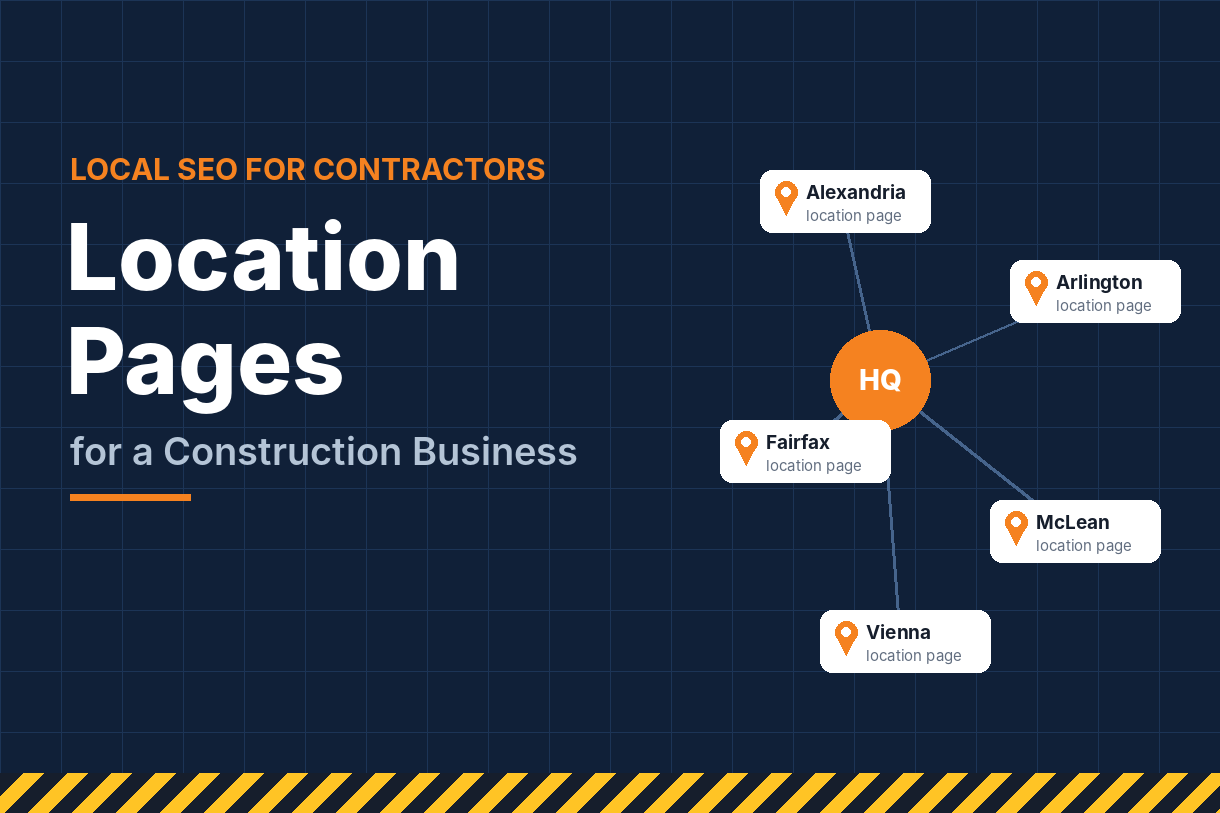
For most contractors, the local side of SEO matters most: location pages, consistent directory listings, local links and reviews that help you rank in each town you serve. A dedicated local SEO strategy focuses that effort on your priority markets.
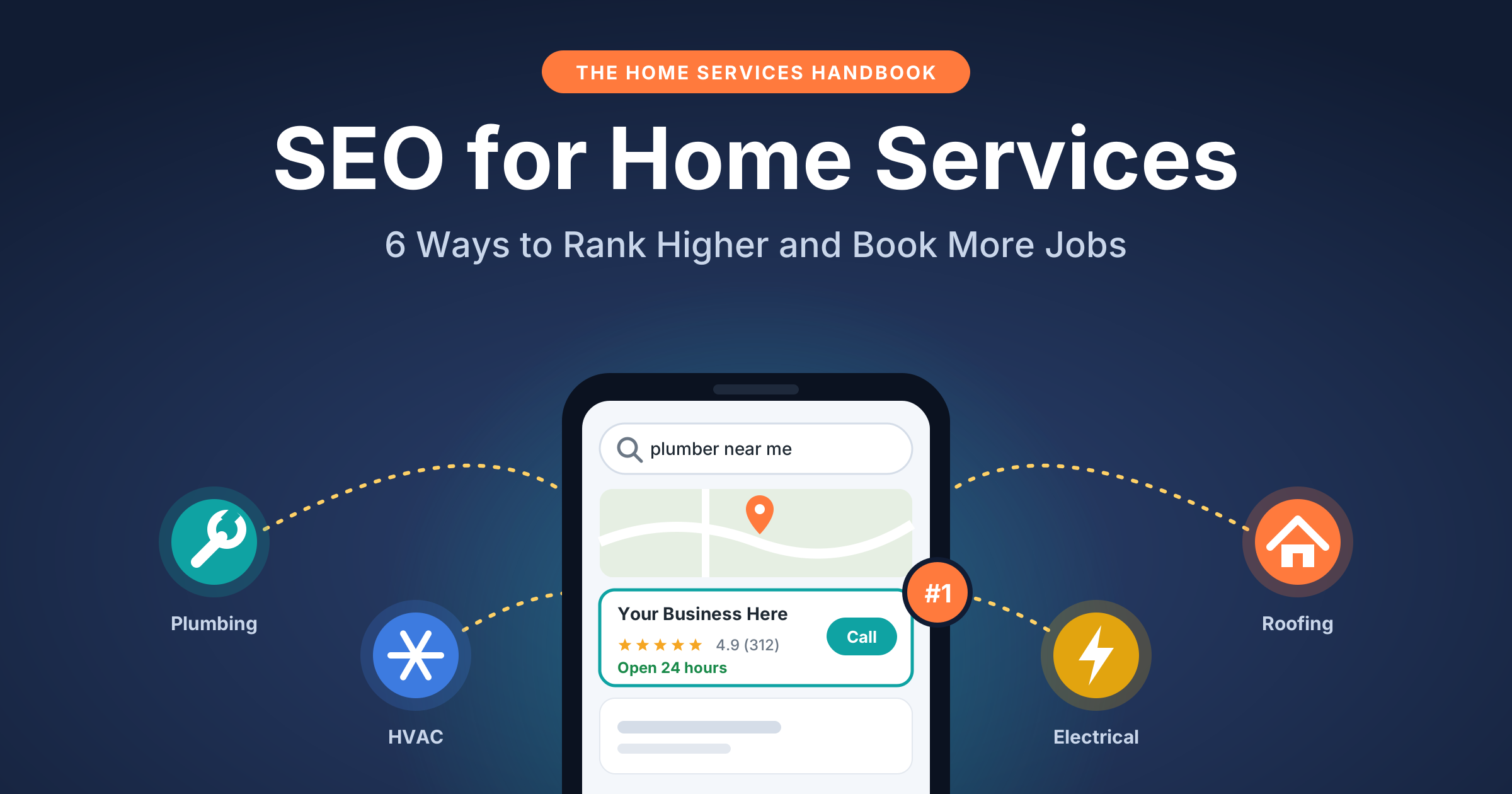
If you also run residential trades like roofing, HVAC or plumbing, the competition is often stiffer, and the tactics shift slightly. Our guide to SEO for home services covers that playbook.
4. Google Search Ads: The Fastest Way to Turn On Leads
Best for: filling the pipeline quickly, testing services and markets, commercial and specialty work. Speed: days. Longevity: low, because leads stop when spending stops.
Search ads put you at the top of Google for the exact searches you choose, and you pay only when someone clicks. For a construction company, that means you can target “commercial roofing contractor [city]” this afternoon and start receiving calls this week.
The risk is wasted spend. Construction clicks can be expensive, and broad campaigns attract DIYers, job seekers and researchers. Success comes from focus: high-intent keywords, negative keywords, tight geo-targeting, dedicated landing pages and conversion tracking. A disciplined PPC strategy puts all of that in place before the first dollar is spent.
Search ads also provide something other channels can’t: fast data. Within weeks, you’ll know which services and towns produce the most calls, which tells you where to focus your SEO and content.
Campaigns need weekly attention to stay efficient. If you’d rather focus on running jobs, professional Google Ads management handles bids, search terms and budgets so your cost per lead stays under control.
5. Local Services Ads: Pay-Per-Lead With a Trust Badge
Best for: residential contractors in eligible categories. Speed: days to weeks, after background and license checks. Longevity: low.
Local Services Ads appear above regular search ads for many home-service searches. You pay per lead rather than per click, and verified businesses display a “Google Guaranteed” or “Google Screened” badge. Your reviews and how quickly you respond affect how often your ad shows.
For eligible residential contractors, Local Services Ads are often one of the most cost-effective paid channels, because you’re only charged for actual inquiries. Answer every lead quickly, and dispute ones that don’t fit your services or area.
6. Referrals and Local Partnerships: The Highest-Quality Leads
Best for: every construction company, especially those doing high-value residential or negotiated commercial work. Speed: slow to build, then steady. Cost: low. Longevity: very high.
Referred clients arrive already trusting you. They’re less price-sensitive, they skip the three-quote shopping process more often, and they tend to close faster. For many established contractors, referrals are the single biggest source of profitable work.
The problem is that most contractors treat referrals as luck rather than a channel. You can make them predictable:
- Ask at every project closeout whether the client knows anyone planning work.
- Thank every referral, whether or not the job closes.
- Stay in touch with past clients through a simple quarterly email.
- Build relationships with professionals who hear about projects first: architects, designers, real estate agents, property managers, insurance adjusters and suppliers.
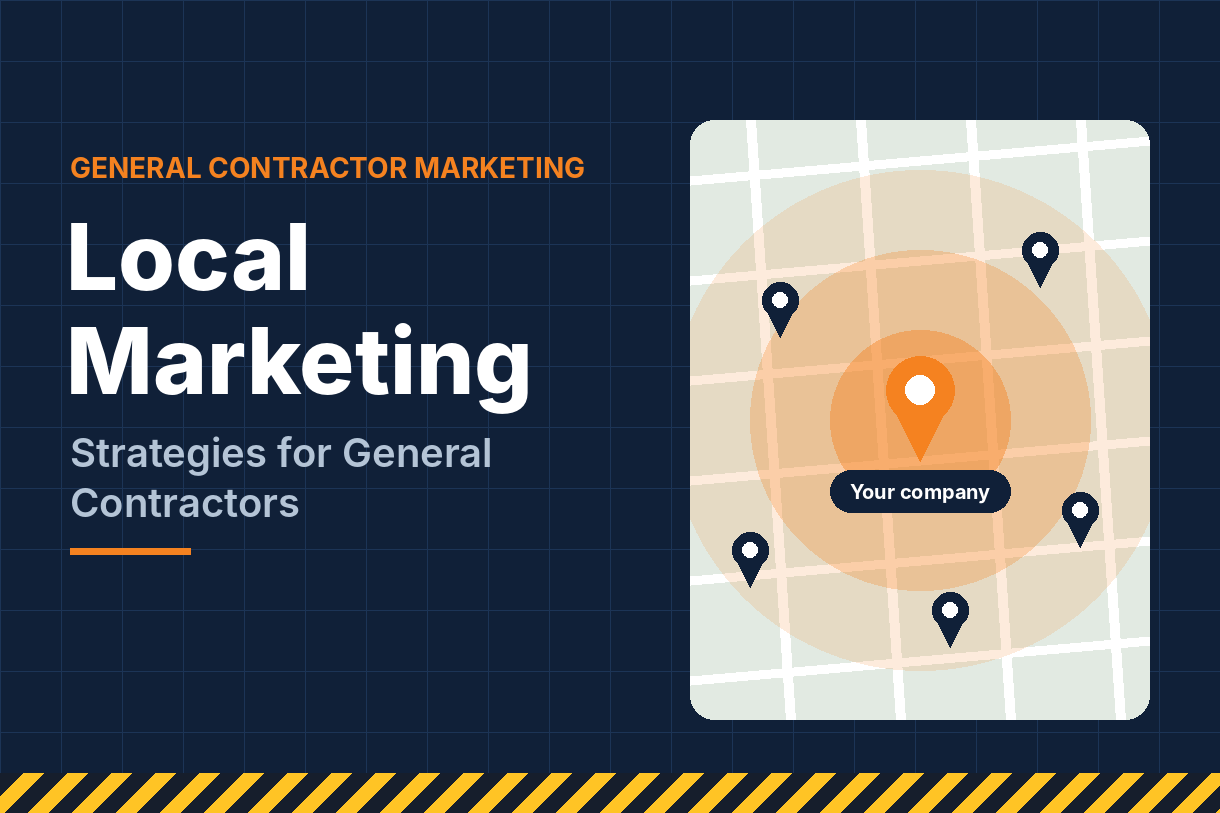
Jobsite marketing works hand in hand with referrals. Yard signs, branded trucks and notes to neighbors near active projects all turn one job into the next. We cover these local tactics, along with community involvement and neighborhood social media, in our guide to local marketing strategies for general contractors.
The limitation of referrals is scale. You can’t turn them up overnight when the schedule empties, which is why they work best alongside search and paid channels.
7. Social Media: Trust and Visibility Between Projects
Best for: residential contractors (Facebook, Instagram, Nextdoor) and commercial firms (LinkedIn). Speed: slow for leads. Cost: low organically, flexible with ads. Longevity: medium.
Social media rarely produces a signed contract on its own. Its real value is keeping your company visible and credible during the long stretch between a buyer’s first idea and their decision to hire. When someone finally searches for a contractor, the company they’ve seen posting finished projects for months already feels familiar.
Choose platforms by who you sell to:
- Facebook and Instagram: before-and-after photos, short jobsite videos and client stories for homeowners. Paid ads can target specific ZIP codes.
- Nextdoor and local Facebook groups: neighborhood recommendations and local credibility.
- LinkedIn: completed projects, safety milestones and team news for developers, architects and property managers.
- YouTube: longer walkthroughs and how-it’s-built videos that also strengthen your website when embedded.
Consistency matters more than volume. Two solid posts a week, every week, beats a burst of activity followed by silence.
8. Email Marketing: The Cheapest Way to Win Repeat Work
Best for: nurturing slow-moving leads and staying in touch with past clients. Speed: fast to start. Cost: very low. Longevity: high.
Email is the most overlooked channel in construction. Many leads aren’t ready to build when they first call, and past clients often need another project a few years later. A simple email program captures both:
- A follow-up sequence for open estimates: a thank-you, a relevant case study, then a check-in.
- A quarterly newsletter for past clients with recent projects, seasonal maintenance tips and a reminder that you take referrals.
It costs almost nothing to run and keeps your name in front of the people most likely to hire you again.
9. Lead Platforms and Bid Networks: Useful Supplements
Best for: filling schedule gaps (residential platforms) and finding commercial or public projects (bid networks). Speed: fast. Cost: medium to high. Longevity: low.
Residential marketplaces like Angi, Thumbtack and Houzz Pro sell leads or visibility to contractors. They can fill a slow month, but leads are often shared with several competitors, which turns many jobs into a race and a price war. Respond within minutes, narrow your service settings and track close rates closely.
For commercial work, the equivalent channel is bid networks and plan rooms such as Dodge Construction Network and ConstructConnect, plus general contractor bid lists and government procurement portals. These are often essential for commercial subcontractors and public-sector builders. Keep a current prequalification package ready so GCs and owners can invite you easily.
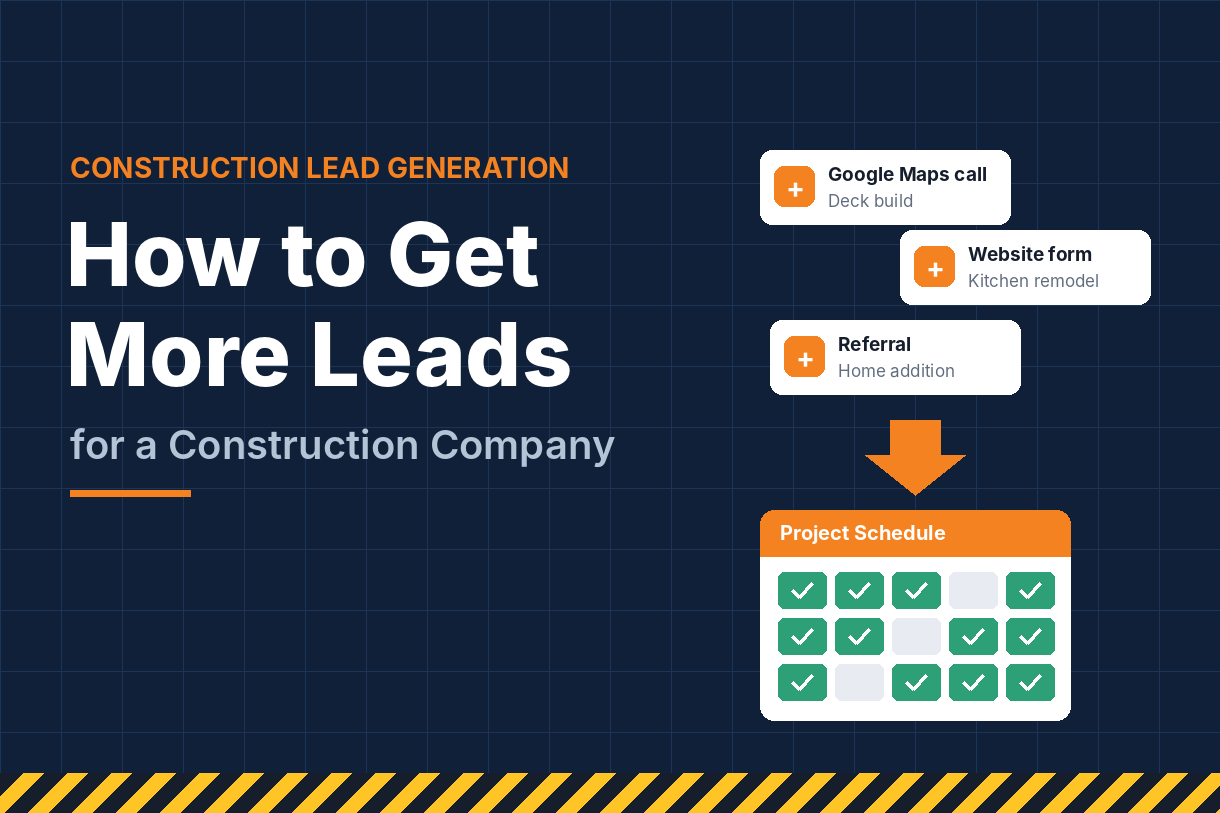
Both work best as supplements to channels you own, like your website, profile and referral network. For a deeper look at these sources, along with how to qualify and follow up on every lead, see our guide on how to get more leads for a construction company.
10. Offline and Traditional Marketing: Still Worth It in the Right Places
Best for: residential contractors in concentrated service areas. Speed: medium. Cost: low to high, depending on the tactic. Longevity: medium.
Not every effective channel is digital. Several traditional tactics still work well for construction companies when they’re targeted:
- Jobsite signs and vehicle wraps: low-cost, always-on visibility in the neighborhoods where you work.
- Direct mail to neighbors around active or recently finished projects.
- Home shows and community events, where buyers can meet you in person.
- Local sponsorships, which build reputation and often earn a link from the organization’s website.
Broad, untargeted traditional advertising, such as radio, billboards or citywide print, is harder to justify for most contractors because it’s expensive and difficult to track. Focus offline spending where your crews already work.
How to Choose the Right Channel Mix
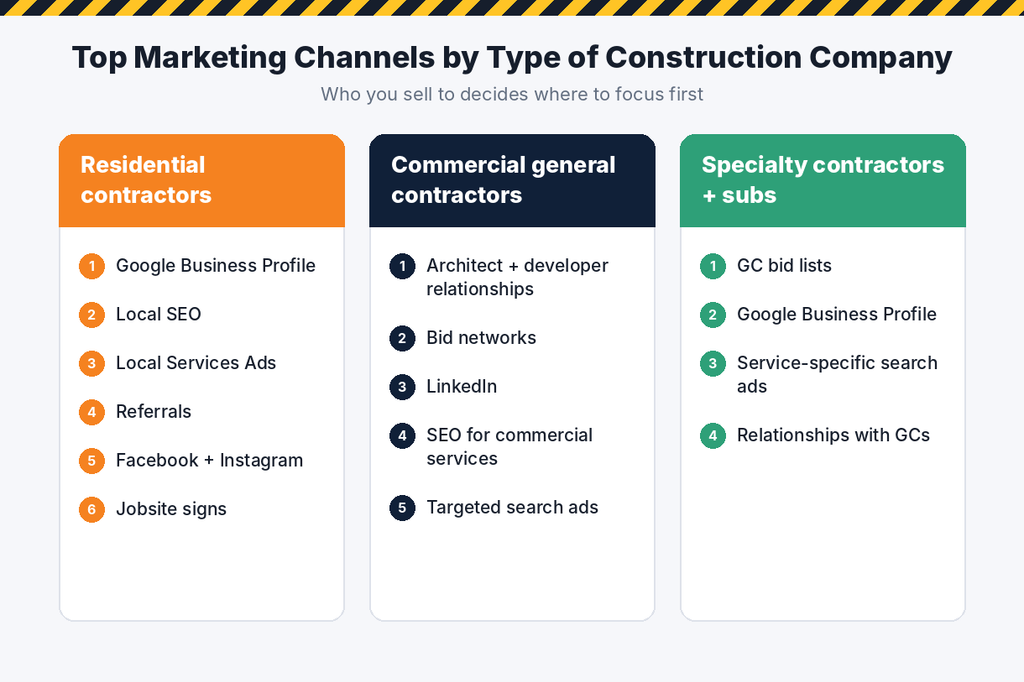
The best marketing channels for your construction company depend mostly on who you sell to. Here’s how the priorities typically shift by business type:
- Residential remodelers and home builders: Google Business Profile, local SEO, Local Services Ads, referrals, Facebook and Instagram, and jobsite signage. Homeowners search locally and trust reviews and visible work.
- Commercial general contractors: referrals and relationships with architects, developers and property managers, bid networks, LinkedIn, organic SEO for commercial services, and targeted search ads. Commercial buyers rely heavily on reputation and prequalification.
- Specialty contractors and subcontractors: GC bid lists, Google Business Profile, focused search ads for specific services, and relationships with general contractors.
Then layer channels in a sensible order. Start with the foundation every channel depends on: a strong website and an optimized Google Business Profile. Add one fast channel, such as search ads or Local Services Ads, to keep the schedule full. Build one compounding channel, such as SEO or a referral program, to lower your costs over time. Only then add amplifiers like social media, email and offline tactics.
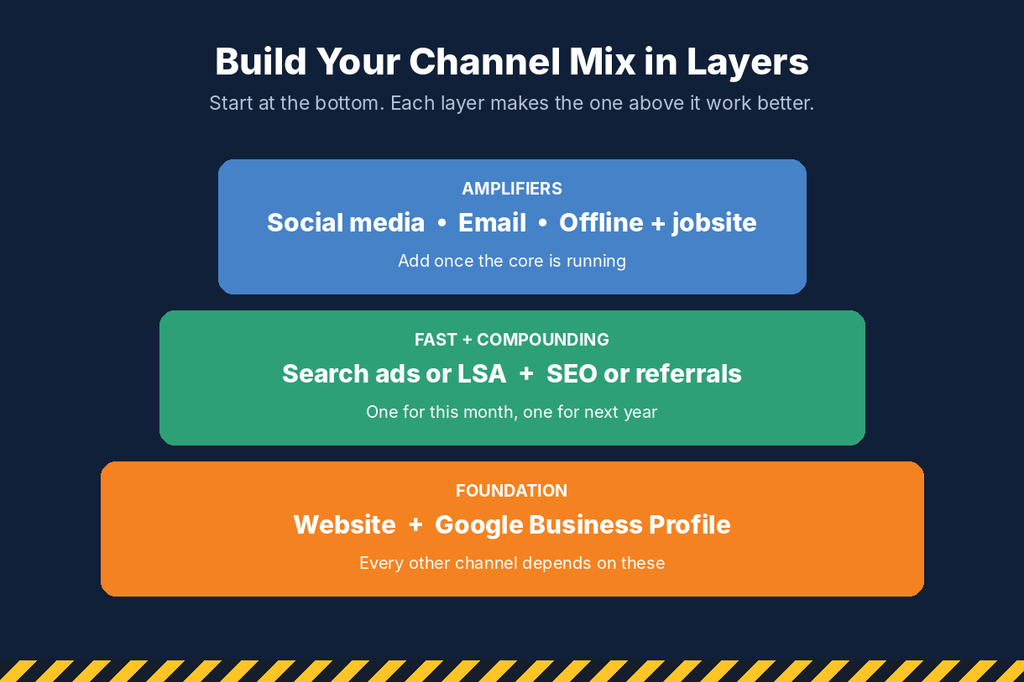
Trying to do everything at once usually means doing nothing well. Two or three channels executed consistently will outperform eight channels run halfway.
For a step-by-step look at how these channels work together as one system, from website to follow-up, see our guide to construction company marketing.
Budgeting and Measuring Your Channels
There’s no universal right amount to spend on construction marketing. It depends on your average project value, close rate, growth goals and how competitive your market is. What matters more is spending in a way you can measure and adjust.
A practical approach:
- Start with a budget you can sustain for six months. Most channels need time to show their real performance.
- Give each channel a clear job. Fast channels fill this quarter’s schedule. Compounding channels lower next year’s costs.
- Track leads by source from day one, using call tracking, form tracking and a simple “How did you hear about us?” question.
- Judge channels by cost per signed job, not cost per lead or clicks.
- Review quarterly, then move money from underperforming channels to the ones producing profitable work.
Most contractors who do this find a clear pattern within a few months: one or two channels produce most of their profitable projects. Those are the channels to double down on.
SEO in particular rewards steady, predictable investment, because rankings build over months of consistent work. Structured SEO packages make that easier to budget, with defined monthly deliverables and reporting that shows what each month returns.
Frequently Asked Questions
What is the best marketing channel for a construction company? There isn’t one best channel for everyone. For most local contractors, the strongest combination is a well-built website, an optimized Google Business Profile, SEO and referrals, supported by search ads when you need leads quickly.
Which marketing channel works fastest? Google search ads and Local Services Ads typically produce leads within days. Lead platforms are also fast, but their leads are often shared with competitors.
Which channel has the best long-term return? SEO and referrals usually deliver the lowest cost per signed job over time, because the leads are exclusive and costs don’t rise with every click.
Do construction companies need social media? Yes, but mainly for trust and visibility. Social media keeps you top of mind and supports referrals, while search and referrals usually drive most of the signed work.
How many marketing channels should a contractor use? Start with a strong foundation (website and Google profile), one fast channel and one compounding channel. Add more only when those are running well and tracked.
Build a Channel Mix That Fills Your Schedule
The best marketing channels for construction companies aren’t the newest or the loudest. They’re the ones that match your clients, work together and are measured by the projects they produce.
Social Market Way helps construction companies choose and run the right channels, from local SEO and Google Business Profile to paid search and campaign tracking. Contact our team today for a review of your current marketing and a recommended channel mix built around the projects you want to win.