


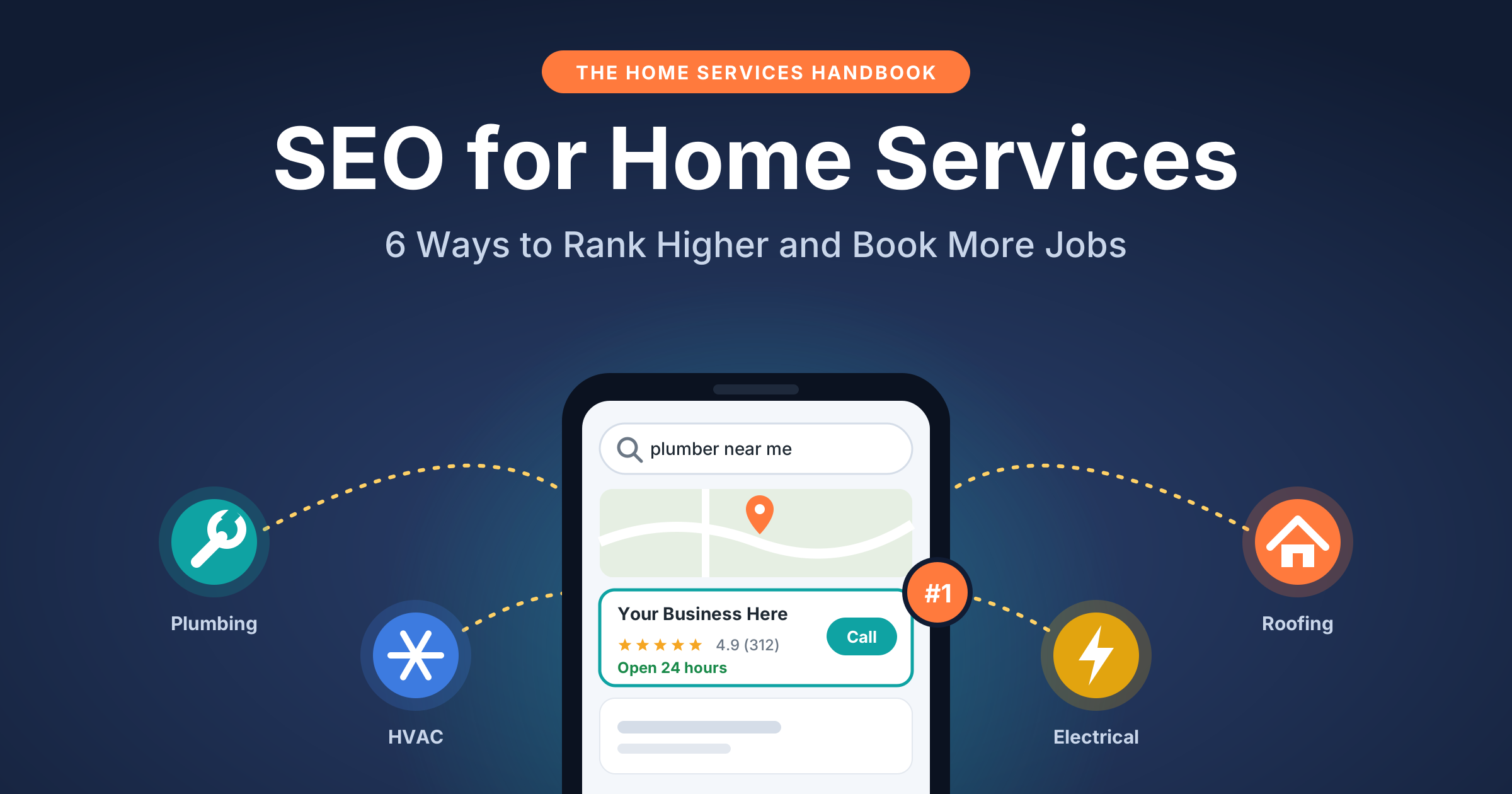
SEO for Home Services: 6 Ways to Rank Higher and Book More Jobs

It’s 9:47 on a Saturday night. A water heater in a finished basement just split open, and the homeowner is standing in two inches of water with a phone in one hand. They are not scrolling social media or flipping through a mailer. They are typing “emergency plumber near me” into a search bar and calling one of the first three companies they see.
If your business isn’t one of those three, that job — and the repeat customer, the referral, and the five-star review that would have followed — goes to someone else.
That is why SEO for home services matters more than search engine optimization does for almost any other industry. Plumbers, HVAC technicians, electricians, roofers, landscapers, pest control pros, and cleaning companies all sell to people who search when they need help right now. Show up at that moment and the phone rings. Miss it, and no amount of truck wraps or yard signs will make up the difference.
The good news: you don’t need to become a marketing expert to compete. You need a clear plan, a handful of tools, and the discipline to keep at it. This handbook walks through six practical steps you can start on this week:
- Dominate local search with your Google Business Profile
- Find the keywords homeowners actually type
- Create content that answers real homeowner questions
- Get your on-page and technical SEO right
- Build authority with backlinks and reviews
- Track the calls and jobs SEO brings in
At the end, we’ll cover when it makes sense to handle SEO yourself and when it’s time to bring in a partner.
1. Dominate local search with your Google Business Profile
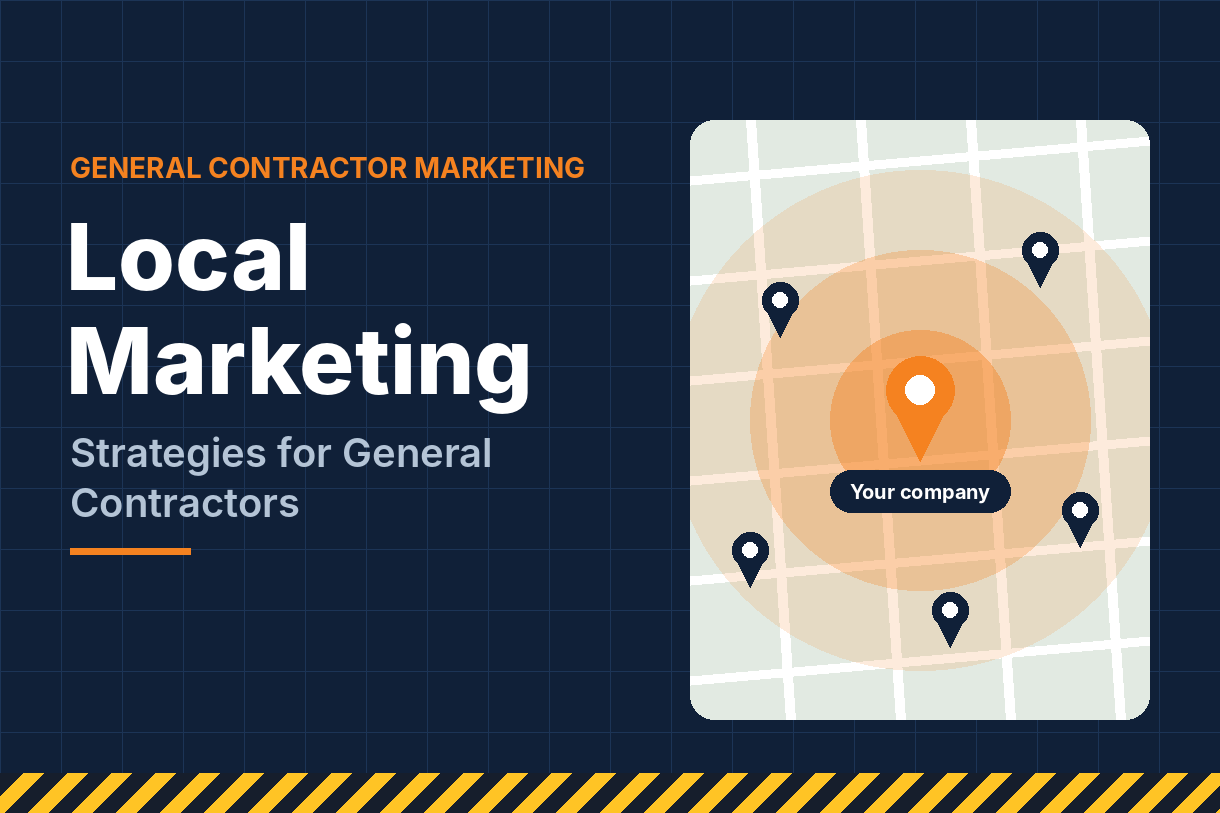
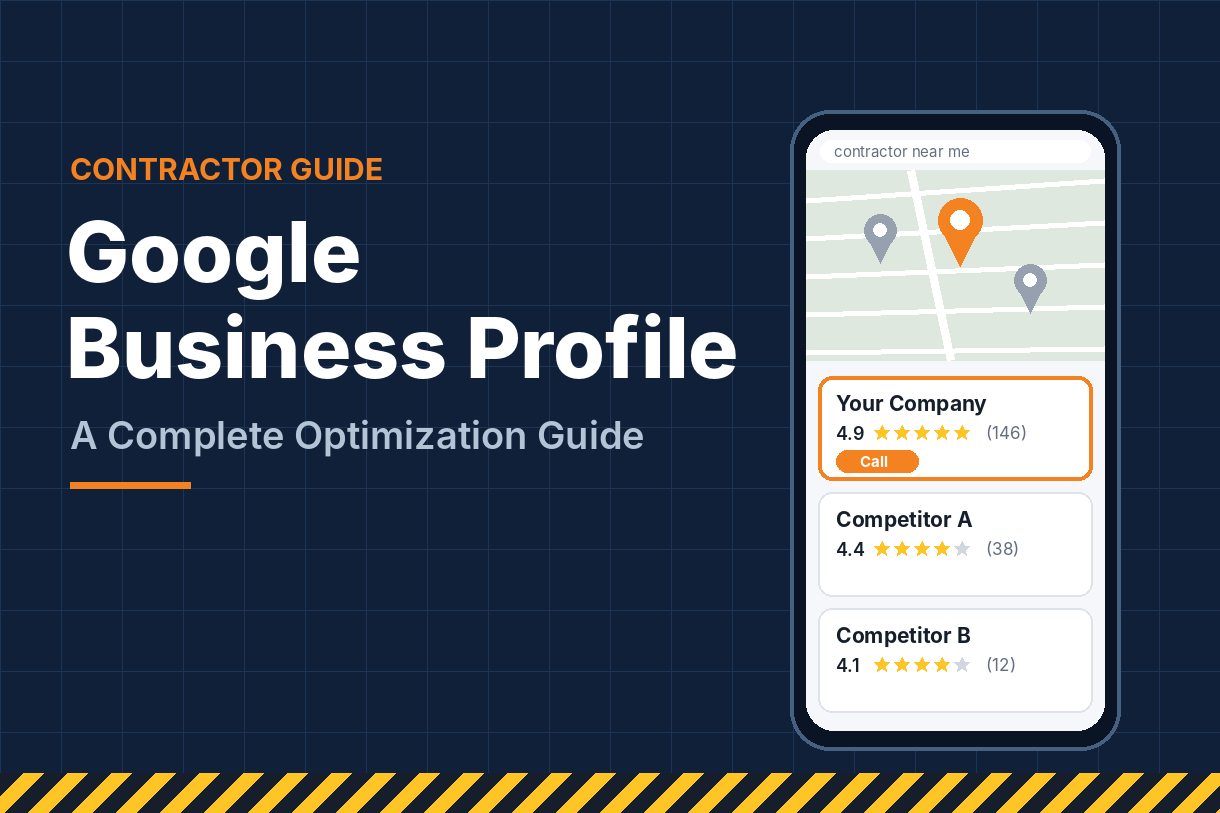
Picture the homeowner from our opening. They pull out their phone, type a few words, and before they even scroll, three local businesses appear on a map with star ratings and a “Call” button. That block of results is called the local pack (or map pack), and for urgent home-service searches it’s the most valuable real estate on the internet.
Most of those calls go to whoever appears first. Local SEO is the work that gets you there. Here’s where to focus:
Claim and fully complete your Google Business Profile. Choose the most specific primary category (“Plumber,” “HVAC contractor,” “Roofing contractor”) and add secondary categories for other services. Fill in every field: service areas, hours (including after-hours or 24/7 availability), services with short descriptions, and your booking link.
Add real photos, often. Upload pictures of your trucks, your crew in uniform, before-and-after jobs, and your shop. Real photos build trust and signal to Google that the profile is active.
Keep your NAP consistent. Your business Name, Address, and Phone number should match exactly everywhere online — your website, Google, Yelp, Angi, the BBB, Nextdoor, and your local chamber of commerce. Mismatched listings confuse search engines and cost you rankings.
Make reviews a habit, not a campaign. Ask every happy customer for a review, ideally by text right after the job, with a direct link. Then respond to every review, good or bad. Fresh, steady reviews are one of the strongest local ranking signals you control.
Post updates. Seasonal offers (“$89 AC tune-up before summer”), new services, and recent projects keep your profile active and give searchers another reason to call.
If you serve multiple cities, or you’re not sure why a competitor with fewer reviews outranks you, an audit from a home service SEO company can find the gaps fast. Our local SEO services cover Google Business Profile optimization, citation cleanup, and review generation built specifically for service-area businesses.
2. Find the keywords homeowners actually type
You call it a “condensate pump replacement.” Your customer types “AC leaking water inside.” Good SEO for home services starts with closing that gap — finding the exact words people use, how often they search them, and how hard they’ll be to rank for.
A keyword research tool like Semrush makes this fast. Type a seed phrase into its Keyword Overview report, choose your country database, and you’ll see the numbers that matter:
Search volume — roughly how many times per month people search that phrase. Big numbers are tempting, but a 900-search local phrase with buyers behind it beats a 30,000-search DIY phrase for booking jobs.
Keyword difficulty (KD %) — how hard it will be to reach page one. Newer or smaller sites should start with low- and mid-difficulty terms and work up.
Search intent — whether the searcher wants to buy (transactional), compare (commercial), or learn (informational). Map transactional keywords to service pages, and informational keywords to blog posts and guides.
Cost per click (CPC) — what advertisers pay for that click. A high CPC is a strong hint that the keyword brings in paying customers, which makes it worth ranking for organically.
Seasonal trend — when demand peaks. HVAC searches spike in summer and winter; gutter cleaning surges in fall. Publish and refresh pages a month or two before the peak.
For each core service, build a short list that blends:
- Service + city: “water heater repair Austin”
- Service + near me: “emergency electrician near me”
- Problem-based searches: “furnace blowing cold air,” “no hot water”
- Cost questions: “how much does a new roof cost”
- Neighborhood or suburb names you serve
Pro tip: run your top competitors’ domains through Semrush’s Organic Research report to see which keywords already send them traffic. It’s the quickest way to spot pages you’re missing.
3. Create content that answers real homeowner questions
Not every searcher is ready to book today. Many are trying to figure out what’s wrong, whether it’s urgent, and what it might cost. If your website answers those questions, you earn their trust long before they need to pick up the phone.
Start with the content that drives bookings, then build outward:
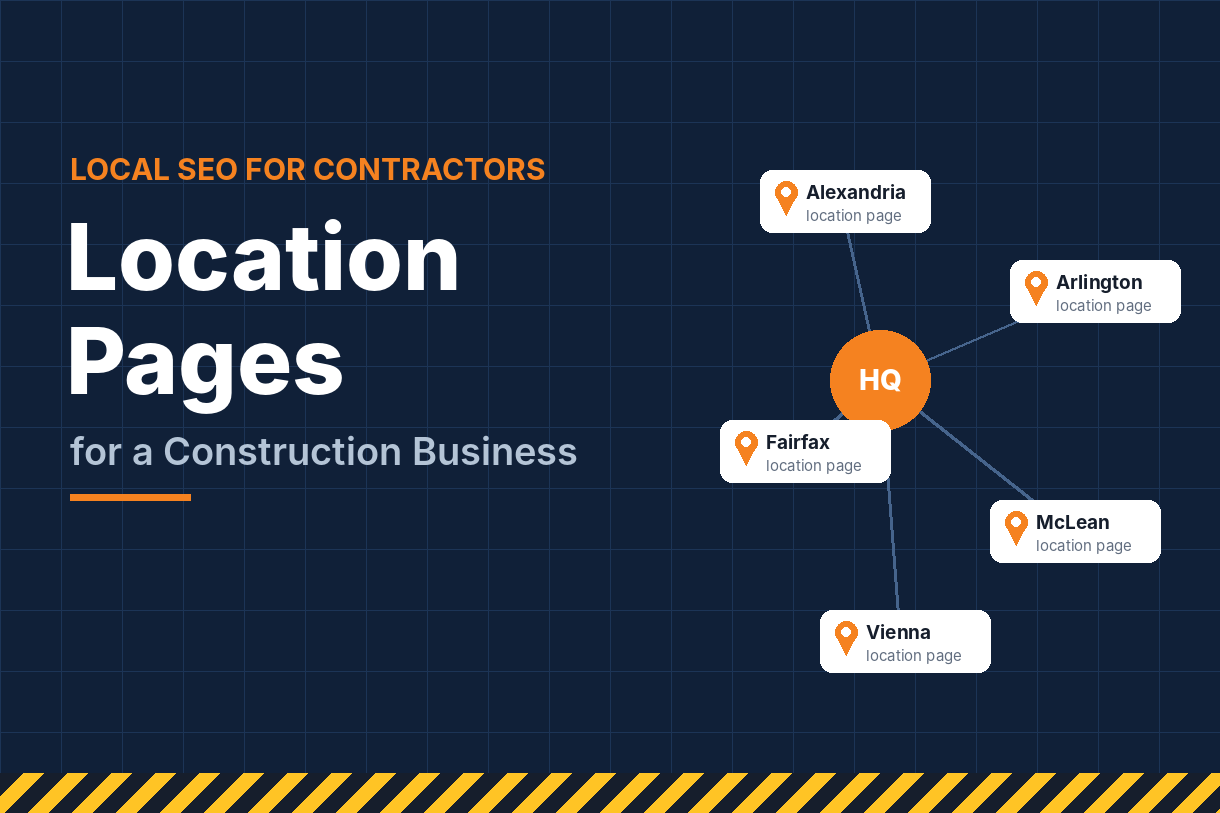
One page per service, per major area. A single “Services” page listing everything you do won’t rank for anything specific. Give each core service its own page — drain cleaning, sewer line repair, water heater installation — and create location pages for the main cities you serve. Make each one genuinely unique: local landmarks, neighborhood-specific issues (older homes with galvanized pipe, hard water in certain zip codes), and photos from real jobs in that area.
Answer the questions your techs hear every day. Your crew already knows what customers ask. Turn those questions into blog posts: “Why is my water heater making a popping noise?” “Repair or replace: when is a 12-year-old AC unit done?” “What to do in the first 10 minutes after a pipe bursts.”
Publish honest cost guides. “How much does it cost to replace a water heater in [city]?” is a high-intent search. Give realistic price ranges and explain what drives the cost up or down. You’ll attract serious buyers and pre-qualify them before they call.
Use video. A two-minute clip of your tech showing how to reset a tripped breaker or relight a pilot light builds trust and can rank in search and on YouTube.
Show your experience. Google rewards content that demonstrates first-hand expertise. Add author bios for your licensed pros, cite your certifications, and include real project examples with photos.
Don’t worry that DIY content gives away the farm. The homeowner who tries the fix and fails — or realizes it’s beyond them — already knows exactly who to call.
4. Get your on-page and technical SEO right
Great content won’t rank if search engines can’t understand it or homeowners bounce off a slow, clunky page. On-page SEO tells Google what each page is about; technical SEO makes sure your site loads fast and can be crawled without problems.
On every service and location page, check these essentials:
- Title tag and meta description. Put the service and city near the front, and give people a reason to click: “Water Heater Repair in Austin | Same-Day Service.”
- One clear H1. Match it to the page’s main keyword, then use H2s for supporting topics like pricing, process, and FAQs.
- Click-to-call above the fold. On mobile, your phone number should be one tap away without scrolling.
- Trust signals. Star ratings, license numbers, years in business, warranties, and financing options.
- Internal links. Connect related pages — your water heater page should link to your tankless installation page and your cost guide — so visitors and search engines can find them.
- Descriptive image alt text. “Technician installing tankless water heater in Austin home” beats “IMG_4021.”
On the technical side, focus on:
- Speed. Compress images, cut heavy plugins, and use good hosting. Aim for pages that load in under three seconds on a phone.
- Mobile-first design. Most urgent home-service searches happen on phones. Test every page on a small screen.
- LocalBusiness schema. Structured data (for example, the Plumber or HVACBusiness type) helps search engines read your name, service area, hours, and phone number.
- Clean indexing. Submit an XML sitemap in Google Search Console, fix broken links and 404 errors, and make sure your site runs on HTTPS.
These details add up. Want a pro to handle them? Our on-page SEO services cover keyword mapping, page optimization, schema markup, and technical fixes for home-service websites.
5. Build authority with backlinks and reviews
Homeowners trust contractors their neighbors vouch for. Google works the same way. When reputable, relevant websites link to yours, each link acts like a recommendation. These are called backlinks, and they remain one of the strongest signals Google uses to decide who ranks.
For a home-service company, quality and relevance beat sheer volume. One link from your city’s chamber of commerce or a local news site is worth more than dozens from random directories overseas.
Here are practical ways to earn them:
- Join local organizations. Chambers of commerce, trade associations, and BNI groups usually list members with a link.
- Get listed by your suppliers. Manufacturers like equipment and fixture brands often run “find a certified installer” directories. If you hold a certification, make sure you’re listed.
- Sponsor the community. Little league teams, school fundraisers, and charity runs often thank sponsors with a website link — and the goodwill is a bonus.
- Be the local expert for reporters. When a heat wave, freeze, or storm hits, local news outlets need quotes. Offer quick, useful tips (“5 ways to protect your pipes tonight”) and you’ll often get a link.
- Partner with complementary businesses. Realtors, home inspectors, property managers, and remodelers can link to you as a trusted referral.
- Clean up citations. Make sure your listings on Yelp, Angi, the BBB, Nextdoor, and industry directories are accurate and consistent.
Reviews are part of your off-page footprint too. A steady stream of recent, detailed reviews on Google and other platforms boosts local rankings and convinces the homeowner comparing three companies at 10 p.m.
One warning: avoid buying cheap link packages or joining link networks. They can trigger penalties that take months to recover from. If you’d rather have a home service SEO company earn links the right way, our off-page SEO services focus on local, relevant, white-hat link building and citation management.
6. Track the calls and jobs SEO brings in
Rankings are nice. Booked jobs pay the bills. The only way to know whether your SEO is working — and where to put more effort — is to measure the outcomes that matter to your business.
Set up these free and low-cost tools first:
- Google Search Console shows which searches your site appears for, your average position, and how many people click through.
- Google Analytics 4 shows what visitors do on your site: which pages they view, and whether they submit a form or tap to call.
- Google Business Profile insights show how many people found your listing, requested directions, or called directly from it.
- Rank tracking in Semrush (its Position Tracking tool) lets you monitor your local rankings for priority keywords in specific zip codes.
Then add the piece most home-service companies skip: call tracking. Because most of your leads arrive by phone, assign unique tracking numbers to your website, Google Business Profile, and ads. You’ll see exactly which source made the phone ring, and many tools record calls so you can tell real job requests from spam.
Finally, close the loop with your CRM or field-service software. Tag every new job with its lead source so you can connect SEO to revenue, not just traffic.
Review these numbers monthly:
- Calls and form submissions from organic search and your Google Business Profile
- Booked jobs and close rate by source
- Revenue and average job value from SEO leads
- Local pack and organic rankings for your top 10–20 keywords
- New reviews and your average star rating
If a service page gets traffic but no calls, improve the offer or the call-to-action. If a high-value keyword is stuck on page two, give that page more content and more internal links.
DIY SEO or hire a pro?
Plenty of owner-operators handle the basics of SEO for home services themselves, and in a small, low-competition market that can work. Setting up your Google Business Profile, asking for reviews, and publishing a few solid service pages are all realistic DIY tasks.
The real cost is time. Every hour spent learning schema markup or chasing backlinks is an hour you’re not quoting jobs, running calls, or managing crews. It usually makes sense to bring in help when:
- You compete with a dozen or more companies for the same high-value keywords
- You serve multiple cities or plan to expand
- Your phone isn’t ringing enough, and you can’t tell why
- You need results before your busy season, not after it
When you compare one home service SEO company to another, look for home-service experience, reporting tied to calls and booked jobs (not just rankings), transparent monthly work, and honest timelines. SEO typically takes several months to build momentum. Be wary of anyone promising page-one rankings in 30 days.
For predictable pricing, our SEO packages bundle local, on-page, and off-page work into clear monthly plans sized for home-service businesses, from single-location startups to multi-city operators.
Frequently asked questions
How long does SEO take for a home-service business? Most companies see early movement in their Google Business Profile within a few weeks of optimization, and stronger organic results over several months. Competitive markets and newer websites take longer.
What matters most for ranking in the map pack? Google looks at relevance (does your profile match the search), distance (how close you are to the searcher), and prominence (reviews, links, and overall reputation). You can’t move your shop, but you can improve the other two.
Do I need a blog? You need helpful content. Service pages come first, but blog posts and cost guides capture homeowners earlier in their search and build the trust that turns into calls later.
Is SEO better than paid ads? They work best together. Ads deliver calls the day you turn them on; SEO builds a source of leads you don’t pay for per click. Many home-service companies use ads for immediate demand while SEO compounds.
Turn searches into booked jobs
The next time a pipe bursts or a furnace quits in your service area, the homeowner will grab a phone and search. The six steps in this handbook — local SEO, keyword research, helpful content, on-page and technical optimization, link building, and tracking — are how you make sure your number is the one they call.
Start with your Google Business Profile this week. Then work down the list one step at a time. And if you’d rather spend your time running jobs than running SEO, Social Market Way can help. As a home service SEO company, we measure success in calls and booked jobs, not just rankings. Explore our SEO packages or reach out for a free consultation.