

How to Get More Leads for a Construction Company

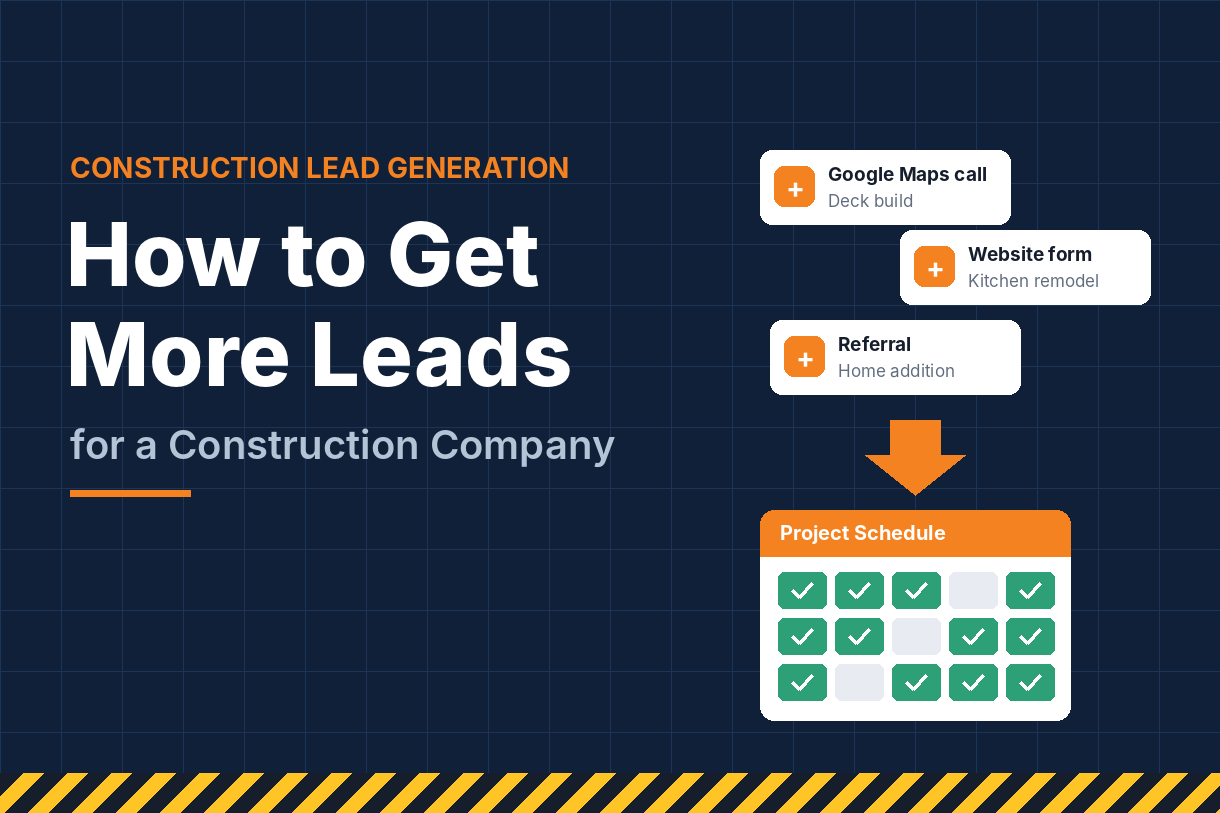
Most construction companies don’t need more leads. They need more of the right leads.
A contractor who gets 40 calls a month but closes three has a different problem than one who gets eight calls and closes four. The first is drowning in tire-kickers. The second has a great close rate and simply needs more volume.
This guide covers both sides: where to find more construction leads, and how to make sure more of them turn into signed contracts. You’ll see which lead sources are fast, which are cheap, which compound over time, and how to stop good leads from slipping away after the first call.
1. Define Your Ideal Lead Before Chasing More
Before you spend another dollar on lead generation, get specific about what a good lead looks like for your company. Write it down:
- Project type: kitchen remodels, roof replacements, tenant improvements, custom homes.
- Project size: the minimum budget that’s worth your crew’s time.
- Location: the towns or ZIP codes where you can work profitably.
- Timeline: how soon the client plans to start.
- Client type: homeowners, property managers, developers, general contractors.
This definition shapes everything else: which keywords you target, which platforms you join, how you word your ads and which questions you ask on the first call.
Next, audit where your current work comes from. Look at your last 20 signed projects and note how each client found you. Most contractors discover that one or two sources produce the majority of their profitable work, while others generate calls that rarely close.
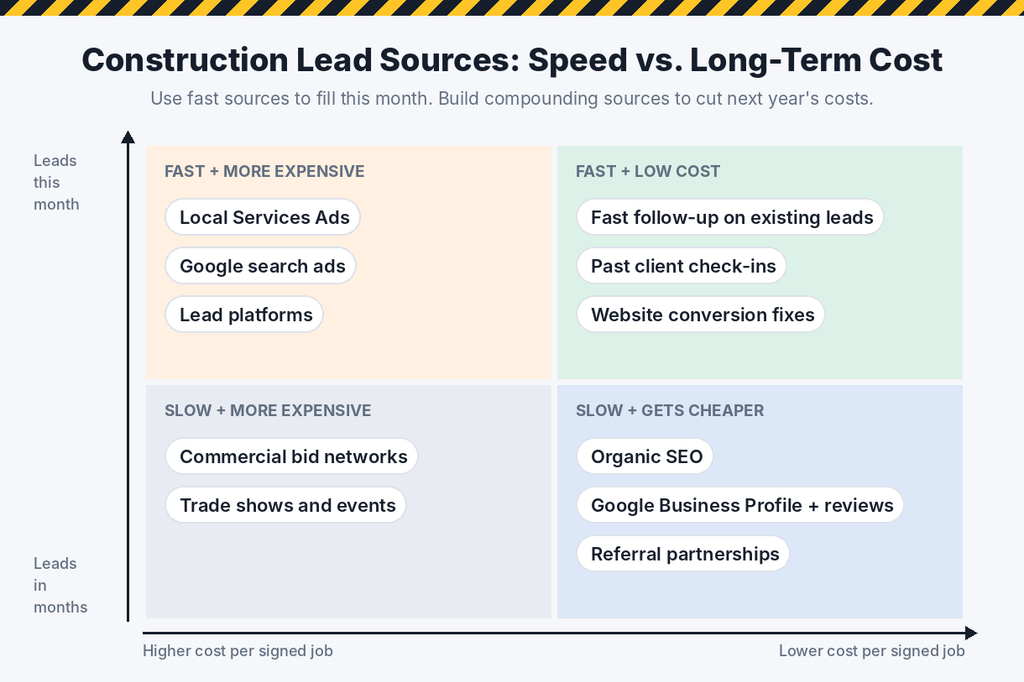
It also helps to understand the trade-off between lead sources. Some deliver leads quickly but cost more per lead, like paid ads and lead platforms. Others take longer to build but get cheaper over time, like SEO and referrals. A healthy pipeline uses both: fast sources to fill this month’s schedule and compounding sources to lower your costs next year.
2. Plug the Leaks in Your Website First
If your website converts poorly, every new lead source you add will underperform. Fixing conversion is often the fastest way to get more leads from the traffic you already have.
Start with a quick audit. Open your site on your phone and ask:
- Can I tell what this company does, and where, within five seconds?
- Is there a clickable phone number and a quote button without scrolling?
- Does each core service have its own page?
- Are there real project photos, reviews and license details?
- Does the site load quickly, and is the quote form short?
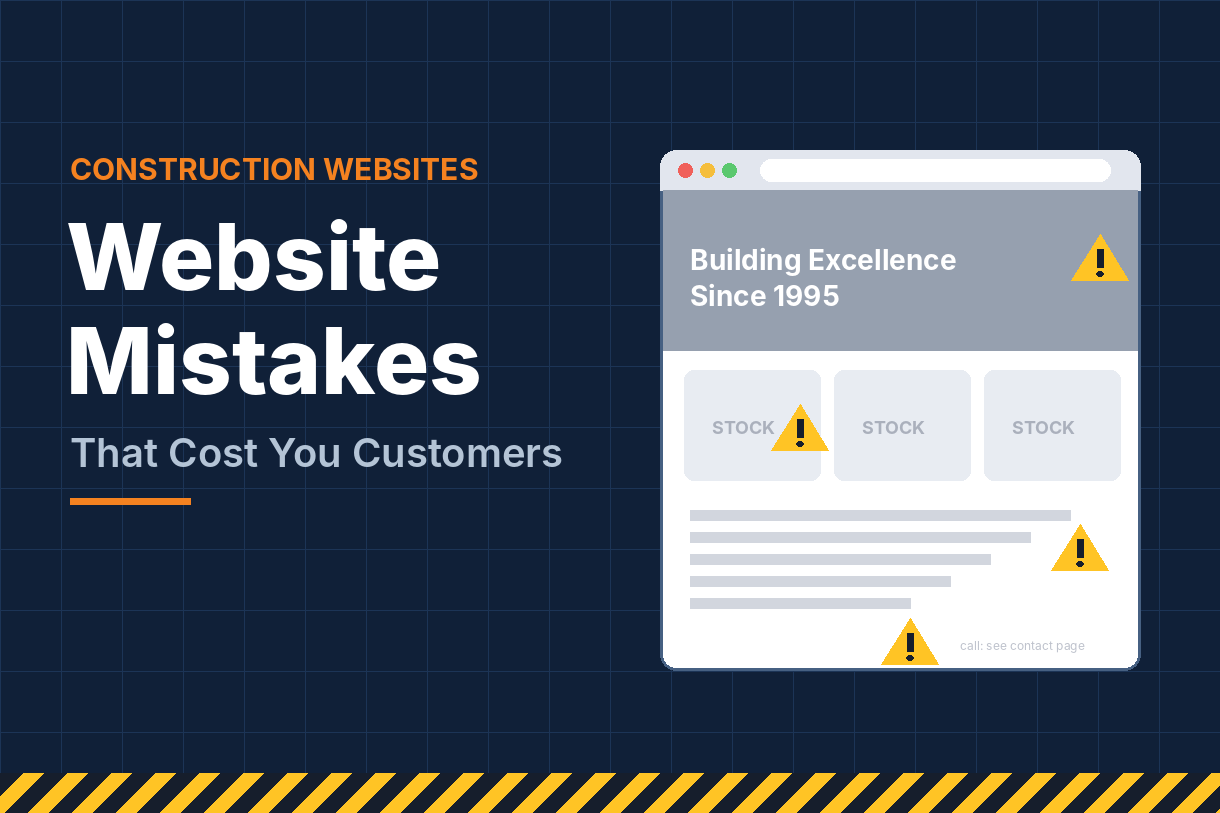
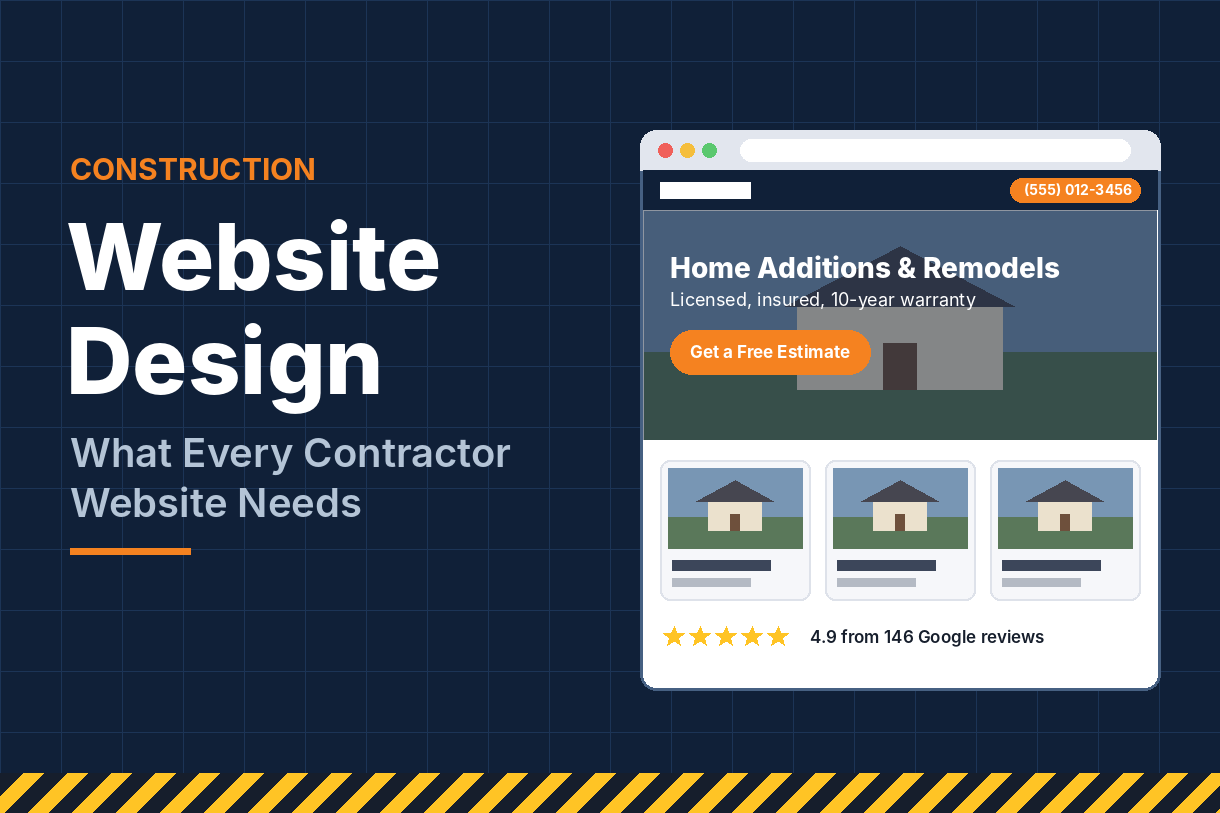
Any “no” is a leak. Common culprits are hidden phone numbers, ten-field quote forms, stock photos and one generic services page. Our guide to construction website design walks through every element a contractor site needs to turn visitors into calls.
Then look at how well each page is set up for search. Clear title tags, descriptive headings, optimized images and internal links help service pages rank for the jobs you want. On-page SEO services handle this page by page, so your best service pages show up when buyers are searching.
Even small changes can make a measurable difference. Shortening a quote form or adding a sticky call button on mobile often increases inquiries without spending anything on new traffic.
3. Win More Calls From Google Maps
For residential contractors especially, the Google map pack is one of the richest lead sources available. People searching “deck builder near me” or “kitchen remodeler [town]” see three businesses on a map, compare star ratings and tap to call. No website visit required.
To get more leads from Maps:
- Choose the most specific primary category for your core work.
- List every service you offer, written the way customers search.
- Upload new job photos every week or two.
- Request a review after every project, and reply to every review you receive.
- Post updates about recent projects, seasonal services and offers.
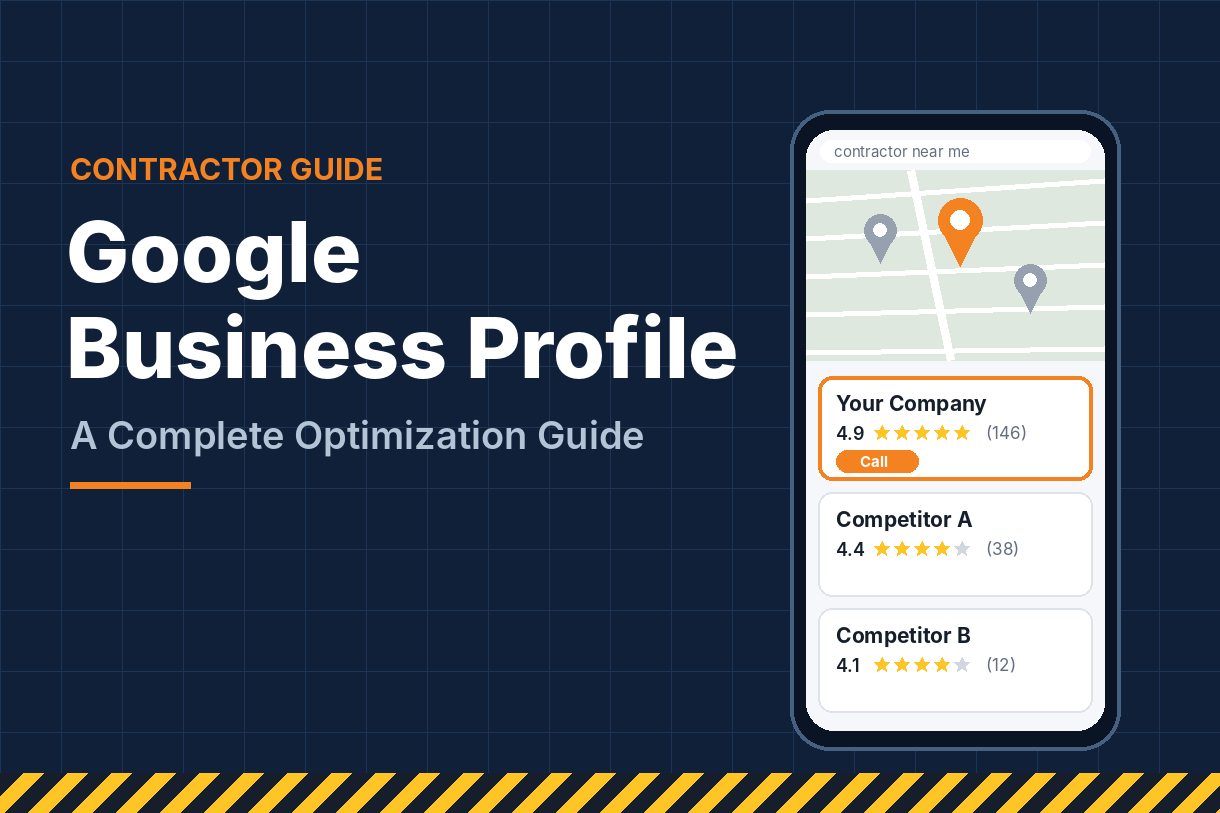
The businesses that dominate the map pack treat their profile as an active marketing channel, not a one-time setup. Our Google Business Profile guide for contractors covers every setting and routine in detail.
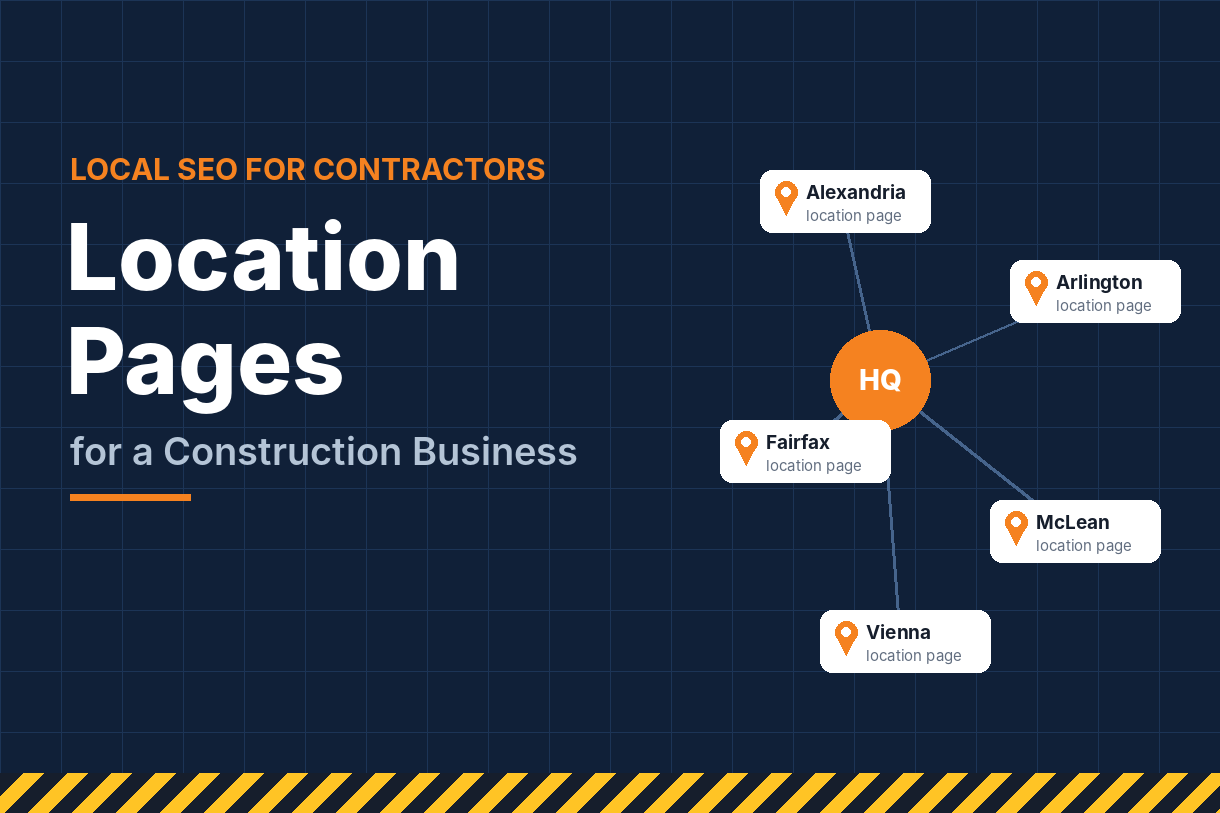
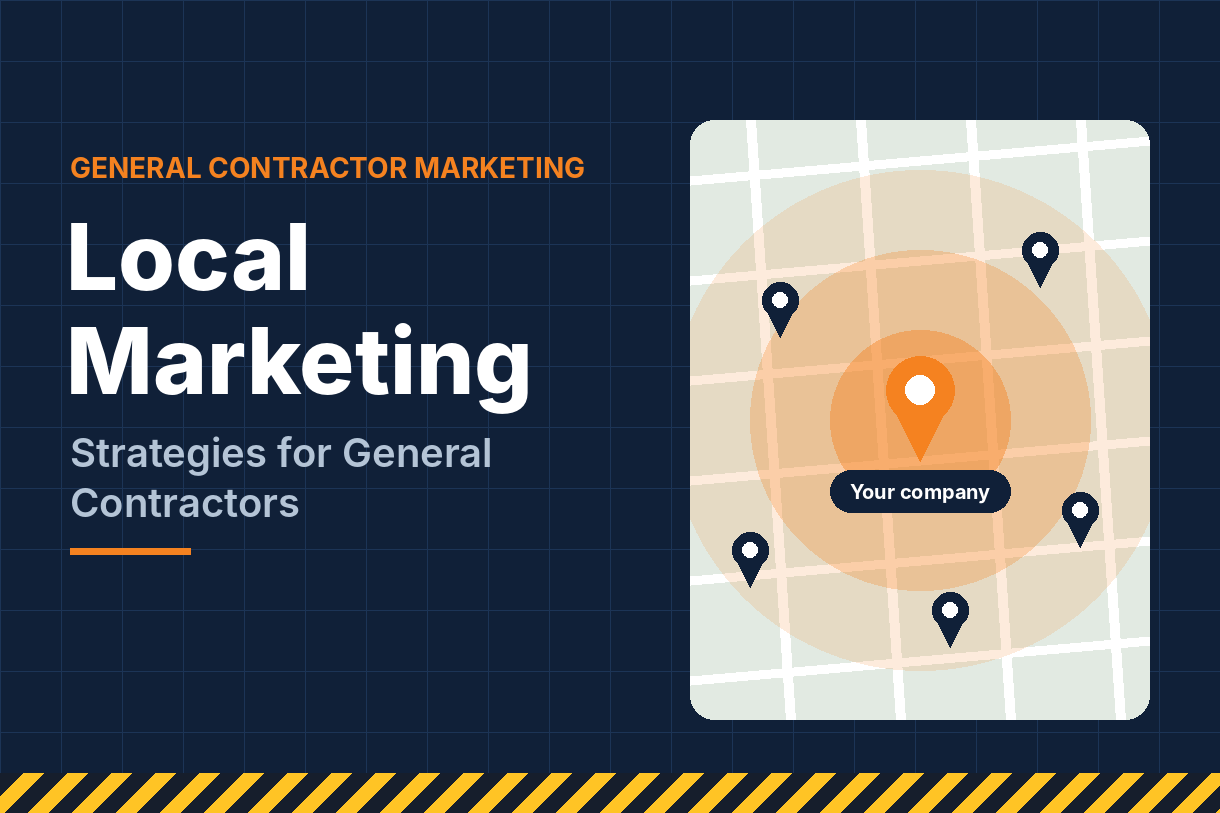
If you want leads from several towns, your profile alone won’t get you there. You’ll need location pages on your website, consistent listings across directories and local links that show Google you’re active in each area. A structured local SEO strategy brings those pieces together so you show up across your whole service area, not just near your office.
4. Build Organic Search Into a Lead Source That Compounds
Paid leads stop when the budget runs out. Organic rankings keep producing. A service page that ranks on page one for “commercial roofing contractor [city]” can bring in qualified leads every month for years, without a cost per click.
To turn organic search into a dependable lead source, focus on searches that signal hiring intent:
- Service plus location: “bathroom remodel Arlington VA”
- Problem-based searches: “foundation crack repair,” “storm damage roof repair”
- Cost and planning questions: “how much does a home addition cost,” which attract buyers early and let you earn their trust before they request quotes
Create a page or article that answers each one better than your competitors do. Then strengthen your site’s authority with links from suppliers, trade associations, local news and community sponsorships.
Organic search takes patience, usually several months before results build. But it’s the lead source that gets cheaper the longer you invest in it. Our complete guide to SEO for construction companies covers keyword research, on-page work, technical fixes and link building step by step.
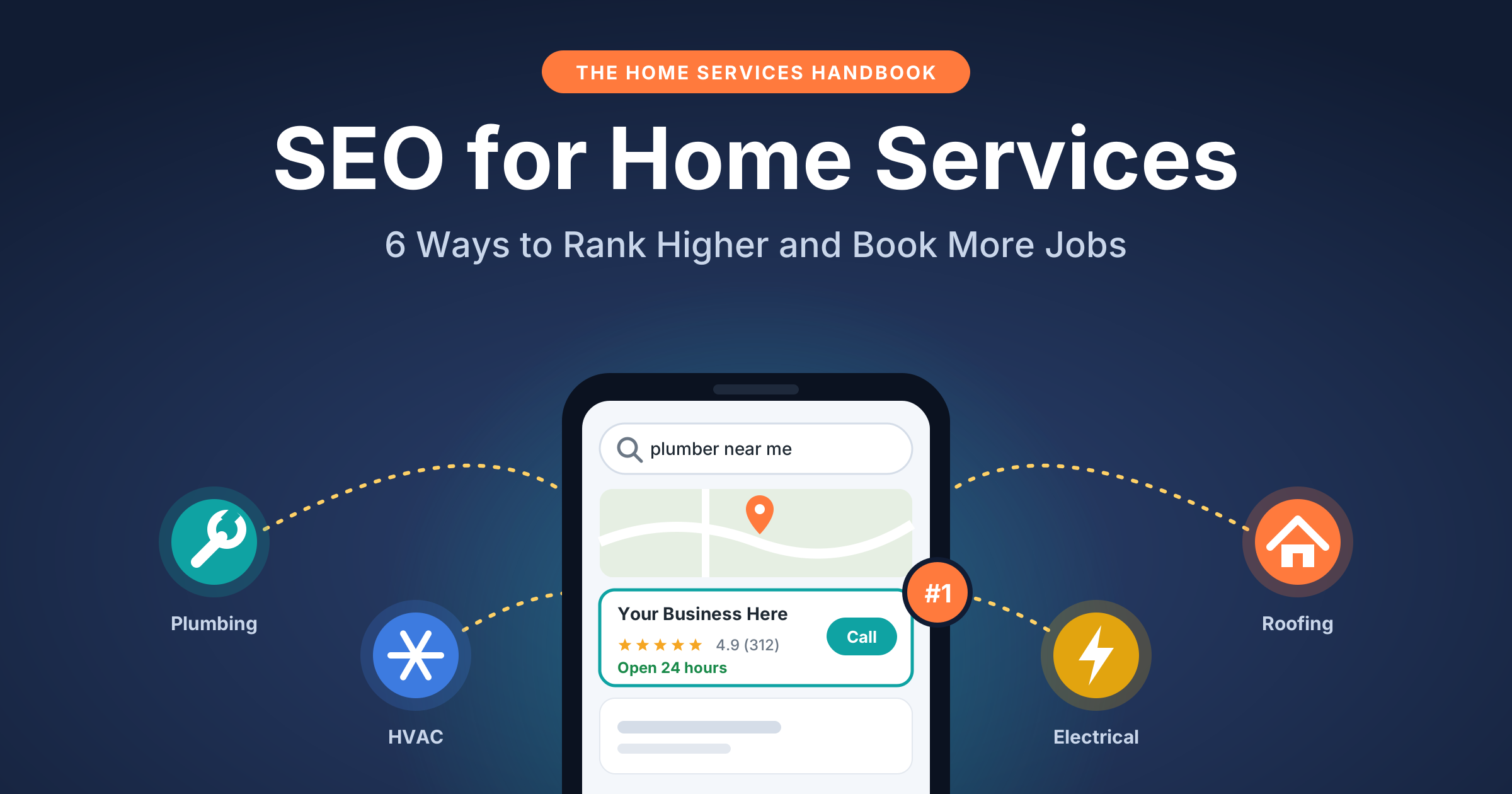
If you also offer residential trades like roofing, HVAC, plumbing or electrical work, the playbook is similar but more competitive. Our guide to SEO for home services shows how service businesses rank higher and book more jobs.
5. Use Local Services Ads for Pay-Per-Lead Calls
Local Services Ads appear at the very top of Google for many home-service searches, above regular ads and the map pack. They’re one of the fastest ways for residential contractors to get leads.
What makes them different:
- You pay per lead, not per click. A lead is typically a call or message from a potential customer.
- You earn a trust badge. After background, license and insurance checks, your ad can show a “Google Guaranteed” or “Google Screened” badge.
- Reviews and responsiveness matter. Your rating, review count and how quickly you answer affect how often your ad appears.
Answer every Local Services lead fast, and dispute leads that don’t qualify, such as wrong service or outside your area, through the platform.
6. Run Focused Search Ads for High-Intent Buyers
Standard Google search ads give you more control than Local Services Ads: you choose the exact keywords, write the ads and send people to dedicated landing pages. They’re especially useful for commercial work and specialty services that Local Services Ads don’t cover.
The key is focus. Bid on high-intent terms like “commercial concrete contractor [city]” or “emergency roof repair,” exclude terms like “jobs,” “DIY” and “salary,” geo-target only your service area, and track calls and form fills as conversions. A tightly built PPC campaign can produce leads within days of launch.
Search ads need ongoing attention, though. Clicks in construction can be expensive, and campaigns that aren’t reviewed every week tend to drift toward irrelevant searches. Professional Google Ads management keeps budgets aimed at qualified leads and a steady cost per lead.
7. Test Lead Platforms Carefully
Home-improvement marketplaces like Angi, Thumbtack and Houzz Pro sell leads or visibility to contractors. They can fill gaps in your schedule, especially when you’re new to an area or your own marketing is still building.
The catch is that many of these leads are shared. The same homeowner may be contacted by three or four contractors within minutes, which turns the job into a race and often a price war.
If you use them:
- Respond within minutes, because the first contractor to call usually has the advantage.
- Narrow your service settings so you only receive project types and areas you want.
- Track close rates per platform, not just lead counts.
- Use them as a supplement, not your only source. Leads you generate yourself are exclusive and usually close at higher rates.
8. Get on Commercial Bid Lists and Networks
Commercial and public-sector work rarely comes through Google searches. It comes through bid invitations. If you want commercial projects, you need to be where general contractors, owners and agencies post them:
| Source | Best for | Watch out for |
|---|---|---|
| Plan rooms and bid networks (Dodge Construction Network, ConstructConnect) | Finding public and private projects early, by trade and region | Subscription costs and many projects outside your size range |
| General contractor bid lists | Subcontractors who want steady invitations from GCs | You must be prequalified, with safety records and insurance ready |
| Government procurement portals (city, county, state and SAM.gov) | Public projects with transparent bidding | Paperwork, bonding requirements and lowest-bid pressure |
| Local builder and trade associations | Relationships that lead to private, negotiated work | Takes time and consistent attendance |
Keep a current prequalification package ready: safety record, insurance certificates, bonding capacity, licenses and a project list. GCs often invite the subs who make prequalification easy.
9. Turn Past Clients Into a Referral Engine
Referrals are usually the highest-quality leads a construction company gets. They arrive already trusting you, they’re less price-sensitive and they close faster. Most contractors rely on them, but very few have a system for generating them.
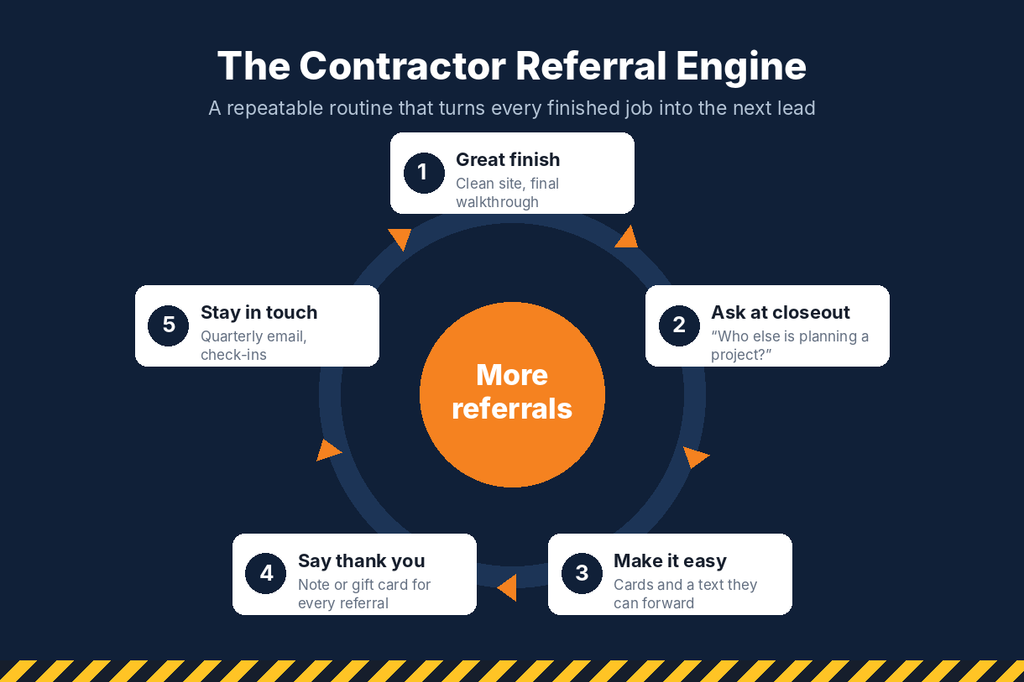
Build a simple referral routine:
- Deliver a great finish. A thorough final walkthrough and a tidy jobsite leave clients eager to recommend you.
- Ask directly at closeout. “Do you know anyone else planning a project this year?” is enough.
- Make referring easy. Leave a few business cards, or send a short text they can forward.
- Thank every referral. A handwritten note or a gift card, whether or not the job closes, keeps people referring.
- Stay in touch. A quarterly email with recent projects and seasonal tips keeps you top of mind.
Don’t overlook your past client list as a direct lead source either. Homeowners who hired you for a kitchen may need a bathroom, deck or roof a few years later. A simple check-in campaign, such as “It’s been three years since your remodel; here’s a free maintenance checkup,” can bring in repeat work at almost no cost.
10. Build Partnerships With Trades and Professionals
Many construction projects start with someone other than the client. Architects, interior designers, real estate agents, property managers, insurance adjusters and suppliers all hear about projects before contractors do.
Identify the professionals who serve your ideal clients, then build real relationships. Meet for coffee, show them your best work and make it easy to refer you. Return the favor whenever you can. A handful of strong partners can supply a steady stream of pre-qualified leads year after year.
Jobsite marketing helps too. Yard signs, branded trucks and door hangers for neighbors near active projects are simple ways to reach people who can see your work in person.
11. Respond Fast and Qualify Every Lead
The fastest way to get more signed jobs without spending more on marketing is to stop losing the leads you already have. Many contractors lose deals simply because a competitor called back first.
Set a few standards and stick to them:
- Call back within the hour during business hours. Use an answering service or a call-forwarding setup for evenings and weekends.
- Send an instant confirmation by text and email whenever someone submits a form.
- Log every lead in a simple CRM with its source, project type and status.
- Follow up on every estimate at least two or three times. Many jobs close on a later contact, not the first one.
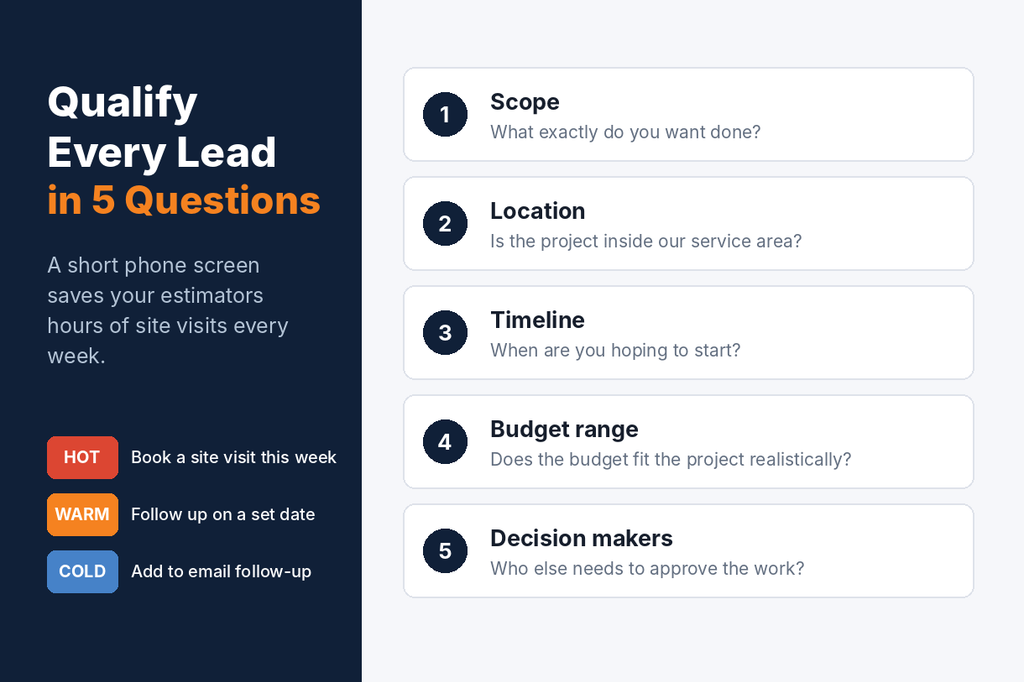
Qualifying matters just as much. Not every lead deserves a site visit. A short phone screen saves your estimators hours each week. Ask about:
- Project scope: what exactly they want done.
- Location: whether it’s in your service area.
- Timeline: when they want to start.
- Budget range: whether it fits the project realistically.
- Decision makers: who else needs to approve the work.
Score leads as hot, warm or cold based on the answers, and prioritize accordingly. Warm and cold leads aren’t lost. Add them to a follow-up email sequence so you’re the first call when they’re ready.
Your website plays a role here too. A quote form that asks for project type, town and timeline pre-qualifies leads before you ever pick up the phone. See our breakdown of what every contractor website needs for form and call-to-action best practices.
For the bigger picture of how lead follow-up fits alongside SEO, ads, reviews and social media, see our guide to construction company marketing.
Measure Cost per Signed Job, Not Cost per Lead
A cheap lead that never closes is more expensive than a costly lead that turns into a $60,000 project. That’s why the most important number in construction lead generation isn’t cost per lead. It’s cost per signed job.
Track these for every lead source, every month:
| Metric | How to calculate it |
|---|---|
| Leads | Calls and forms received from the source |
| Qualified rate | Qualified leads ÷ total leads |
| Close rate | Signed jobs ÷ qualified leads |
| Cost per signed job | Total spend on the source ÷ signed jobs |
| Revenue per source | Total contract value from that source’s jobs |
After three to six months, the picture gets clear. You’ll usually find one or two sources producing your most profitable work at the lowest cost per signed job. Move budget toward those, and cut or fix the ones that don’t perform.
For most contractors, organic search ends up with one of the lowest costs per signed job over time, because the leads are exclusive and the cost doesn’t rise with every click. The challenge is staying consistent long enough to see the results. Our SEO packages give you a predictable monthly plan with clear deliverables and reporting, so you can measure exactly what it returns.
Your 30-Day Lead Generation Action Plan
You don’t need to do all eleven at once. Here’s a practical first month:
- Week 1: Write down your ideal lead, audit where your last 20 jobs came from, and fix the biggest leaks on your website.
- Week 2: Complete and update your Google Business Profile, then send review requests to your last ten happy clients.
- Week 3: Set up call tracking, a simple CRM and a one-hour callback standard. Launch Local Services Ads or a focused search campaign on your most profitable service.
- Week 4: Contact five past clients and five potential referral partners, and plan your first two service or location pages for SEO.
At the end of the month, review your numbers and decide where to double down.
Frequently Asked Questions
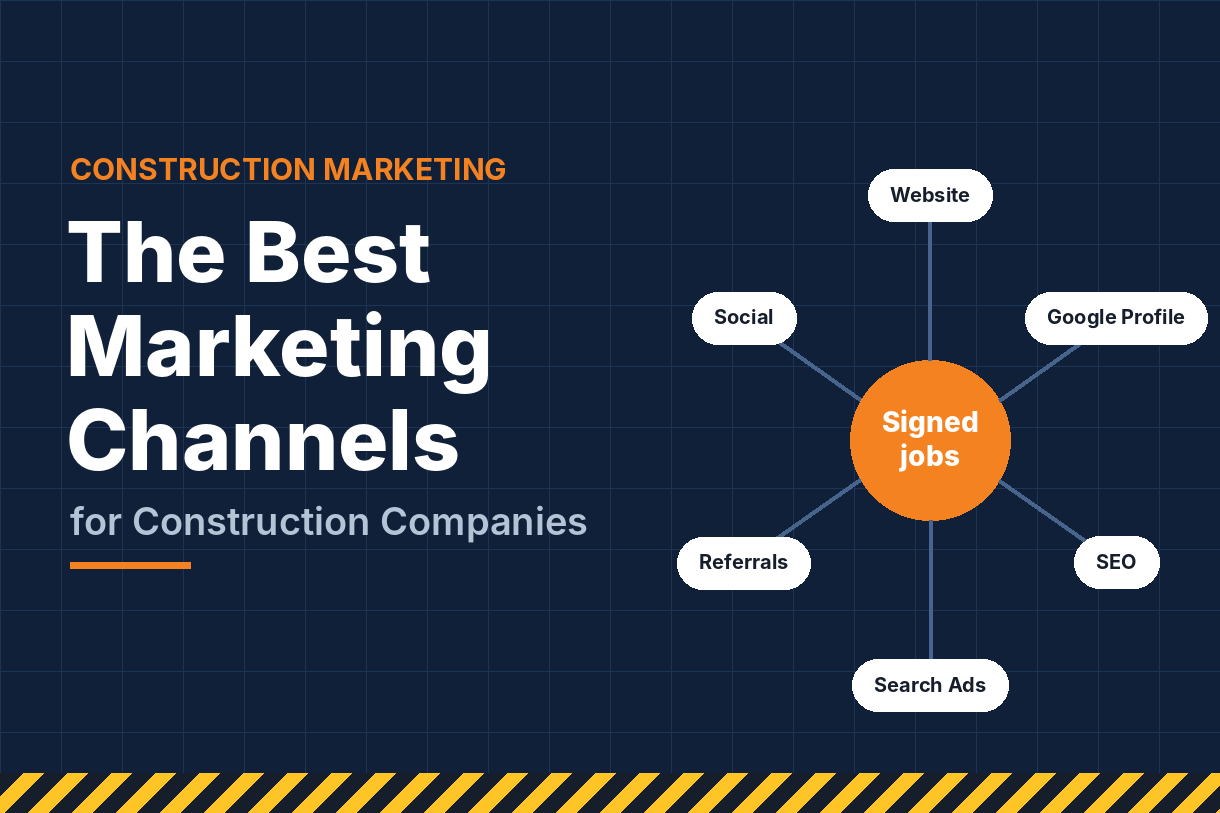
What is the best way to get leads for a construction company? There’s no single best source. Most growing contractors combine Google (Maps, organic and ads) for new demand with referrals and partnerships for high-quality, high-trust leads.
Should construction companies buy leads? Bought leads from marketplaces can fill gaps quickly, but they’re often shared with competitors. Use them as a supplement and track close rates closely.
How quickly can I get more construction leads? Local Services Ads and search ads can produce leads within days. Google Business Profile improvements often help within weeks. SEO and referral systems take months but deliver the lowest long-term cost.
How do I get commercial construction leads? Join bid networks and plan rooms, get prequalified with general contractors, register on government procurement portals and build relationships with architects, developers and property managers.
Why am I getting leads but not closing them? Usually it’s slow follow-up, poor qualification or leads from the wrong sources. Respond within the hour, screen leads before site visits and compare close rates by source.
Ready for a Steadier Pipeline?
More leads don’t come from one tactic. They come from a few reliable sources working together, and a team that follows up on every one.
Social Market Way helps construction companies build lead generation systems across search, maps and paid campaigns, with tracking that shows exactly which jobs each dollar produces. Contact our team today for a free review of your current lead sources and a plan to fill your schedule with the projects you want.