

Is SEO Worth It? An Honest Answer for Business Owners

You’ve probably heard both sides. One person tells you SEO is the best money they ever spent. Another tells you they paid an agency for a year and got nothing but a monthly PDF full of charts they didn’t understand.
Both people are telling the truth. That’s what makes the question “is SEO worth it?” so frustrating to answer.
Here’s the short answer: yes, SEO is worth it for most businesses that sell to people who search before they buy — as long as you can give it six to twelve months and you hire for results, not activity. It is not worth it if you need leads next week, if nobody searches for what you sell, or if you pick the cheapest provider you can find.
This guide is the long answer. We’ll show you what you actually pay for, how SEO compares to running Google Ads, what has changed now that AI answers sit at the top of Google, and the honest situations where we’d tell you not to spend a dollar on it.
We run SEO services for businesses out of Washington, DC, so yes, we have a stake in the answer. That’s exactly why we’d rather you make this decision with clear eyes. A client who understands what SEO can and can’t do is a client who stays, grows and refers friends.
By the end, you’ll know whether SEO is worth the investment for your business — and what a good SEO partner should look like if you decide to hire one.
What You’re Actually Paying for When You Pay for SEO
Before you can judge whether SEO is worth it, you need to know what “SEO” means on an invoice. A lot of disappointment comes from business owners who thought they were buying rankings and were actually buying a vague bundle of “optimization.”
Real SEO work falls into four buckets:
- Technical health. Making sure Google can crawl, load and understand your site. Slow pages, broken redirects and pages accidentally blocked from search quietly cap your results no matter how good your content is.
- On-page optimization. Matching each page to what people actually search for, then writing titles, headings and copy that answer the question better than competitors do.
- Content. Building the service pages, location pages and articles that capture buyers at every stage, from “what is” questions to “near me” searches.
- Authority. Earning links, mentions and reviews from other trusted sites, which tells Google your business is real and respected.
Most businesses we audit have a gap in at least one of these. The most common one is surprisingly basic: service pages that never say what the business does, where it does it, or why someone should pick it. Fixing that alone often moves the needle within a few months. If you want to see what that work looks like in practice, our on-page SEO services page walks through it.
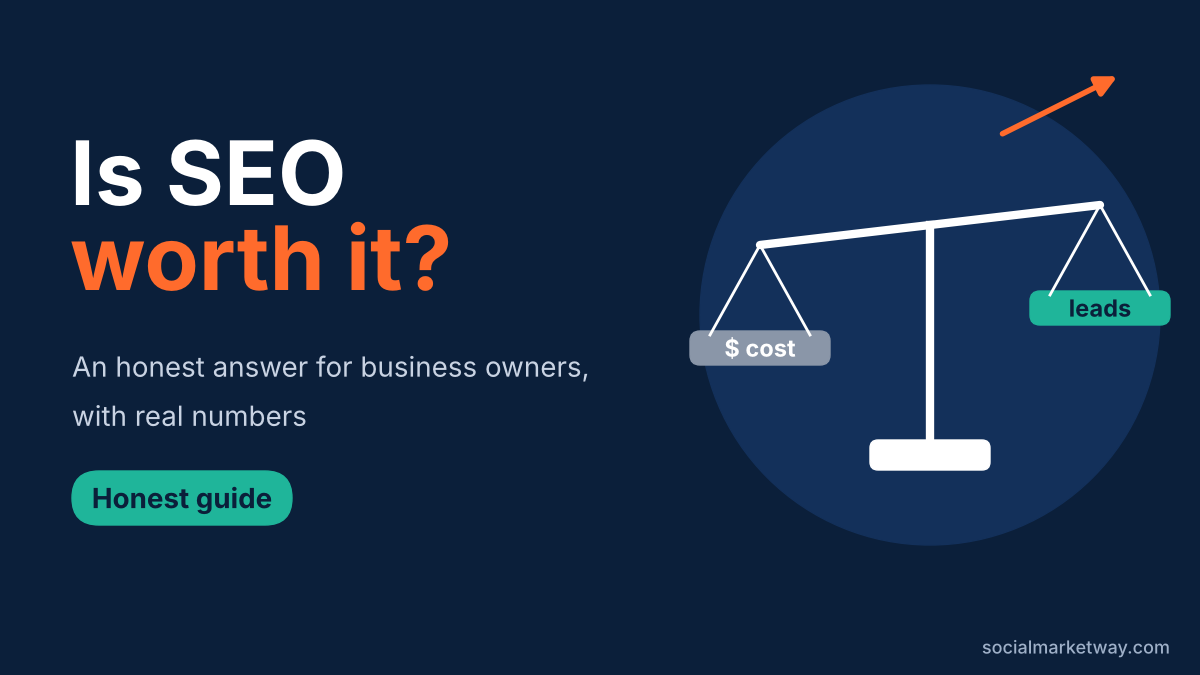
Here’s the key point. When you ask “is it worth paying for SEO?”, you’re really asking whether paying someone to do these four things consistently will produce more revenue than it costs. That’s a math question, and we’ll get to the math shortly.
What you should not be paying for: guaranteed #1 rankings, “submissions” to hundreds of search engines, or a fixed number of backlinks per month from sites you’ve never heard of. Those are signs of a provider selling activity, not outcomes.
Is Search Engine Optimization Worth It in 2026, With AI in the Results?
This is the question we hear most right now. Google shows AI Overviews at the top of many searches, people ask ChatGPT for recommendations, and headlines keep declaring that “SEO is dead.” So is search engine optimization worth it anymore?
The data says yes — with a twist.
The bad news is real. Ahrefs studied 300,000 keywords and found that when an AI Overview appears, the top-ranking page now gets about 58% fewer clicks than it would have before AI Overviews existed. For simple “what is” questions, Google is answering people directly.
The good news is bigger than the headlines suggest. A Similarweb-based study of the top 40,000 US sites found organic search traffic fell only about 2.5% year over year — nowhere near the 25–60% drops people like to quote. The same research found roughly 90% of search clicks still go to organic results, not ads. And AI chatbots still send a tiny slice of web traffic: about 0.7% globally in early 2026, versus 17.1% for organic search, according to Sensor Tower data reported by eMarketer.
So what’s the twist? The searches that got hurt are mostly the ones that never paid your bills. “What is a heat pump” lost clicks. “Heat pump installer in Silver Spring” did not — because someone searching that wants a company, not a definition.
That changes how good SEO is done, not whether it’s worth doing:
- Focus on buying-intent searches (services, locations, comparisons, pricing) over pure trivia.
- Build a brand that AI tools recognize. ChatGPT, Gemini and Google’s AI Overviews lean on the same signals Google always has: trusted mentions, reviews and links from other sites. That’s why off-page SEO matters more now, not less.
- Structure your pages so AI tools can quote you: clear answers, real data, schema markup.
The businesses losing in 2026 are the ones still publishing generic blog posts to chase traffic. The ones winning are using SEO to show up exactly when a buyer is ready.
Is It Worth Paying for SEO? The Math vs. Google Ads
The cleanest way to answer “is SEO worth the investment?” is to compare it with the thing most businesses use instead: paid search.
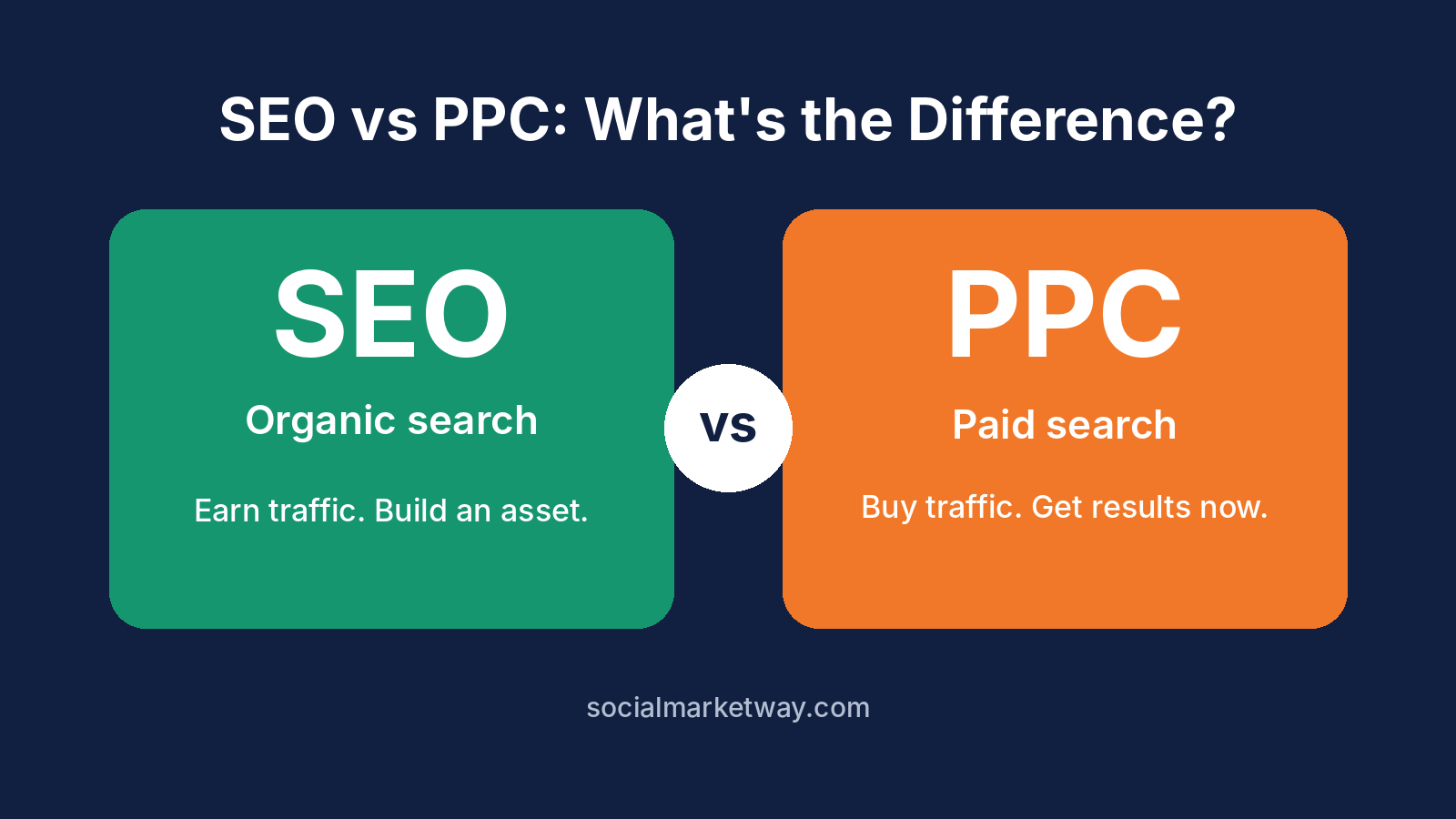
Google Ads are fast. You set a budget today and your phone can ring tomorrow. But you pay for every single click, forever. Click prices keep climbing in competitive local industries, and many service keywords cost several dollars to well over $20 per click. Even the phrase “is a SEO company worth it” runs about $7 a click in Ahrefs. The moment you stop paying, the leads stop too.
SEO works the other way around. It’s slow to start, but the traffic it builds doesn’t send you a bill per visit. A page that ranks keeps working while you sleep, on weekends, and long after the work that put it there is finished.
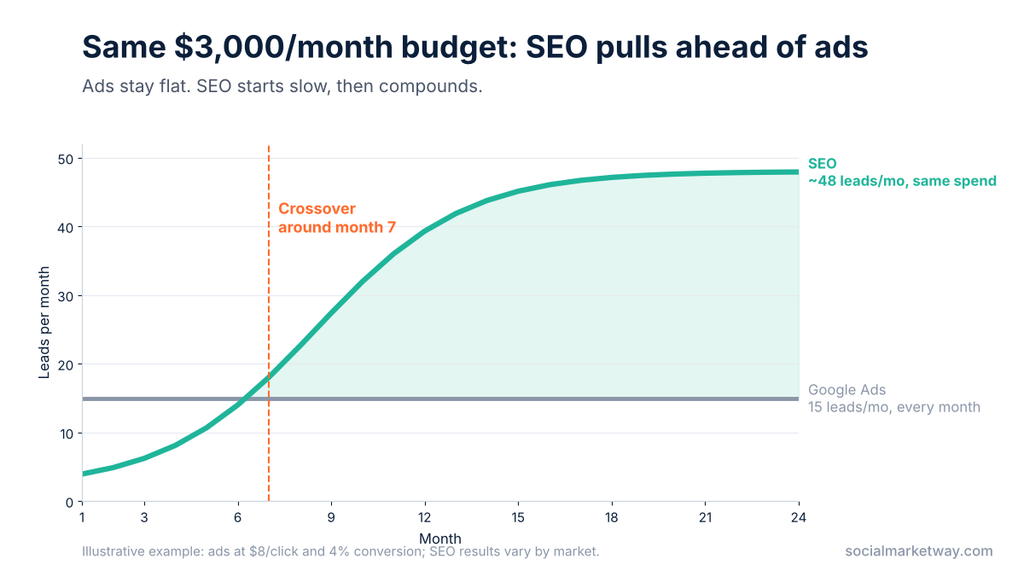
Here’s a simple illustration. These are example numbers, not a promise, but they show the shape of the decision:
| Same $3,000/month budget | Google Ads | SEO |
|---|---|---|
| Month 1 | ~375 clicks at $8 each | Little new traffic; fixes and foundations |
| Month 6 | ~375 clicks | Rankings starting to pull in steady visits |
| Month 12 | ~375 clicks | Traffic that would cost more than $3,000/month to buy as ads |
| If you stop paying | Traffic drops to zero next day | Rankings fade slowly over months, not overnight |
The crossover point — where SEO starts delivering more value than the same money in ads — typically shows up somewhere between month six and month twelve for a well-run campaign. After that, every month widens the gap.
That doesn’t mean ads are bad. Ads are great for testing offers, covering slow seasons and getting leads while SEO ramps up. The smartest setup for most of our clients is both: ads for speed now, SEO for cheaper leads later.
The other half of the math is what organic visitors are worth. Organic search converts at around 5% on average, according to Ruler Analytics data, because these visitors went looking for you. To run the numbers for your own business, multiply your expected monthly visits by your conversion rate, close rate and average sale. Then compare that with your monthly spend. Our guide to how much SEO costs breaks down typical price ranges so you can plug in realistic figures.
When SEO Is NOT Worth It (Honestly)
Any agency that tells you SEO is right for everyone is selling, not advising. Here are the situations where we’d tell you to keep your money, or at least wait.
You need revenue in the next 30 days. SEO is a compounding investment. If cash flow depends on leads this month, start with paid ads or referrals and come back to SEO once the urgent fire is out.
Nobody searches for what you sell. If you’ve invented a brand-new product category, there may be no search demand yet. In that case, you need awareness first (PR, social, paid campaigns), and SEO becomes valuable once people start looking for the solution by name.
You can’t commit for at least six months. Three months of SEO followed by cancellation is the most expensive way to do it. You pay for the setup and leave right before the payoff.
Your website can’t convert. SEO brings visitors. If your site loads slowly, hides your phone number or doesn’t explain your offer, more traffic just means more people leaving. Sometimes the best first investment is a better website, then SEO.
You’re shopping on price alone. This is the big one. A $299/month SEO package sounds like a deal until you look at what it buys. At that price, providers usually cut corners in the one place you can’t afford to: authority building. Cheap packages often rely on link farms, spun articles and private blog networks. Those can trigger a Google penalty that takes far longer to undo than it took to cause.
That last point deserves a closer look. Links from other websites are still one of the strongest ranking signals, but only when they’re earned from real, relevant sites. Our link building services page explains what a clean, white-hat approach looks like, so you can spot the difference.
If none of these red flags describe you, SEO is very likely worth it. The next question is who should do it.
Is Hiring an SEO Company Worth It, or Should You DIY?
You have three real options: do it yourself, hire someone in-house, or work with an SEO company. Each can work. The right choice depends on your time, budget and how competitive your market is.
| Do it yourself | In-house hire | SEO company | |
|---|---|---|---|
| Cash cost | Lowest (plus paid tools) | Full salary, benefits and tools | Monthly retainer |
| Your time | Many hours a week | Hiring and managing one person | About an hour a month |
| Skills covered | Whatever you learn | One person’s strengths | Technical, content, links and reporting |
| Best for | Very small, low-competition niches | Large companies with steady SEO needs | Most growing small and mid-sized businesses |
DIY is worth it if you’re in a low-competition niche, enjoy learning, and have five to ten hours a week to spare. Many owners start here. The catch is opportunity cost: an hour spent learning schema markup is an hour not spent closing deals or serving customers.
An in-house hire is worth it once SEO is big enough to be a full-time job. But one person rarely covers technical SEO, content and outreach equally well, and you’ll still need paid tools on top of their salary.
Is a SEO company worth it? For most small and mid-sized businesses, yes, because you get a full team for less than the cost of one employee. You get specialists for each part of the work, the tools are included, and the knowledge doesn’t walk out the door when someone quits.
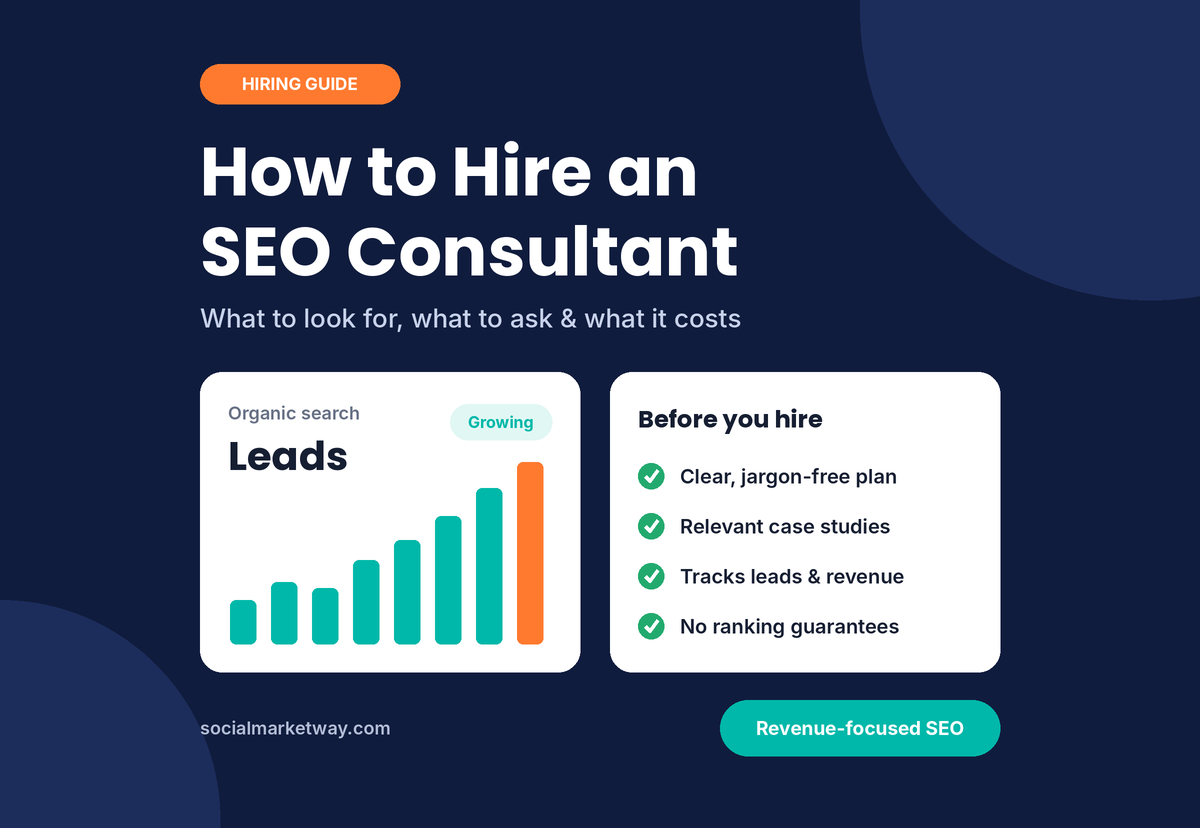
But “are SEO companies worth it” depends entirely on which company. The good ones share a few traits:
- They tie their work to leads and revenue, not just rankings.
- They explain what they’ll do in plain English before you sign.
- They never guarantee a #1 position (nobody controls Google).
- They give you a named person to talk to, not a support ticket queue.
- They show you real case studies with real numbers.
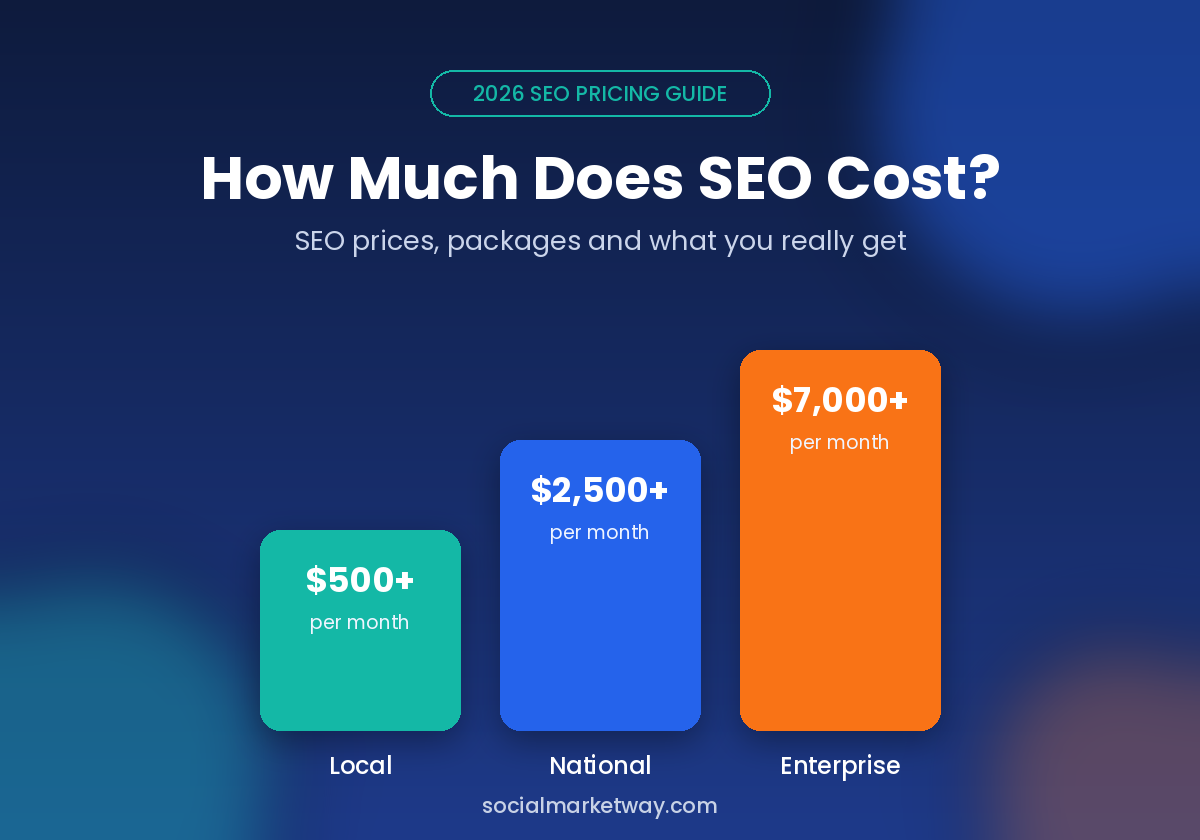
That’s the standard we hold ourselves to. Each client gets a dedicated SEO manager and a monthly report covering rankings, traffic, conversions and the work done. You can see exactly what’s included at each level on our SEO packages page, starting at $2,000 a month.
Is SEO Worth the Investment if It Takes Months? What to Expect, Month by Month
The number one reason people decide SEO isn’t worth it is that they expected results too soon. So let’s set honest expectations.
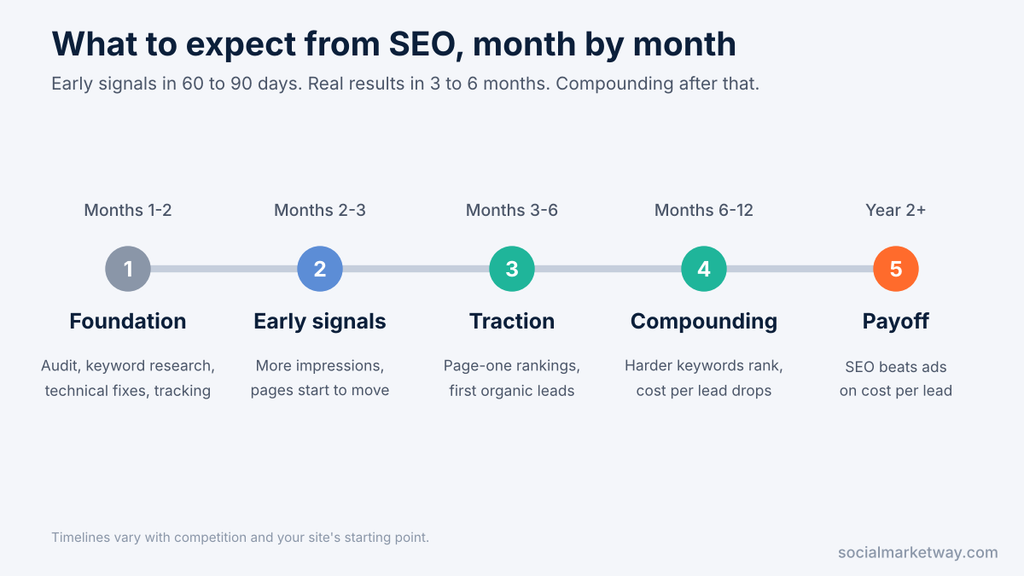
Months 1–2: Foundation. Audit, keyword research, technical fixes, tracking setup. You won’t see much in the way of new leads yet. You should see a clear plan and a list of fixes already completed.
Months 2–3: Early signals. Pages start appearing for more searches, even if they’re on page two. Impressions in Google Search Console rise. In our experience, early improvements usually show up within 60 to 90 days.
Months 3–6: Traction. Target pages climb onto page one for less competitive terms. Calls and form fills from organic search start becoming noticeable. This is when most clients first feel that SEO is “working.”
Months 6–12: Compounding. Content and authority build on each other. Harder keywords start ranking, and the cost per lead keeps dropping as traffic grows while the monthly fee stays flat.
Year 2 and beyond: The payoff. This is where SEO pulls clearly ahead of paid ads. You’re defending and expanding positions rather than building from zero.
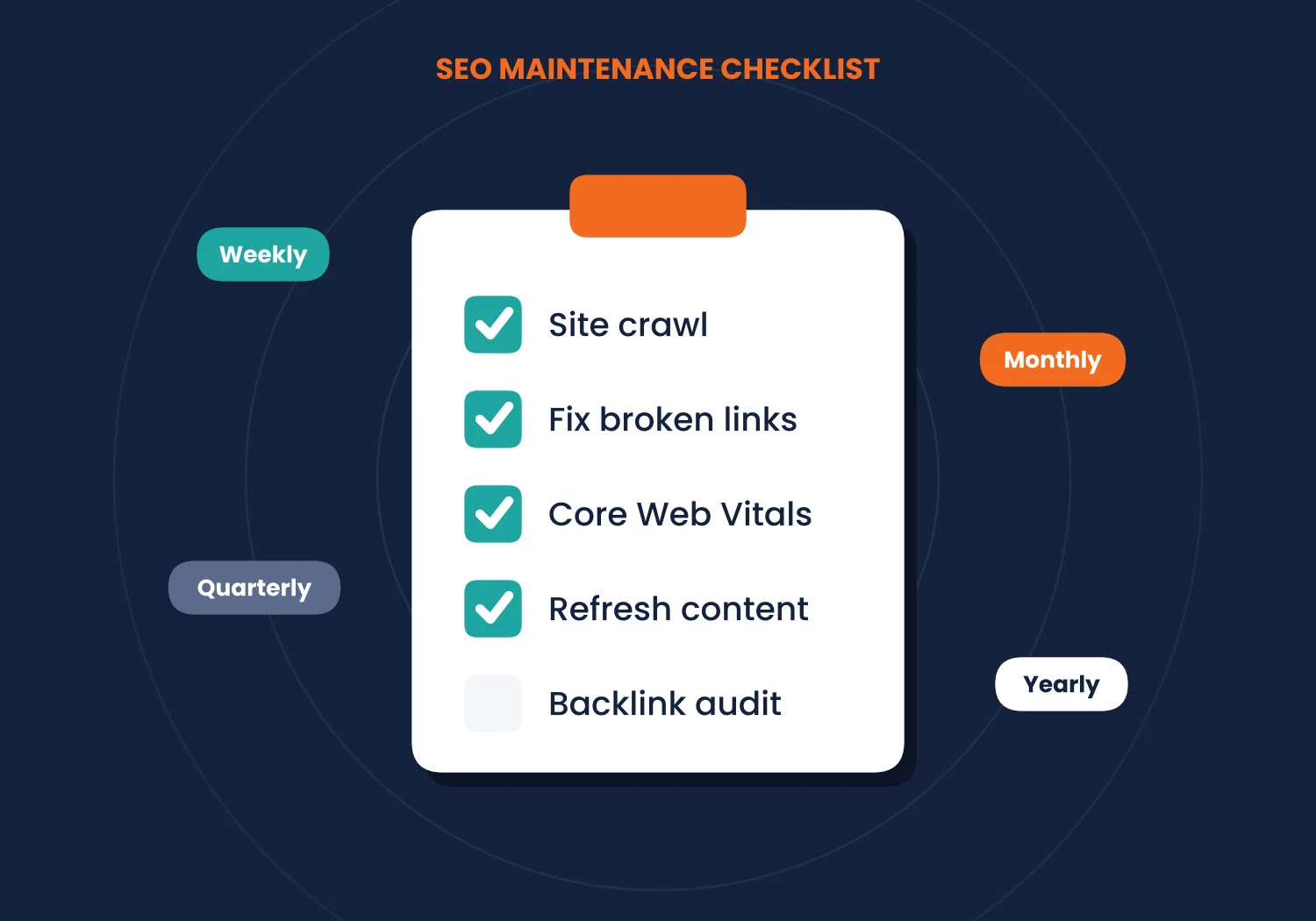
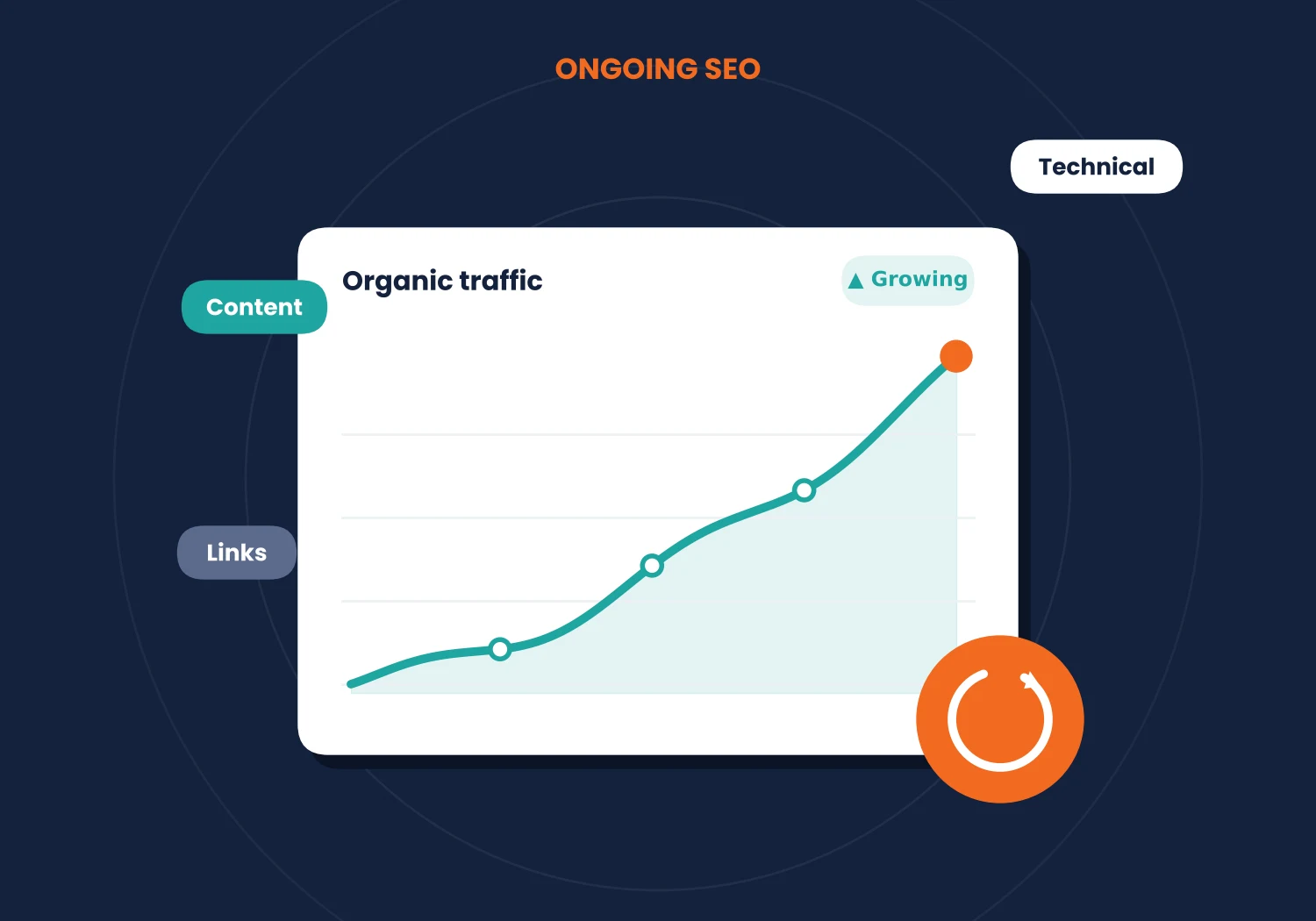
One thing that surprises people: SEO isn’t a project you finish. Competitors keep publishing, Google keeps updating, and new questions keep appearing in your market. Stopping is like canceling a gym membership the week you finally see results. If you’re wondering why it needs to continue after the first big wins, read our explainer on what ongoing SEO is and why it protects the rankings you’ve paid for.
The timeline also depends on your starting point. A site with years of history and a few good links will move faster than a brand-new domain. A local plumber competing in one city will move faster than an online retailer competing nationally. A good SEO partner will tell you where you sit on that scale before you sign anything.
How to Know Your SEO Investment Is Paying Off
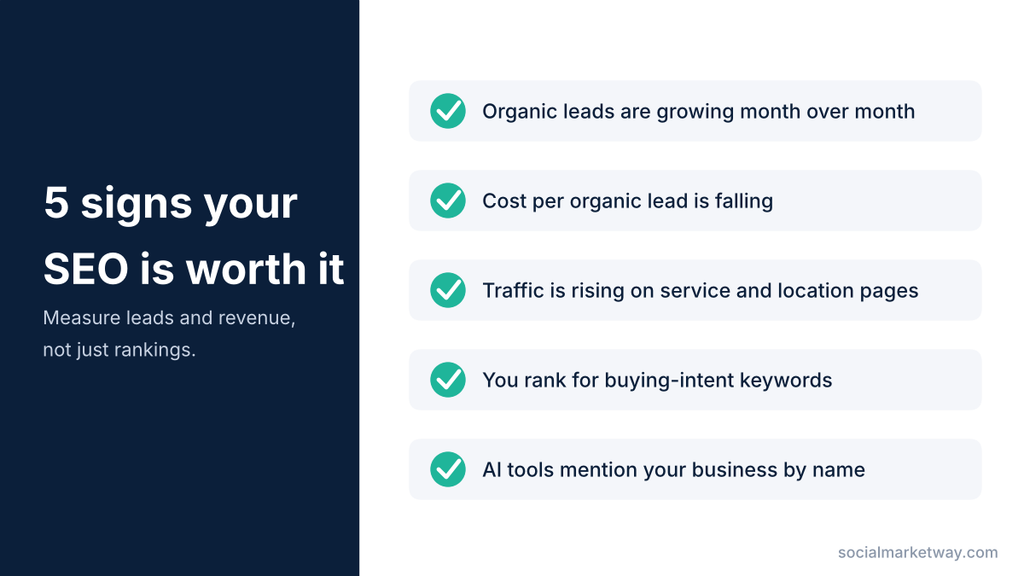
“Are SEO services worth it?” only has a real answer if you measure the right things. Rankings and traffic are useful signals, but they don’t pay your rent. Here’s what to track, in order of importance:
- Leads and sales from organic search. Calls, form submissions, booked appointments and online orders that came from Google. This is the number that decides whether SEO is worth it.
- Cost per organic lead. Your monthly SEO spend divided by organic leads. Watch this fall over time and compare it with your cost per lead from ads.
- Traffic to money pages. Visits to service, product and location pages, not just blog posts.
- Rankings for buying-intent keywords. “Roof repair near me” matters more than “how long does a roof last.”
- Visibility in AI answers. Whether your business is mentioned when people ask ChatGPT or Google’s AI about your service.
You don’t need to become an analyst to check this. A good provider should hand you a monthly report that answers three questions in plain English: What did we do? What changed? What’s next?
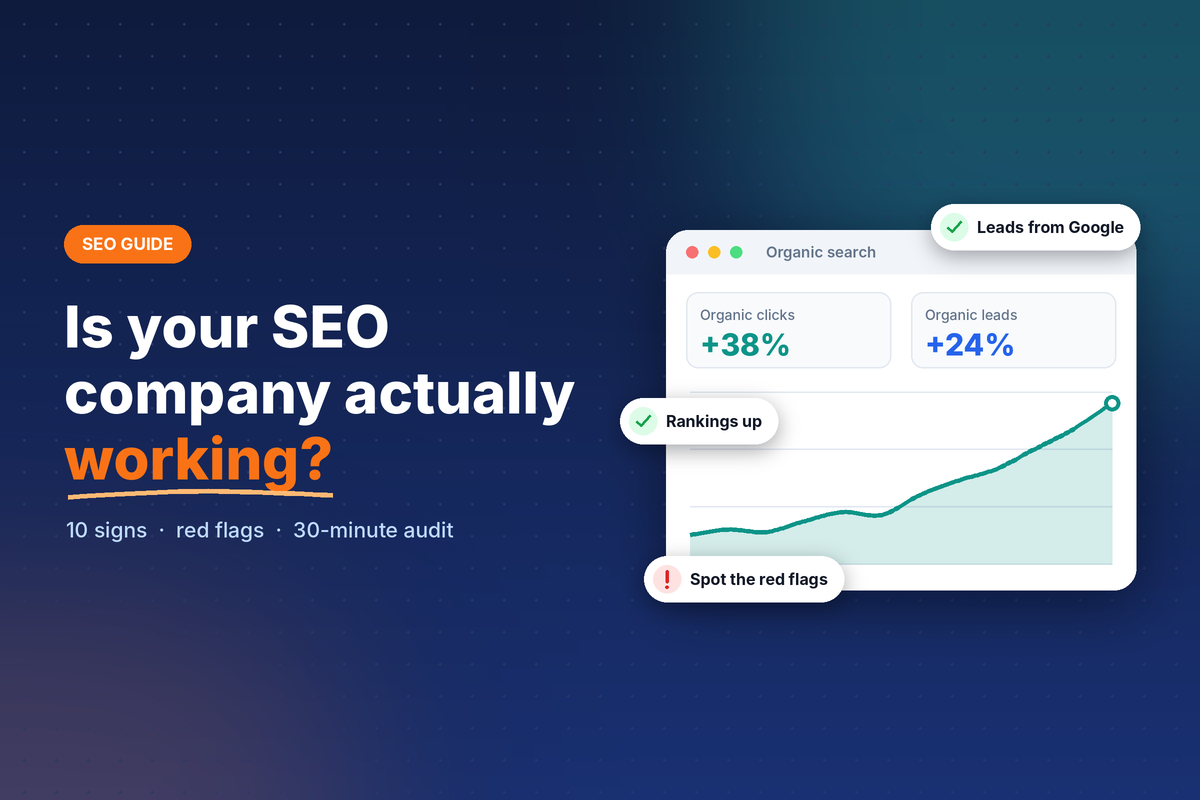
If your reports are full of jargon and you can’t tell whether you’re getting more business, that’s a problem with the provider, not with SEO. We wrote a full guide on how to tell if your SEO company is working, including the questions to ask and the warning signs to watch for.
A quick gut check: after six months, you should be able to point to specific leads or customers who found you through Google. If you can’t, ask your provider why, and expect a straight answer.
What “Worth It” Looks Like: Real Client Results
Theory is nice. Results are better. Here’s what SEO has done for a few of the businesses we work with.
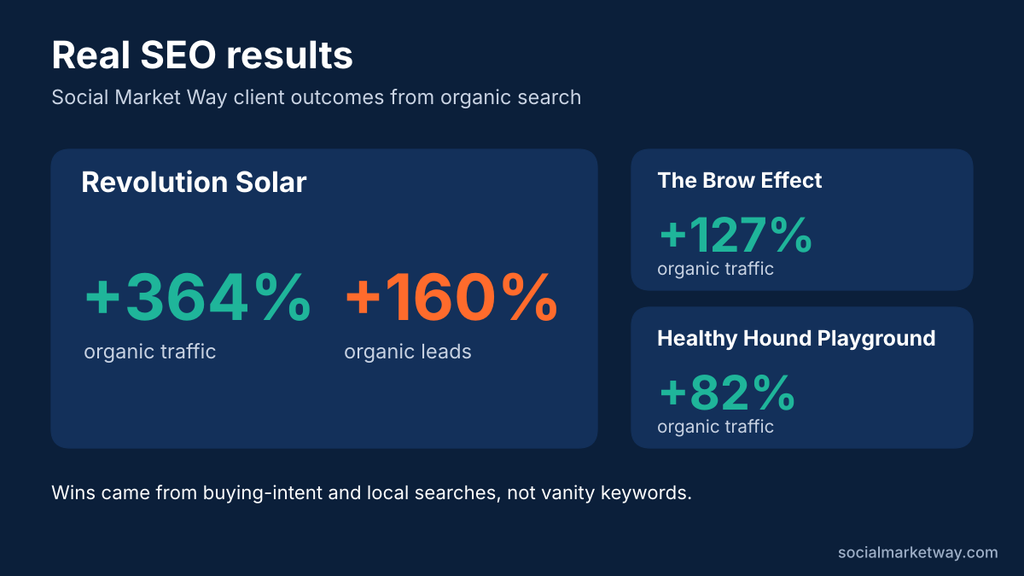
Revolution Solar came to us in a crowded, expensive market where solar ad clicks are among the priciest in home services. By rebuilding their service pages around what homeowners actually search, fixing technical issues and earning links from relevant industry sites, they grew organic traffic by 364% and organic leads by 160%. Those are leads they no longer have to buy one click at a time.
The Brow Effect, a beauty studio, grew organic traffic by 127% by focusing on local searches and Google Business Profile optimization, the searches people make when they’re ready to book.
Healthy Hound Playground, a dog daycare and boarding business, increased organic traffic by 82% by targeting the specific services and neighborhoods their customers search for.
Notice what these have in common. None of them won by chasing huge national keywords. They won by showing up for the searches their buyers make right before they pick up the phone. That’s the difference between SEO that looks good in a report and SEO that grows a business.
None of this happened in a straight line, either. Each campaign went through the same stages: an audit, a priority list, steady monthly execution, and regular course corrections based on what the data showed. If you’re curious how that process runs behind the scenes, our article on SEO campaign management walks through how we plan, prioritize and adjust a campaign month to month.
Your results will depend on your market, your website and your competition. But if businesses in solar, beauty and pet care can make SEO pay off, the odds are good that yours can too.
Frequently Asked Questions
Is SEO worth it for a small business?
Usually, yes, especially for local service businesses. Local searches like “dentist near me” or “electrician in Arlington” have strong buying intent and less competition than national keywords. A small business can often win those searches with a focused budget.
Are SEO companies worth it, or are they a scam?
Most SEO companies are legitimate, but quality varies a lot. Be wary of guaranteed rankings, very cheap monthly fees, long lock-in contracts with no reporting, and anyone who won’t explain what they’re doing. A good SEO company shows you its work and ties it to leads.
Is a SEO company worth it if I already run Google Ads?
Yes, the two work well together. Ads bring fast leads while SEO builds a cheaper, long-term source of traffic. Over time, many businesses reduce ad spend on keywords where they already rank well organically.
How much should I spend on SEO?
It depends on your market and goals. Local businesses in moderately competitive markets typically invest from about $2,000 a month. Multi-location and national brands often need more. Spending too little to make real progress is usually worse than waiting until you can fund it properly.
How long before SEO is worth the investment?
Expect early movement in two to three months and meaningful results in three to six. Most well-run campaigns become clearly profitable somewhere between six and twelve months, and keep improving after that.
Is SEO still worth it with ChatGPT and AI search?
Yes. Organic search still drives far more website traffic than AI chatbots, and AI tools rely on the same trust signals SEO builds. Good SEO now includes making your business easy for AI tools to find, understand and recommend.
The Bottom Line: Is SEO Worth It?
For most businesses whose customers search online before they buy, yes, SEO is worth it. It’s one of the few marketing channels that gets cheaper per lead the longer you do it. It keeps working when you stop paying for every click, and it puts you in front of people at the exact moment they’re looking for what you sell.
But it’s only worth it under the right conditions:
- You can commit for at least six to twelve months.
- People actually search for what you offer.
- Your website can turn visitors into calls and customers.
- You work with someone who measures success in leads and revenue, not vanity metrics.
If those boxes are checked, the real question isn’t whether SEO is worth it. It’s how much business you’re handing to competitors every month you wait.
Not sure if SEO is right for your business? Let’s find out together.
We’ll look at your website, your competitors and the searches your customers are making, then tell you honestly whether SEO makes sense for you right now. If it doesn’t, we’ll say so. If it does, you’ll get a clear plan with realistic timelines and a clear picture of what you’ll get for your money.
You can compare what’s included at each level on our SEO packages page, or email us at [email protected] to request a free SEO review. Every client gets a dedicated SEO manager, monthly reporting in plain English, and a team that treats your budget like it’s our own.