


How to Hire an SEO Consultant: What to Look For, What to Ask & What It Costs

Deciding to hire an SEO consultant is one of the most important marketing calls a business owner makes. Get it right and you gain a partner who turns Google into a steady source of leads. Get it wrong and you burn months of budget on reports, jargon, and rankings that never pay the bills.
The hard part is that most people hiring an SEO consultant are not SEO experts themselves. That makes it difficult to tell a genuine strategist from someone who simply talks a good game.
This guide fixes that. We’ll walk you through what an SEO consultant actually does, when it makes sense to hire one, how to compare consultants and agencies, the exact questions to ask, the red flags to avoid, and what it should cost. By the end, you’ll know how to hire an SEO expert with confidence.
Quick summary
- A good SEO consultant diagnoses before prescribing, and ties every recommendation to revenue, not vanity metrics.
- Look for clear communication, relevant case studies, and someone who asks about your business before talking about keywords.
- Avoid anyone who guarantees #1 rankings, hides behind jargon, or uses the same plan for every client.
- Expect to pay roughly $75–$200+ per hour, or $500–$10,000+ per month, depending on scope.
- Measure success by leads, calls, and sales, not just traffic.
What Does an SEO Consultant Actually Do?
An SEO consultant is a specialist who works out why your website isn’t winning the search traffic it should, then builds a plan to fix it. Think of them as a diagnostician first and a builder second.
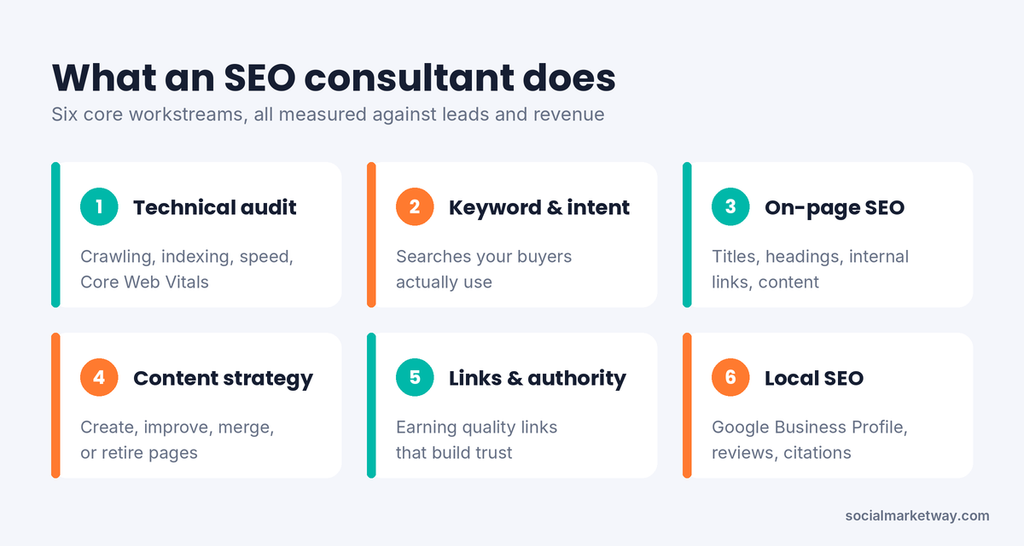
Most SEO consultants cover some or all of the following:
- Technical SEO audits. Checking crawlability, indexing, site speed, Core Web Vitals, mobile usability, redirects, and structured data. If Google can’t properly read your site, nothing else matters. (Our SEO website audit covers this in depth.)
- Keyword and search intent research. Finding the searches your buyers actually use, and matching each one to the right type of page. If you’re new to this, start with what a keyword in SEO really is.
- On-page optimization. Improving titles, headings, internal links, and content so each page clearly answers what searchers want.
- Content strategy. Deciding which pages to create, which to improve, and which to merge or retire.
- Link building and authority. Earning quality links that build trust with Google. See our guide on how to get backlinks and why your website needs them.
- Local SEO. Optimizing your Google Business Profile, citations, and reviews to rank in the map pack. Our Google Business Profile SEO guide breaks this down.
- Reporting and measurement. Tracking rankings, traffic, and, most importantly, leads and revenue.
The key distinction: a pure consultant often focuses on strategy and guidance, while your team (or an agency) handles implementation. Some SEO services experts do both. Knowing which you need is the first step in hiring an SEO consultant who fits.
Signs It’s Time to Hire an SEO Consultant
Not every business needs outside SEO help right away. But if any of these sound familiar, it’s probably time to hire SEO help:
- Your organic traffic has dropped and you don’t know why. A sudden decline after a Google update, redesign, or migration needs expert diagnosis, fast.
- Your rankings have plateaued. You’re stuck on page two for the terms that matter, and nothing you try moves the needle.
- You get traffic, but not leads. Visitors arrive and leave. That usually points to an intent mismatch or a conversion problem, which is where SEO and UX must work together.
- You’re planning a redesign or migration. This is one of the riskiest moments for SEO. A consultant can protect years of rankings.
- Competitors are outranking you. Especially if they’re newer or smaller than you.
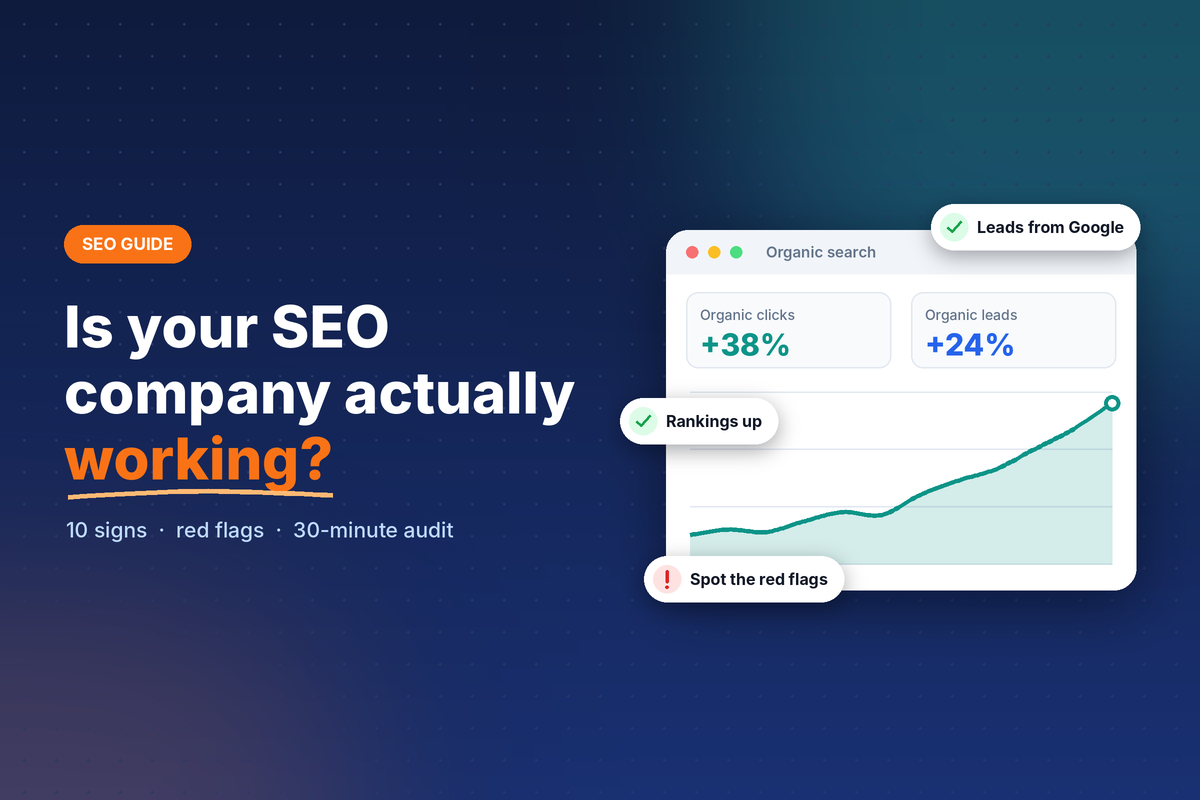
- Your current SEO feels busy but unfocused. Lots of activity, lots of reports, little growth. If you’re unsure, read how to tell if your SEO company is working.
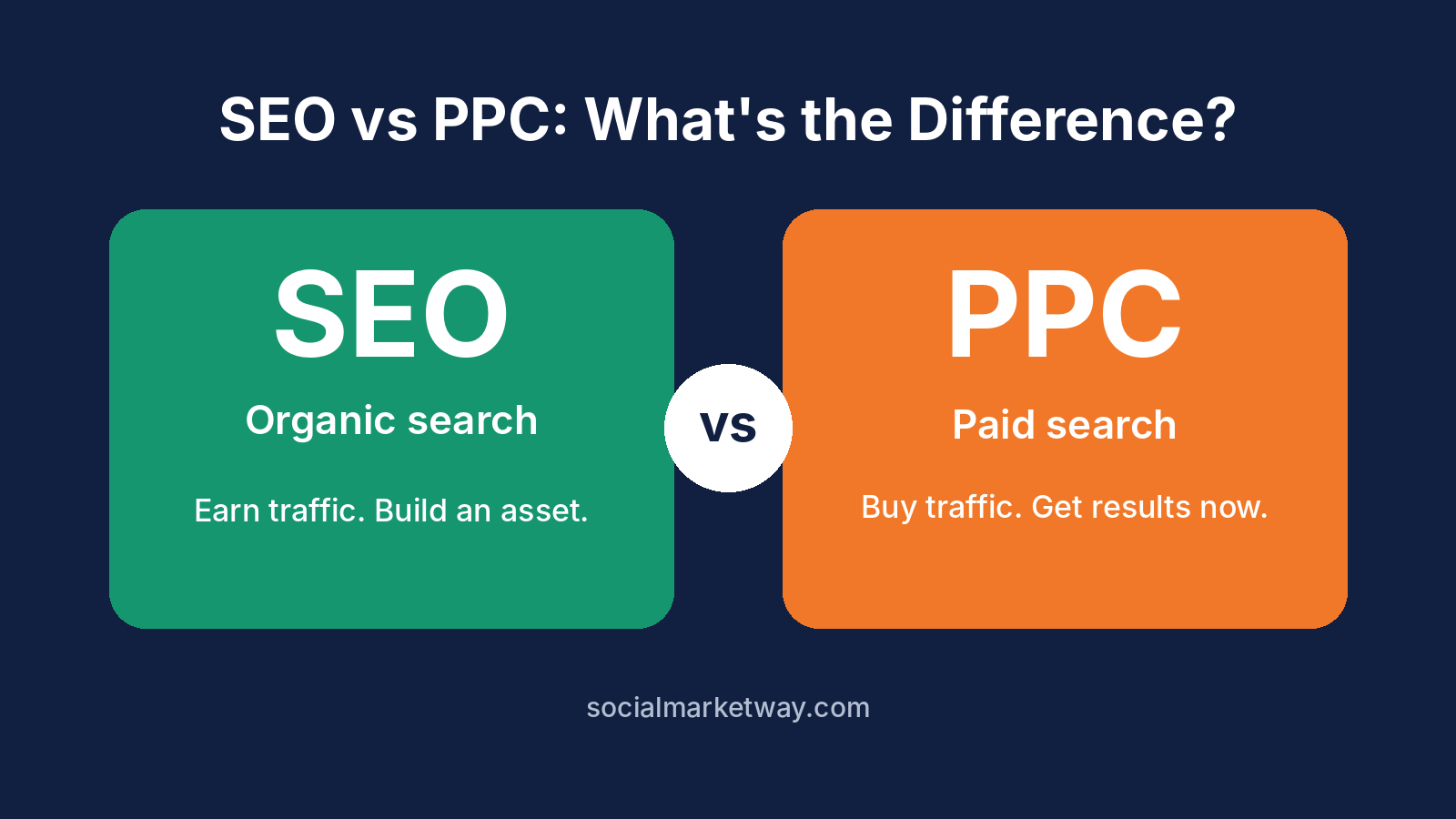
- You’re relying too heavily on paid ads. If ad costs keep climbing, SEO can lower your cost per lead over time. Our SEO vs PPC comparison explains how the two fit together.
Still wondering whether the investment pays off? We wrote an honest breakdown: Is SEO worth it?
SEO Consultant vs. SEO Agency vs. In-House Hire
Before you hire an SEO professional, decide what kind of help you need. Each option has clear trade-offs.
| Freelance SEO consultant | SEO agency | In-house SEO hire | |
|---|---|---|---|
| Best for | Strategy, audits, guidance for a team that can implement | Hands-on execution across technical, content, links, and reporting | Large sites with constant, ongoing SEO needs |
| Typical cost | $75–$200+/hour or a project fee | $500–$10,000+/month retainer | Full salary, benefits, and tools |
| Strengths | Senior expertise, flexible, direct access to the expert | A full team of specialists, more capacity, faster delivery | Deep product knowledge, always available |
| Watch-outs | Limited capacity; you may need others to implement | You may be handed to junior staff; check who does the work | Hard to hire, slow to ramp up, one person’s skill set |
When a consultant makes sense: You have developers and writers in-house, and you need someone to set direction, prioritize, and keep everyone accountable.
When an agency makes sense: You don’t have the time or team to implement, and you want one partner responsible for results. Many businesses also choose a hybrid: a senior consultant sets the strategy while an agency team handles delivery.
Whichever route you choose, think long term. SEO is not a one-off fix, and our guide to ongoing SEO services vs one-time SEO explains why.
How to Hire an SEO Expert: A 7-Step Process
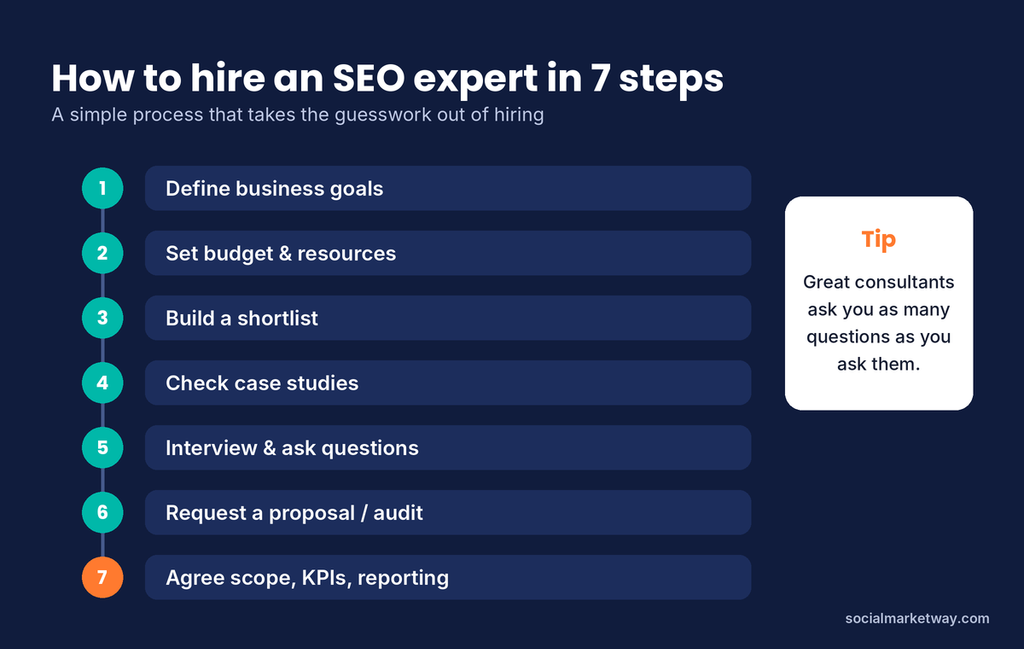
Here’s a simple, repeatable process for how to hire an SEO expert without guesswork.
Step 1: Define your business goals
Start with outcomes, not tactics. “Rank for more keywords” is not a goal. “Generate 30 more qualified quote requests a month” is. Clear goals let you judge every candidate against what matters.
Step 2: Know your budget and resources
Decide what you can invest monthly and who on your team can implement changes. This determines whether you need a strategist, a done-for-you agency, or both. Our SEO pricing guide will help you set a realistic number.
Step 3: Build a shortlist
Ask for referrals from businesses you trust, check reviews, and look at who ranks well for competitive terms in your own industry. An SEO expert who can rank their own business is a good sign. Aim for three to five candidates.
Step 4: Review case studies and references
Ask for examples similar to your business, size, and market. Strong case studies show the starting problem, what was done, and the measurable result. Then speak to at least one past client.
Step 5: Interview and ask hard questions
Use the questions later in this guide. Pay attention to how they think, not just what they say. Great consultants ask you as many questions as you ask them.
Step 6: Request a proposal or paid audit
A good proposal should reference your website and your competitors. If it reads like a template, it probably is. A small paid audit is a low-risk way to test how someone works.
Step 7: Agree on scope, KPIs, and reporting
Before signing, put in writing what will be delivered, how success will be measured, how often you’ll get updates, and the notice period. This protects both sides.
What to Look for When You Hire an SEO Professional
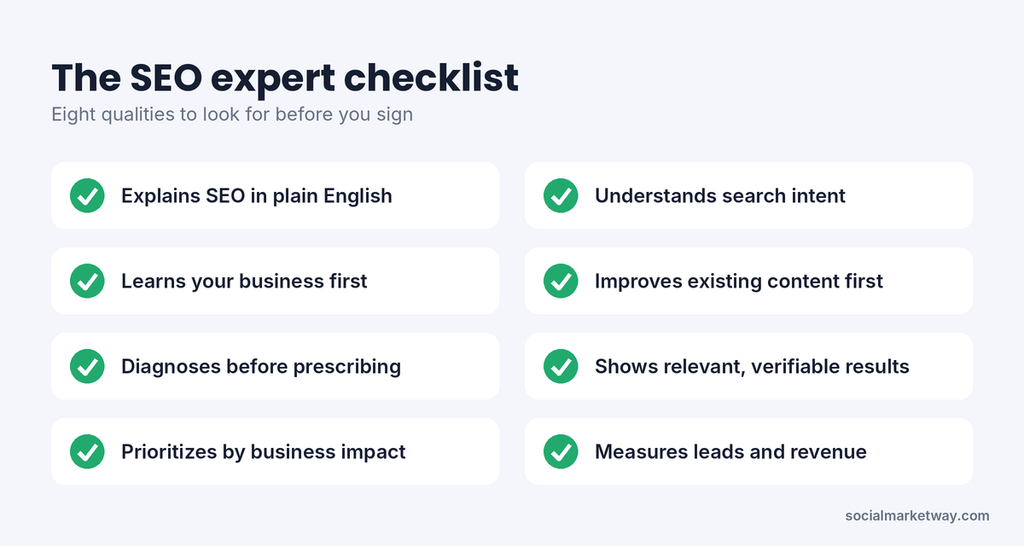
There’s no official license for SEO, so credentials alone won’t tell you much. Instead, judge candidates on these eight qualities.
1. They explain SEO in plain English
If a consultant can’t explain what they’re doing and why, you can’t judge whether it’s worth paying for. The best SEO services experts make complex topics simple, without talking down to you.
2. They want to understand your business first
A strong consultant asks about your margins, best customers, sales cycle, and service areas before talking keywords. The highest-volume keyword isn’t always the most profitable one. A plumber may earn more from “emergency water heater repair” than from “plumbing tips.”
3. They diagnose before they prescribe
Beware of anyone who recommends a solution in the first five minutes. Good consultants look at your data (Google Search Console, analytics, crawl reports) and identify the real cause before suggesting fixes.
4. They prioritize by impact
An audit with 200 “issues” is useless if nobody knows where to start. Ask how they decide what comes first. The right answer weighs business impact against effort and your available resources.
5. They understand search intent
Some searches want a service page, some want a guide, some want a map listing. A consultant who understands intent builds the right page for each query, instead of stuffing keywords into the wrong one.
6. They’re smart about content
More content isn’t always better. Often the fastest wins come from improving, updating, or merging pages you already have. Ask how they’d approach your existing content before creating new pages.
7. They have relevant, verifiable results
Look for case studies that show the problem, the strategy, and a business outcome like leads or revenue, not just a screenshot of a traffic spike. Experience in your industry is a bonus. For example, we’ve documented strategies for dental practices, construction companies, and managed service providers.
8. They measure what matters
Rankings and traffic are leading indicators, not the goal. Your consultant should track calls, form fills, booked appointments, and sales from organic search, and report on them clearly.
Questions to Ask Before You Hire an SEO Consultant
The goal of these questions isn’t to catch anyone out. It’s to understand how they think. Bring this list to every interview.
About your business
- What do you need to know about our business before making recommendations?
- Who do you think our most valuable customers are, and how do they search?
About strategy
- Based on a quick look, what do you see as our biggest opportunity?
- How do you decide which tasks to prioritize first?
- How do you approach existing content versus creating new content?
About implementation
- Who will actually do the work? Will I deal with you directly?
- What will you need from our team, and how much time will it take?
- Do you handle technical fixes, content, and link building, or only advise?
About results and reporting
- Which KPIs will you track, and how do they tie to revenue?
- How often will we get reports, and what will they include?
- What results can we realistically expect in 3, 6, and 12 months?
About experience
- Can you share a case study from a business similar to ours?
- Can I speak to a current or past client?
- How do you stay current with Google algorithm and AI search changes?
About the relationship
- What’s the contract length and notice period?
- Who owns the content, accounts, and data if we part ways?
Pay attention to the answers you don’t get. Vague replies to the results and ownership questions are a warning sign.
Red Flags to Avoid When Hiring an SEO Consultant
Knowing what to avoid is just as valuable as knowing what to look for. Walk away if you see any of these.
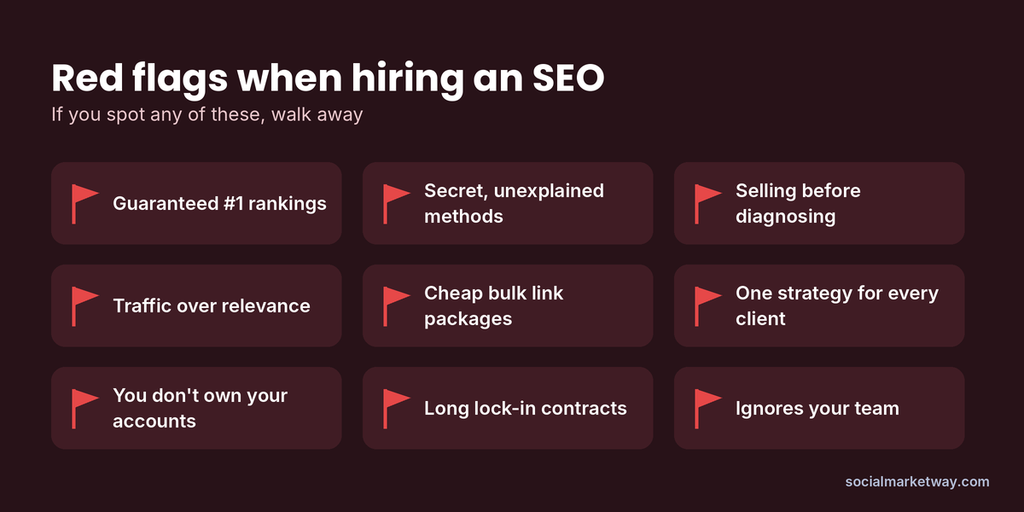
- Guaranteed #1 rankings. Nobody controls Google. Google itself warns that no one can guarantee a top ranking. Any SEO who promises it is either misleading you or planning risky tactics.
- Secret methods. “We have a proprietary technique we can’t explain” often means link schemes or tactics that can get your site penalized.
- Recommendations before diagnosis. If they’re selling a package before they’ve looked at your site, they’re selling, not consulting.
- Obsession with traffic over relevance. 10,000 visitors who will never buy are worth less than 200 who will. Watch for anyone who brags about traffic without mentioning leads.
- Cheap, high-volume link packages. “500 backlinks for $99” is a fast route to a Google penalty. Quality beats quantity every time.
- The same strategy for every client. A dentist, a contractor, and an ecommerce store need very different plans. See how small businesses, enterprises, and ecommerce brands approach SEO differently.
- No access to your own data. You should always own your Google Analytics, Search Console, Google Business Profile, and website accounts.
- Long lock-in contracts with no exit. Confident consultants don’t need to trap clients.
- Dismissing your team. Your staff know your customers. A consultant who ignores them will miss valuable insight.
How Much Does It Cost to Hire an SEO Consultant?
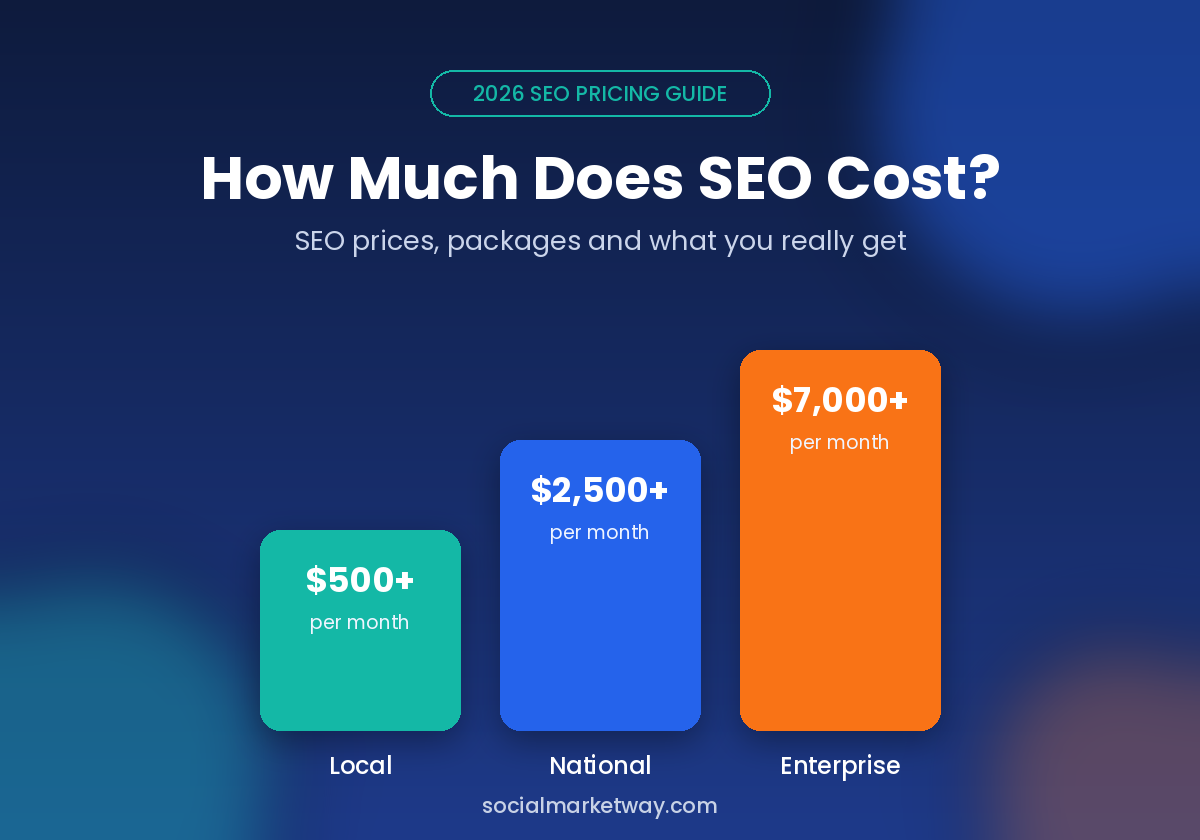
SEO pricing varies widely based on your site’s size, competition, location, and how much work is included. Here are typical industry ranges.
| Pricing model | Typical range | Best for |
|---|---|---|
| Hourly | $75–$200+ per hour (experienced consultants often $150–$200+) | Ad-hoc advice, training, troubleshooting |
| Project-based | $1,000–$30,000+ (commonly $2,500–$5,000) | Audits, migrations, one-off strategies |
| Monthly retainer | $500–$10,000+ per month | Ongoing strategy and execution |
| Performance-based | Varies | Generally not recommended; it can encourage risky shortcuts |
For context, Social Market Way’s monthly SEO packages start at $2,000 for Basic, $3,000 for Pro, and $7,000 for Enterprise.
Don’t choose on price alone. A cheap consultant who chases the wrong keywords costs more in the long run than an experienced one who drives real leads. Compare proposals on what’s included, who does the work, and how results will be measured.
For a full breakdown, read How Much Does SEO Cost? SEO Pricing & Packages Explained.
How to Brief Your SEO Consultant (and What the First 90 Days Should Look Like)
Once you hire an SEO consultant, the quality of your brief shapes the quality of their work. Share these five things on day one:
- Commercial priorities. Which services or products bring in the most profit, and which do you want to grow?
- Your ideal customer. Who buys, what problems they have, and how they make decisions.
- What’s happening now. Recent traffic changes, redesigns, campaigns, or competitor moves.
- Internal resources. Who can update the website, write content, and approve changes, and how quickly.
- Past SEO work. Previous agencies, link building, audits, or penalties. History matters.
A healthy first 90 days
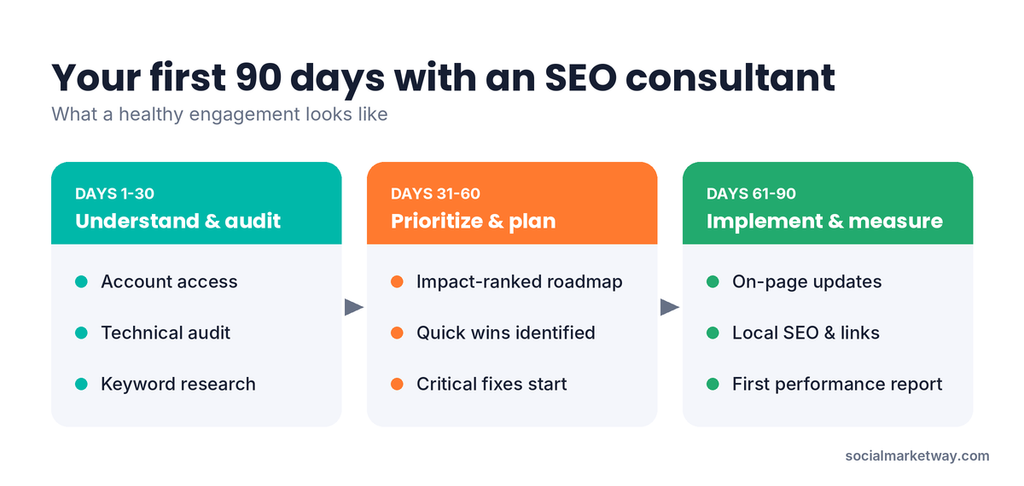
- Days 1–30: Understand and investigate. Access to accounts, a technical audit, keyword and competitor research, and a review of what’s already working.
- Days 31–60: Prioritize and plan. A clear roadmap ranked by impact, with quick wins identified. Fixes to critical technical issues should start here.
- Days 61–90: Implement and measure. On-page improvements, content updates, local SEO, and early link building, plus your first meaningful performance report.
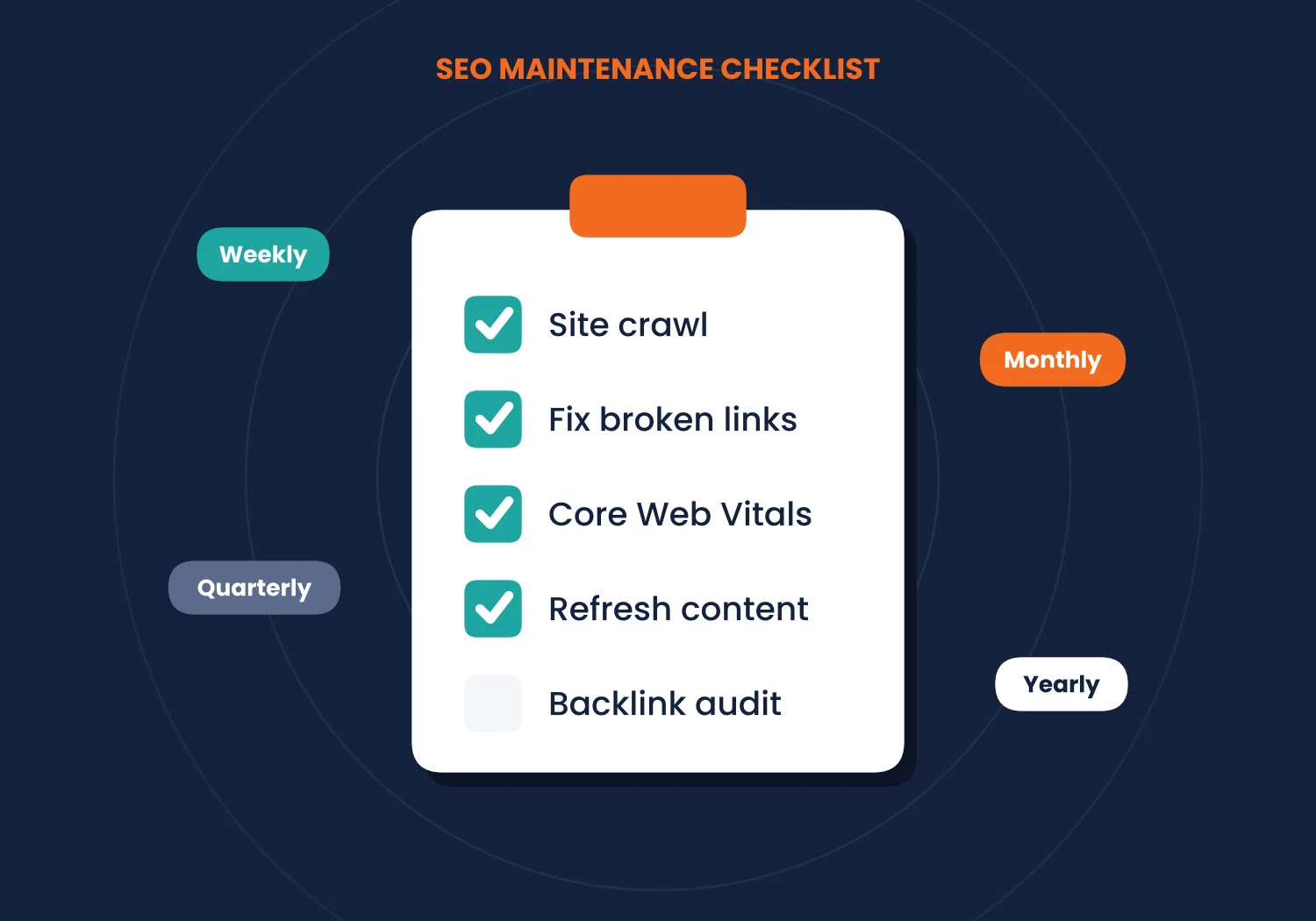
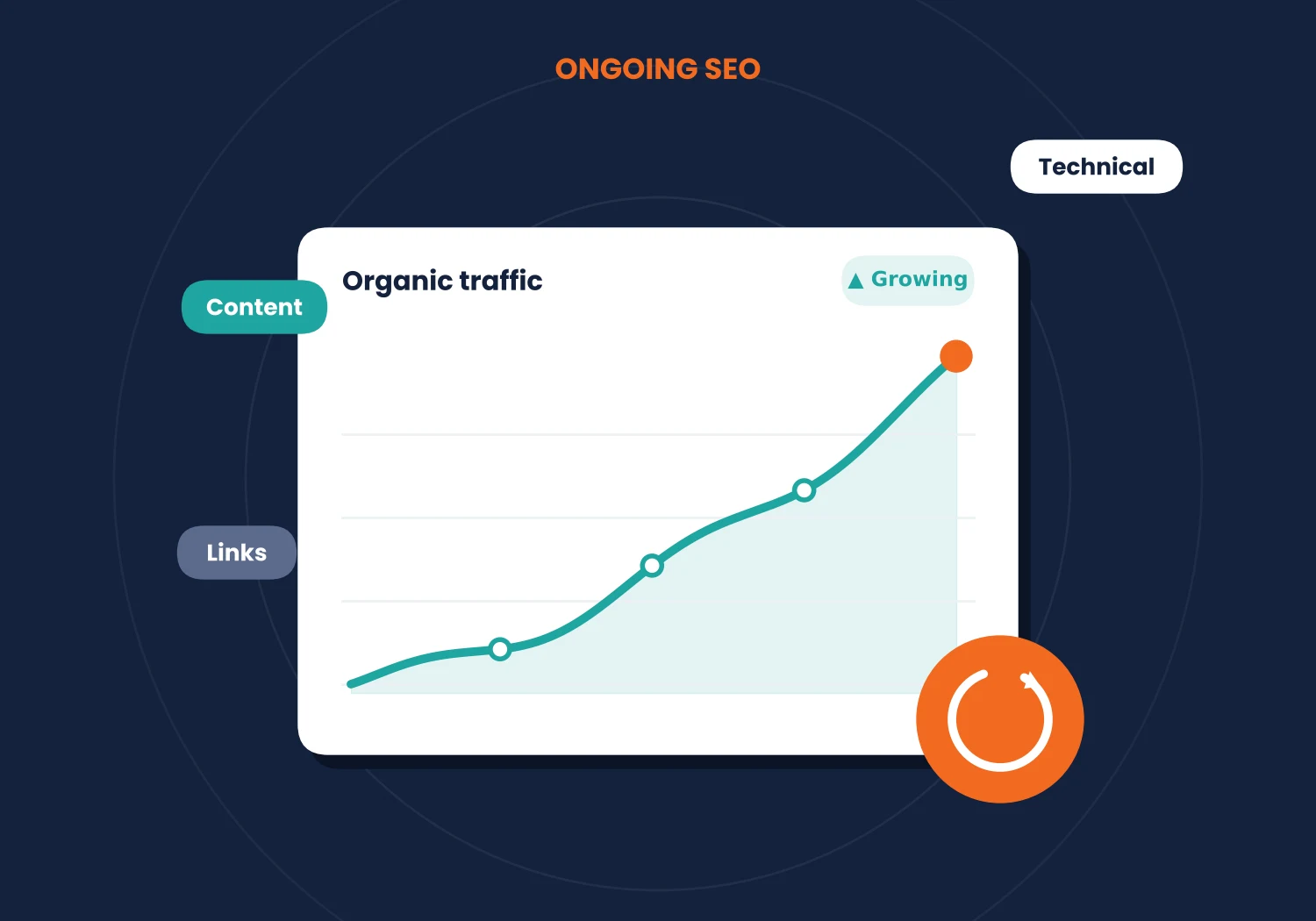
After that, the work moves into a rhythm of implementing, reviewing, and refining. That’s the heart of ongoing SEO, supported by regular SEO maintenance and structured SEO campaign management.
One note on timing: SEO compounds. Most businesses see early movement within three months and more meaningful lead growth between six and twelve months, depending on competition.
People Also Ask
How much does it cost to hire an SEO consultant?
Most SEO consultants charge $75 to $200+ per hour, $1,000 to $30,000+ per project, or $500 to $10,000+ per month on retainer. Price depends on your website’s size, your competition, and how much implementation is included. Compare proposals on scope and expected business results, not price alone.
Is it worth hiring an SEO consultant?
Yes, for most businesses that rely on Google for leads. A good SEO consultant finds the issues holding your site back, prioritizes fixes by revenue impact, and saves months of trial and error. The return comes from lower cost per lead over time compared with paid ads.
What should I ask an SEO consultant before hiring?
Ask who will do the work, how they prioritize tasks, which KPIs they track, what results to expect in 3, 6, and 12 months, and whether they can share a similar case study. Also confirm that you will own all accounts, content, and data.
How do I find a good SEO expert?
Get referrals, check reviews, and look at who ranks well in your own industry. Shortlist three to five candidates, review case studies with measurable outcomes, speak to a past client, and request a proposal or small paid audit that references your actual website.
What is the difference between an SEO consultant and an SEO agency?
An SEO consultant usually provides strategy, audits, and guidance, while your team implements. An SEO agency provides a full team that handles strategy and execution, including technical fixes, content, link building, and reporting. Many businesses combine both.
Can an SEO consultant guarantee first-page rankings?
No. No one controls Google’s algorithm, and Google warns against anyone promising guaranteed rankings. A trustworthy SEO consultant will set realistic goals, explain their strategy, and measure progress in leads and revenue rather than promising a specific position.
Frequently Asked Questions About Hiring an SEO Consultant
Should I hire an SEO consultant or do SEO myself?
You can learn the basics yourself, and there’s plenty of free information online. The challenge is knowing which advice applies to your site and what to prioritize. A consultant saves you time and costly trial and error, especially in competitive markets.
How long before I see results after I hire an SEO expert?
Expect early signs (technical fixes, ranking movement) within 1–3 months, and stronger lead growth in 6–12 months. Highly competitive industries can take longer.
Is it better to hire a local SEO consultant?
Not necessarily. Remote consultants work well for most businesses. That said, if you depend on local customers, choose someone with proven local SEO experience who understands your market.
What qualifications should an SEO professional have?
There’s no official SEO license. Certifications such as Google Analytics can help, but proven results, relevant case studies, and clear thinking matter far more.
How do I know if my SEO consultant is doing a good job?
Track leads, calls, and revenue from organic search, not just rankings. Regular, clear reporting is a must. Our guide on how to tell if your SEO company is working gives you a full checklist.
Can an SEO consultant help with AI search?
Yes. A modern SEO expert should understand how Google’s AI Overviews and AI assistants pull information, and how to structure content, reviews, and authority so your business gets cited.
Ready to Hire an SEO Consultant Who Focuses on Revenue?
Hiring the right SEO consultant comes down to a few simple principles: choose someone who understands your business, diagnoses before prescribing, communicates clearly, and measures success in leads and sales.
At Social Market Way, that’s exactly how we work. Every engagement starts with understanding your goals and auditing your site, then building a prioritized plan our team implements and reports on in plain English. You’ll always know what we’re doing, why, and what it’s delivering. See the results we’ve achieved for clients in our case studies.
Book your free SEO strategy call and we’ll show you the biggest opportunities on your site, with no obligation.
Frequently Asked Questions About Hiring an SEO Consultant
How much does it cost to hire an SEO consultant?
Most SEO consultants charge $75 to $200+ per hour, $1,000 to $30,000+ per project, or $500 to $10,000+ per month on retainer. Price depends on your website’s size, your competition, and how much implementation is included. Compare proposals on scope and expected business results, not price alone.
Is it worth hiring an SEO consultant?
Yes, for most businesses that rely on Google for leads. A good SEO consultant finds the issues holding your site back, prioritizes fixes by revenue impact, and saves months of trial and error. The return comes from lower cost per lead over time compared with paid ads.
What should I ask an SEO consultant before hiring?
Ask who will do the work, how they prioritize tasks, which KPIs they track, what results to expect in 3, 6, and 12 months, and whether they can share a similar case study. Also confirm that you will own all accounts, content, and data.
How do I find a good SEO expert?
Get referrals, check reviews, and look at who ranks well in your own industry. Shortlist three to five candidates, review case studies with measurable outcomes, speak to a past client, and request a proposal or small paid audit that references your actual website.
What is the difference between an SEO consultant and an SEO agency?
An SEO consultant usually provides strategy, audits, and guidance, while your team implements. An SEO agency provides a full team that handles strategy and execution, including technical fixes, content, link building, and reporting. Many businesses combine both.
Can an SEO consultant guarantee first-page rankings?
No. No one controls Google’s algorithm, and Google warns against anyone promising guaranteed rankings. A trustworthy SEO consultant will set realistic goals, explain their strategy, and measure progress in leads and revenue rather than promising a specific position.
Should I hire an SEO consultant or do SEO myself?
You can learn the basics yourself, and there’s plenty of free information online. The challenge is knowing which advice applies to your site and what to prioritize. A consultant saves you time and costly trial and error, especially in competitive markets.
How long before I see results after I hire an SEO expert?
Expect early signs (technical fixes, ranking movement) within 1-3 months, and stronger lead growth in 6-12 months. Highly competitive industries can take longer.
Is it better to hire a local SEO consultant?
Not necessarily. Remote consultants work well for most businesses. That said, if you depend on local customers, choose someone with proven local SEO experience who understands your market.
What qualifications should an SEO professional have?
There’s no official SEO license. Certifications such as Google Analytics can help, but proven results, relevant case studies, and clear thinking matter far more.
How do I know if my SEO consultant is doing a good job?
Track leads, calls, and revenue from organic search, not just rankings. Regular, clear reporting is a must.
Can an SEO consultant help with AI search?
Yes. A modern SEO expert should understand how Google’s AI Overviews and AI assistants pull information, and how to structure content, reviews, and authority so your business gets cited.